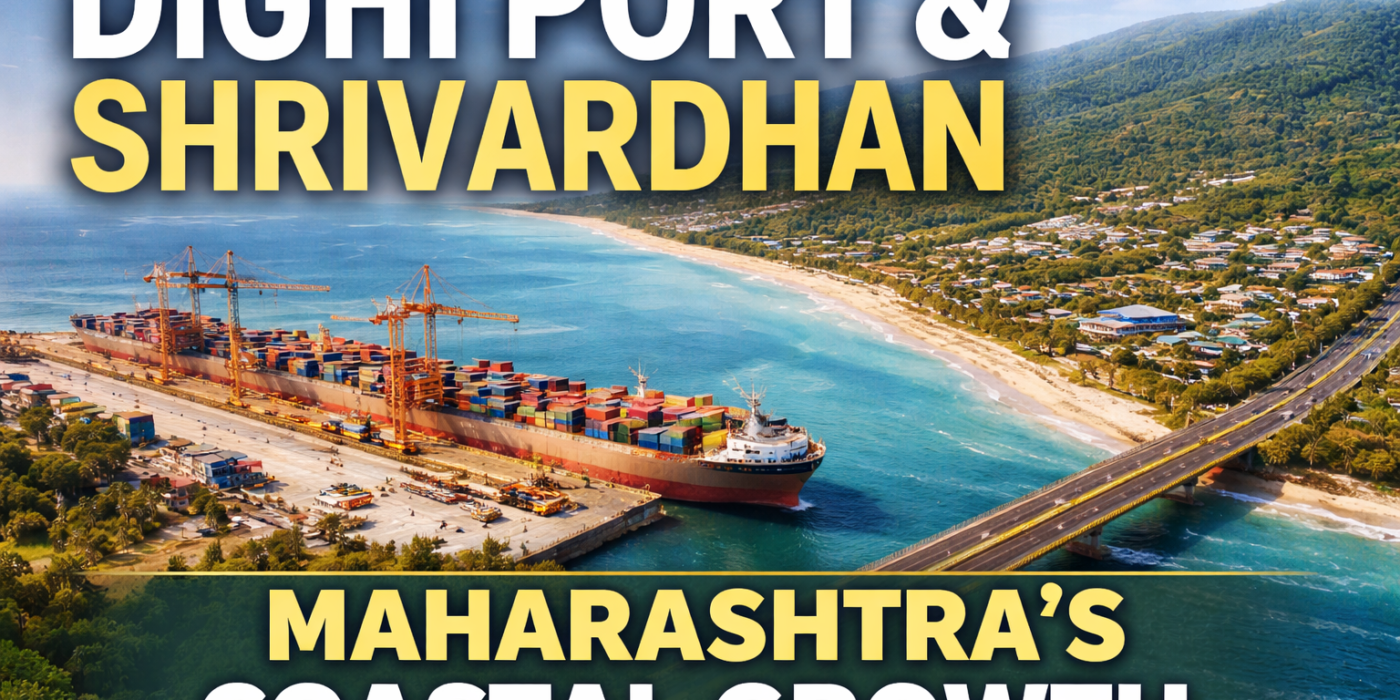
Dighi Port & Shrivardhan: How Coastal Infrastructure Is Reshaping Maharashtra’s Growth
Dighi Port & Shrivardhan: When the Coastline Became the New Growth Frontier
For decades, India’s economic growth followed highways, cities, and industrial belts.
But quietly—almost unnoticed—another axis of growth has been strengthening in the background:
Ports.
And on Maharashtra’s Konkan coast, one port is steadily rewriting the region’s future.
Dighi Port.
What makes this story compelling is not just the port itself—but what it is doing to the surrounding geography, land values, livelihoods, and long-term development narrative of Shrivardhan and the Raigad coastline.
This is not a speculative story.
It is a structural one.
Why Ports Always Change Land Economics
Globally, ports are not just trade gateways—they are economic multipliers.
Wherever a deep-water port becomes operational, four things follow almost inevitably:
Logistics and warehousing
Industrial clusters
Employment-driven migration
Residential and social infrastructure
Land around ports does not grow because of hype.
It grows because economic gravity shifts.
Dighi Port is now creating that gravity along the Konkan belt.
Dighi Port: Maharashtra’s Strategic Coastal Asset
Located in Raigad district, Dighi Port is Maharashtra’s closest all-weather deep-water port to the western shipping routes. Its strategic importance lies in:
Deep draft capability for large vessels
Reduced congestion pressure on JNPT
Direct access to Konkan, Goa, and southern Maharashtra
Port-led industrial development potential
As India pushes toward port-led development, logistics efficiency, and coastal economic zones, Dighi Port is no longer peripheral—it is foundational.
Shrivardhan: From Coastal Town to Strategic Hinterland
Shrivardhan has historically been known for:
Beaches
Temples
Tourism
Quiet coastal living
But ports change the destiny of hinterlands.
Shrivardhan’s proximity to Dighi Port places it in a unique dual-position:
Close enough to benefit from economic spillover
Far enough to retain livability, ecology, and lifestyle value
This balance is rare—and extremely valuable.
The Infrastructure Effect: Roads Before Real Estate
What differentiates this cycle from past coastal speculation is sequencing.
Infrastructure is coming before mass construction.
Key drivers include:
Improved road connectivity linking Dighi–Shrivardhan–Raigad interiors
Port-led logistics planning
Government focus on coastal road and industrial corridors
Interest from logistics, warehousing, and processing industries
Historically, land appreciation is strongest when infrastructure precedes demand—not the other way around.
Land, Logistics, and the New Coastal Economy
The Dighi–Shrivardhan belt is evolving into a multi-layered economic zone:
Near-port land → logistics, warehousing, industrial use
Intermediate belt → workforce housing, support services
Coastal & scenic zones → tourism, second homes, wellness resorts
This layered growth is healthy.
It prevents chaotic development and allows different land uses to coexist sustainably.
Why Investors Are Looking Early
Serious land investors don’t wait for billboards—they track policy, ports, and freight movement.
The reasons Dighi–Shrivardhan is drawing attention now:
Entry prices still significantly below mature port regions
Long-term visibility due to port-led economics
Strong government backing for coastal development
Limited supply of large, contiguous land parcels
Tourism + industry = diversified demand
This is not a “flip” market.
It is a patient capital market.
Lessons from History: Ports Create Cities
Look at:
Mumbai itself
Rotterdam
Singapore
Shanghai
Ports don’t just move goods—they anchor civilizations.
Dighi Port may not create a megacity overnight, but it will:
Create jobs
Stabilize land demand
Attract institutions
Improve infrastructure
Elevate the region’s economic relevance
Shrivardhan stands to benefit as the livable, human-scale counterbalance to industrial intensity.
What Needs to Be Done Right
The opportunity is large—but so is the responsibility.
Success depends on:
Environmental sensitivity
Zoning discipline
Infrastructure-first planning
Controlled density
Transparent land governance
Ports can accelerate growth—but only smart planning ensures it is sustainable.
The Bigger Picture
Dighi Port and Shrivardhan together represent something larger:
A shift from city-centric growth to region-centric growth.
From congestion to distributed opportunity.
From speculation to economic logic.
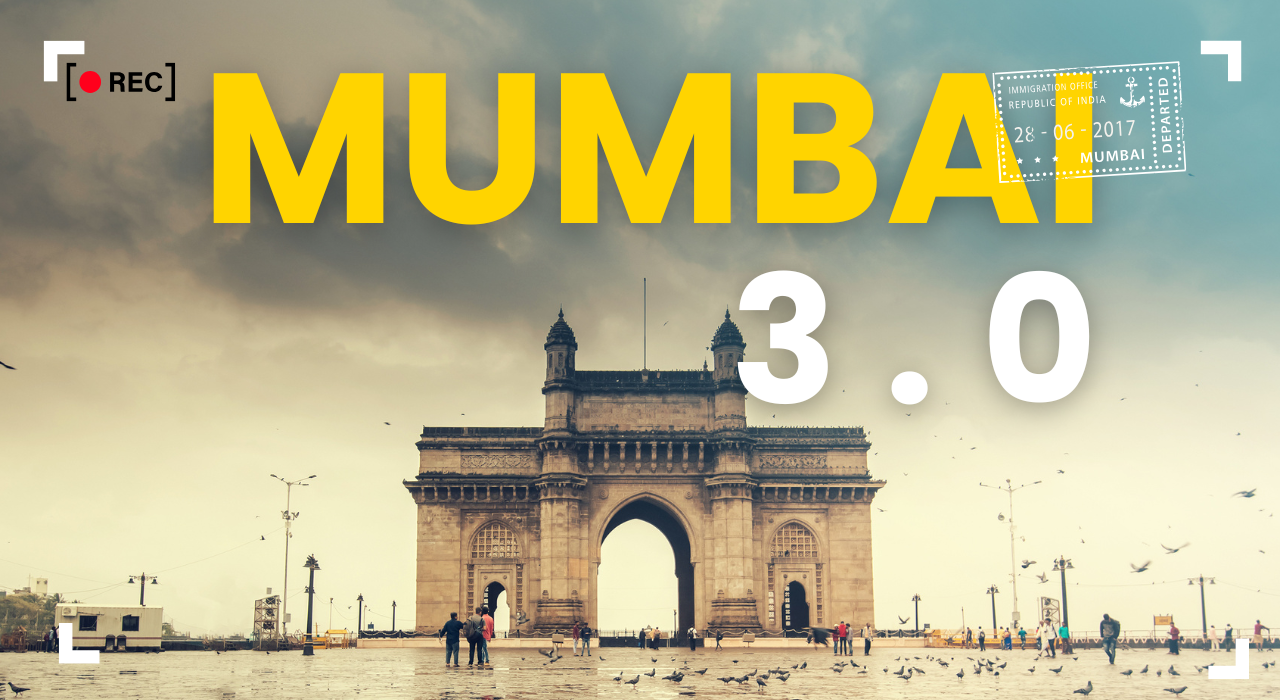
As Mumbai 3.0 reshapes the metropolitan core, coastal nodes like Dighi will quietly power the next layer of India’s growth story.
Final Thought
Ports change maps slowly—but permanently.
Dighi Port is not just building maritime capacity.
It is reshaping the destiny of an entire coastline.
And Shrivardhan, standing at the edge of that transformation, may soon be remembered not just as a coastal town—but as a strategic chapter in Maharashtra’s next economic era.