
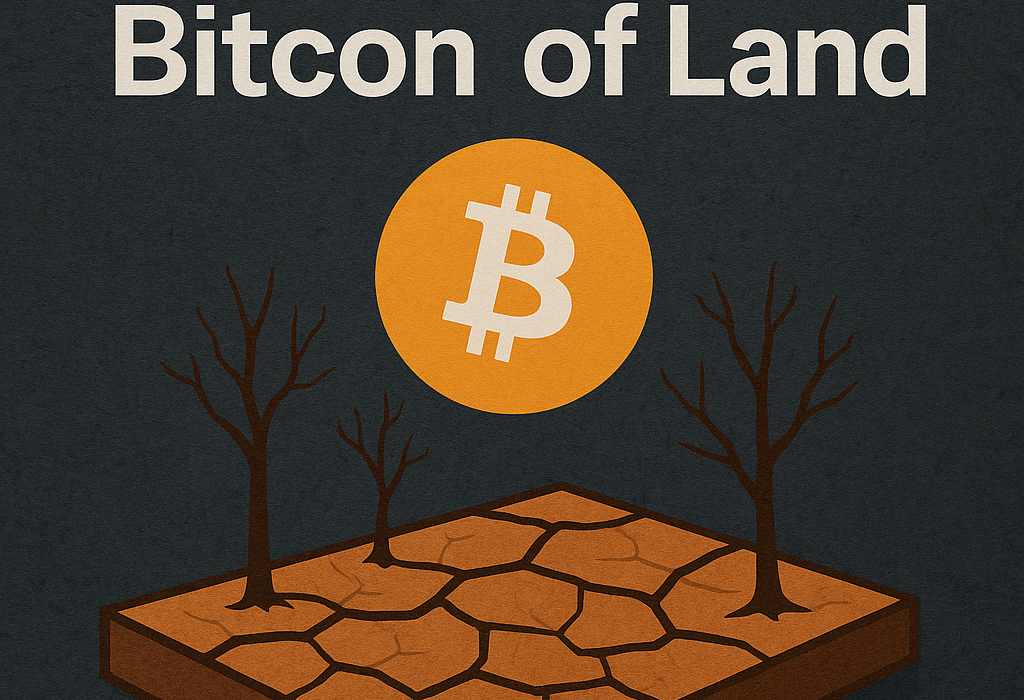
Bitcoin of Land
The current real-estate bull run has lifted everything in its path — the good, the bad, and the outright illegal. But when momentum slows, the glitter will fade, and many of today’s “hot deals” will reveal themselves for what they truly are: inaccessible, non-convertible, and non-approvable land fragments with no future.
In the frenzy of speculation, these parcels behave like the Bitcoin of land — all promise, no foundation.
For thousands of investors chasing the dream of “expressway proximity,” reality strikes only after purchase: the so-called plot is often hours from the nearest highway, disconnected from any planned development zone, and unapprovable under state planning norms.
The Mirage of Expressway Living
The emotional pull is strong.
The idea of owning a piece of land, a farmhouse to breathe clean air and reconnect with nature, is powerful. And in that emotion, due diligence becomes the first casualty.
Titles go unchecked.
Approvals are “promised” rather than presented.
Conversion documents are perpetually “in process.”
The assumption that “anything near Alwar will eventually gain legality” is a costly misconception. When the tide of speculation recedes, many investors will be left with paper plots that cannot be registered, financed, developed, or even accessed safely.
Dreams Sold on Dusty Roads
Across southern Haryana, Mewat, and the outskirts of Rajasthan, agricultural land is being rebranded into “farm zones,” “nature villas,” and “lifestyle plots.” Drone shots, rain-washed meadows, and dramatic hill views create a cinematic illusion — but beneath it lies an inconvenient truth:
-
No conversion under Section 90A (Rajasthan Land Revenue Act)
-
No layout approval from the Senior Town Planner
-
No integration with any urban local body
-
No basic infrastructure, civic grid, or road connectivity
Yet, the pitches flow:
“Future conversion guaranteed.”
“Approvals in pipeline.”
“Expressway access coming soon.”
What’s sold is aspiration.
What’s delivered is ambiguity.
Ecology Pays the Price Too
Many of these patches sit along fragile landscapes like the Aravalli foothills — natural buffers and ecological lungs for NCR. Instead of restoring nature, unregulated construction is scarring it.
Concrete walls replace native trees; borewells tap already stressed aquifers.
The same people fleeing pollution unknowingly contribute to the next wave of ecological damage.
When Hype Meets Reality
As the market stabilizes, only legally compliant, well-located, and infrastructure-ready estates will retain value. Everything else, especially inaccessible and non-convertible land, risks becoming dead stock — illiquid assets with no path to appreciation.
The new era of real-estate growth will be shaped not by hype but by compliance, transparency, and master-plan alignment.
Where the New Standard Emerges
Amid the chaos, a select few developments are proving that compliance is not a burden — it’s a competitive advantage.
Projects that are:
-
Fully converted under Section 90A
-
STP-approved layouts
-
RERA filings in motion
-
Strategically located within the development grid
-
Backed by upcoming infrastructure like the Paniyala Expressway exit and the Delhi–Mumbai Expressway corridor
These assets are redefining what credibility looks like in the land investment business.
They are bank-financeable, legally transparent, and future-ready — the opposite of speculative rural patches sold on sentiment.
The Bottom Line
When the dust settles, only one kind of land will command premium valuations:
Legally clear, infrastructure-connected, RERA-aligned, and master-plan integrated holdings.
Everything else — especially inaccessible, non-convertible, non-approvable land — will fade like yesterday’s crypto hype. Speculation has had its run. Compliance is the new currency of trust.
The future belongs to investors who choose clarity over chaos — not the Bitcoin of land, but the blue-chip assets of tomorrow’s real estate economy.