MMR Land Market Forecast: Infrastructure-Led Boom Explained by Industry Expert
Future of Land Investment in MMR: A New Era of Security, Growth & Opportunity
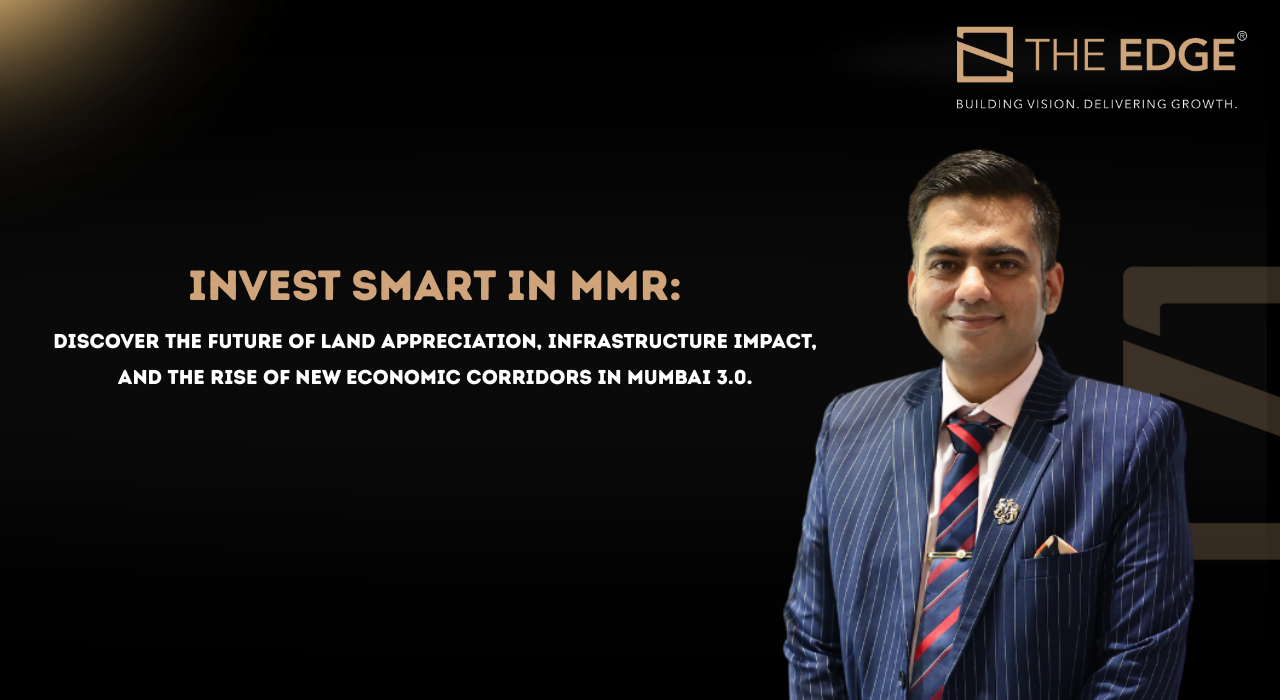
By Girish Chhalwani, Founder & CEO, THE EDGE Developments
Introduction: Why Land Is Becoming the New Gold Standard in MMR
For decades, the Mumbai Metropolitan Region (MMR) has been the heartbeat of India’s real estate market. But today, with infrastructure expansion, economic decentralisation, and the shift toward sustainable urban planning, land investment in MMR is entering its most defining era.
Investors, homebuyers, and developers are all asking the same question:
Where will the next wave of growth happen?
And the answer, backed by data and ground-level insights, is clear:
MMR’s land markets—especially the emerging corridors—are becoming the most strategic and secure investment choices of the next decade.
From Mumbai 3.0’s expansion to the Navi Mumbai Airport influence zone, the fundamentals today are stronger than ever.
1. Why Land Is Outperforming Other Asset Classes in MMR
In an age where equities fluctuate and fixed deposits fail to beat inflation, land remains the only asset that compounds both scarcity and demand.
 Zero Depreciation Asset
Land never ages, cracks, or depreciates. Structures do — land doesn’t.
High Appreciation + Low Holding Cost
Land offers appreciation driven by infrastructure, not building quality.
Full Ownership & Control
Unlike flat ownership (which is shared), land investors own the asset outright.
Better ROI in Emerging Corridors
Areas around Karjat, Pen, Panvel, Khopoli, and Dombivli see faster value jumps due to infrastructure inflow.
As an advisor and developer, I’ve seen land outperform apartments by 2x–4x in the same micro-market when held for 5–10 years.
2. The Infrastructure Revolution Driving Land Prices in MMR
MMR is witnessing one of the biggest infrastructure booms in India’s history.
Each major project shifts the real estate graph upward.
 Mumbai Trans Harbour Link (Atal Setu)
Redrawing connectivity by bringing South Mumbai closer to Navi Mumbai & beyond.
Navi Mumbai International Airport (NMIA)
Historically, airports fuel massive land appreciation — NMIA will be no different.
Virar–Alibaug Multimodal Corridor
The spine of Mumbai 3.0 — connecting industrial, residential, and logistics hubs.
Panvel–Karjat Railway Corridor
Making Karjat, Khopoli, and adjoining zones future residential capitals.
Dedicated industrial & logistics corridors
Driving employment, migration, housing, and land demand.
Every infrastructure milestone adds another layer of value to land investment — especially in the outskirts, where development is just beginning.
3. The Rise of Mumbai 3.0 and What It Means for Land Investors
Mumbai 3.0 is redefining how the city will grow over the next 25 years.
Decentralised development
No more pressure on island city — growth is moving outward.
Sustainable, low-density planning
Land-rich zones are preferred for balanced development.
New economic clusters
KSC New Town, Panvel, Karjat, Pen, Thane Extension, and Khopoli.
Massive demand for plotted projects
Buyers are now choosing plot + construction freedom over compact apartments.
In Mumbai 3.0, land availability = economic advantage.
This is why investors are positioning themselves early.
4. Which MMR Regions Will Lead the Next Land Boom?
Based on on-ground study, investor sentiment, and infrastructure mapping, these are the hotspots:
 1. Karjat (The Green Superpower of MMR)
Great for weekend homes, plotted development, and long-term appreciation.
2. Panvel (Airport Capital of MMR)
Strongest economic magnet due to NMIA + MTHL.
3. Pen & Pali Belt
Affordable land + proximity to industrial corridors.
4. Khopoli
High growth due to clean air, tourism, and upcoming MMC.
5. Dombivli–Badlapur Cluster
Residential spillover + railway upgrades.
6. Uran–KSC–JNPT Belt
Commercial and logistics powerhouse in the making.
Each region fits a different investor profile, but they share one common thread — future-proof growth.
5. Why 2025–2035 Will Be the Golden Era for Land Investors
We are entering a decade where:
Infrastructure delivery will be faster
Land banking will become institutional
Buyers want low-density living
Mumbai’s expansion will be unstoppable
Economic shifts will favour peripheral hubs
Historically, the biggest wealth creation in real estate happens before full infrastructure delivery.
The next 10 years offer that opportunity — especially for those who understand corridor-based investments.
6. My Expert Recommendation: How to Invest Safely & Smartly
Do not rush — verify title, zoning, and approvals.
Choose infrastructure-led corridors — not isolated locations.
Prefer NA plots over agricultural for long-term clarity.
Look for townships, gated developments, and plotted communities.
Hold for 7–10 years for maximum wealth creation.
Study govt. announcements, DP plans, and future zoning.
Expert-driven land investment is a science, not a gamble.
MMR right now is the perfect lab for high-return, low-risk land strategies.
Conclusion: Land Is the Future — and MMR Is the Ground Zero
In the evolving Mumbai 3.0 landscape, land is more than an asset — it is an advantage.
From infrastructure transformation to demographic shifts and economic decentralisation, every trend points to one truth:
The future of wealth creation in MMR lies in land.
For investors, families, and developers, the next decade will belong to those who understand this early and act decisively.
— Girish Chhalwani
Founder & CEO, THE EDGE Developments