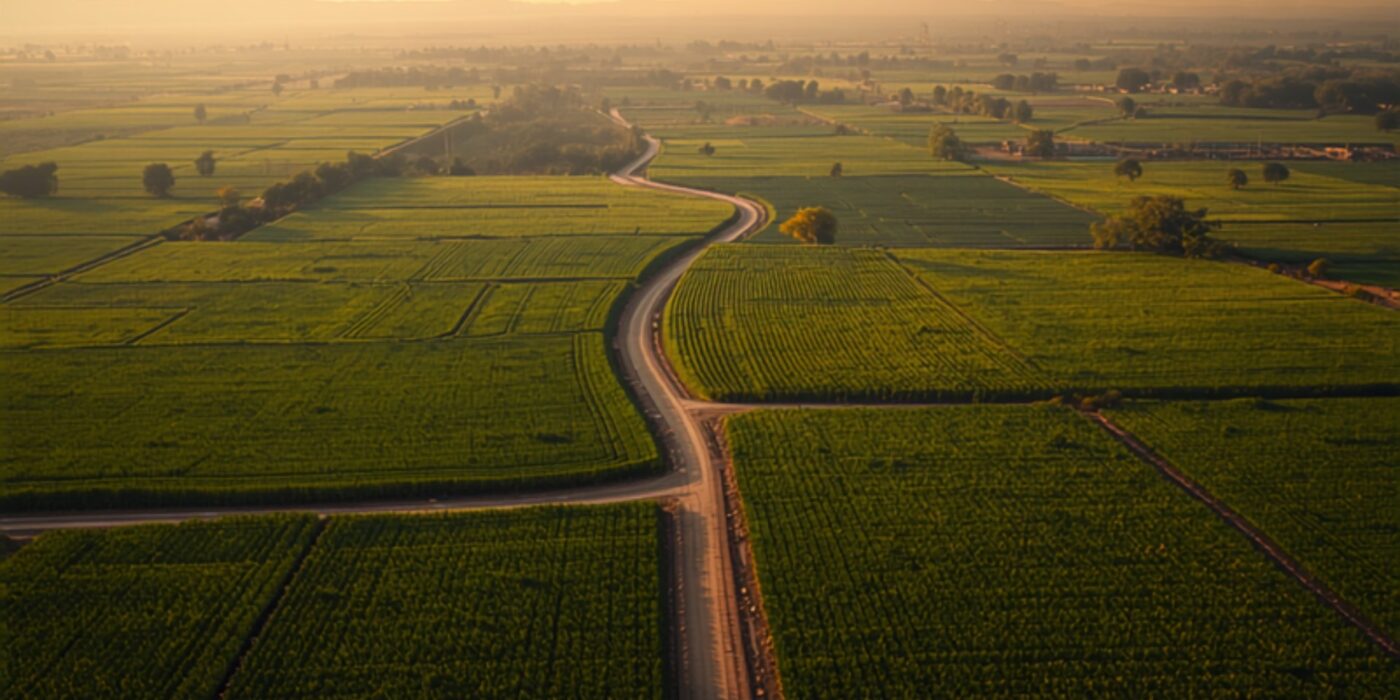
Aerial view of a winding road and boundary line dividing two adjoining agricultural land parcels
CategoriesLand Investment

Common Land Disputes in Maharashtra: Patterns, Causes & How to Avoid Them

THE EDGE — Direct Answer

The most common land disputes in Maharashtra fall into six recurring patterns: unclear inheritance among multiple legal heirs, boundary and encroachment conflicts with neighbouring parcels, undisclosed prior sales or mortgages not reflected in the current 7/12, fraudulent or expired Power of Attorney used to execute a sale, protected-tenant claims under Maharashtra’s tenancy laws on agricultural land, and government reservation of the land for a public purpose under the Development Plan. Nearly every pattern is preventable with the same core discipline: a full 30-year title search, independent verification of the seller’s identity and authority, and cross-checking the land against government project maps before signing anything.

TL;DR — KEY TAKEAWAYS

  • Inheritance disputes among multiple legal heirs are the single most common cause of unclear title in Maharashtra land transactions.
  • Boundary and encroachment disputes often surface only after purchase, when a survey reveals the plot doesn’t match what was represented.
  • Power of Attorney fraud — selling through an expired, revoked, or forged POA — remains a recurring scam pattern, especially with NRI-owned or absentee-owner land.
  • Tenancy rights and government reservations can encumber land in ways a simple 7/12 check won’t reveal — always cross-check against Development Plan maps.

Most land disputes in Maharashtra are not the result of bad luck — they follow a small number of recurring, well-understood patterns that a properly structured due diligence process catches before money changes hands. This guide covers the six patterns THE EDGE’s advisory work sees most often, illustrated with composite scenarios drawn from common transaction structures rather than any single real case.

Reading time: 11 minutes | Last updated: July 2026 | Author: Girish Chhalwani, Founder & CEO, THE EDGE Developments

Pattern 1: Unclear inheritance and succession disputes

Land held by a joint family or passed down through generations often has multiple legal heirs with a claim to it, even if only one family member’s name appears prominently on documents shown to a buyer. A common scenario: a seller presents a 7/12 extract showing their name, but the land was inherited jointly with siblings or cousins who never formally partitioned it — meaning the seller does not have unilateral authority to sell the entire parcel.

How to avoid it: Request a full succession/family tree disclosure from the seller, verify against the 8-A extract and mutation history, and confirm whether a registered partition deed exists. If the land came through inheritance, get written consent from all legal heirs, not just the named seller.

Pattern 2: Boundary and encroachment disputes

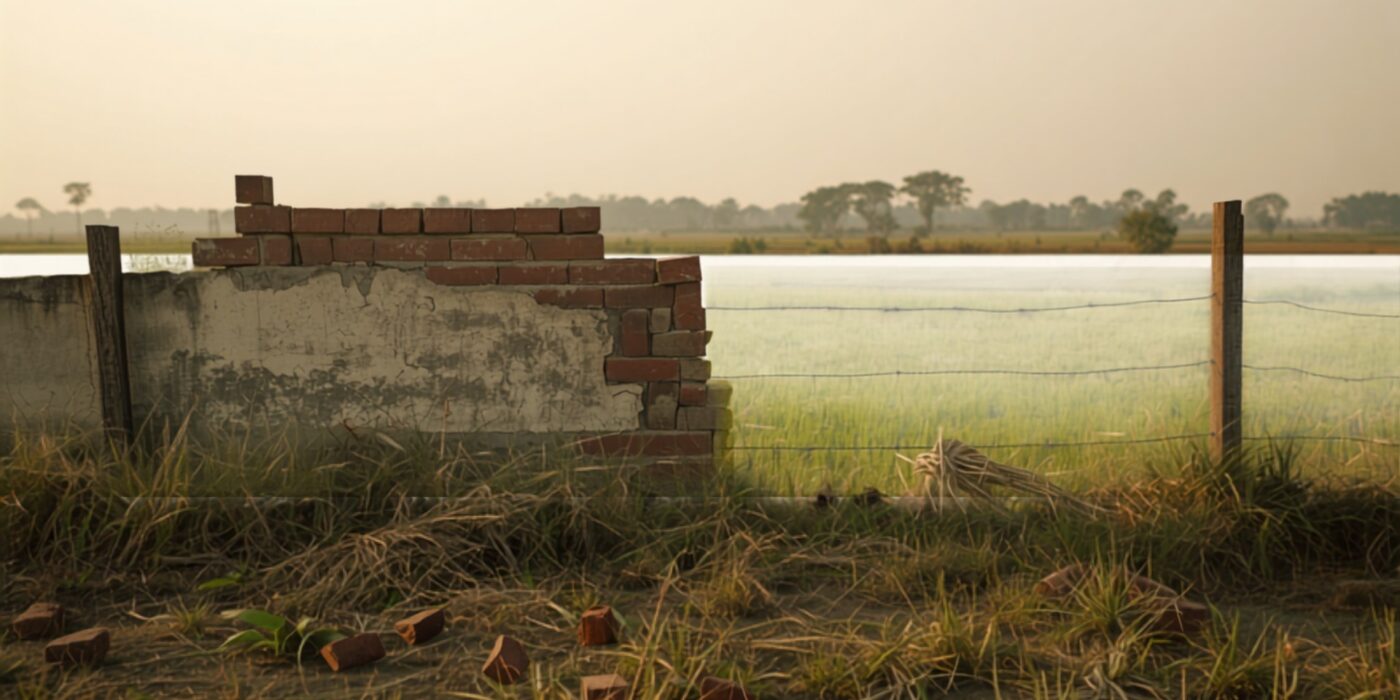
A plot’s boundaries as described on paper (survey number, area) can differ from what’s physically demarcated on the ground — sometimes due to informal historical encroachment by a neighbouring landowner, sometimes due to outdated survey records that were never updated after a road or drain was built through the area.

How to avoid it: Commission a fresh boundary survey (Mojani) by a licensed surveyor before purchase, and physically walk the boundary with the seller and, where possible, adjoining landowners present to confirm no disputed overlap.

Pattern 3: Undisclosed prior sale, mortgage, or encumbrance

A seller may fail to disclose — deliberately or through incomplete records — that the land was previously mortgaged to raise a loan, or that a portion was already sold to someone else in a transaction not yet reflected in the current 7/12 mutation entries.

How to avoid it: A 30-year title search through the Sub-Registrar’s Index II records is the single most effective check here — it reveals every registered transaction against the property, not just the current snapshot. Also check the CERSAI database for registered mortgages.

Pattern 4: Power of Attorney fraud

Land owned by an NRI, an elderly or absentee owner, or someone living far from the property is sometimes sold by a third party holding a Power of Attorney (POA) that has since been revoked, expired, or was never validly executed in the first place. Buyers who don’t independently verify the POA’s current validity can end up in a transaction the actual owner later disputes.

How to avoid it: Independently contact the actual titled owner (not just through the POA holder) to confirm the POA is current and was knowingly granted. Verify the POA is registered, and check its specific scope — a POA limited to “management” does not necessarily authorise a sale.

Pattern 5: Protected tenancy claims on agricultural land

Maharashtra’s tenancy laws grant certain long-term cultivators of agricultural land statutory protection and, in some circumstances, a right to purchase the land they’ve tilled. Land that appears to have a clean single-owner 7/12 can still carry an undisclosed tenancy claim if someone has cultivated it for an extended period under an informal arrangement.

How to avoid it: Ask directly whether any tenant has cultivated the land, check the 7/12’s “Other Rights” column for any tenancy entries, and consult a local advocate familiar with the specific taluka’s tenancy history before finalising agricultural land purchases.

Pattern 6: Government reservation under the Development Plan

A parcel can be privately owned with clean title yet still be reserved by the local planning authority for a public purpose — a road widening, a garden, a school site — under the applicable Development Plan or Town Planning Scheme. This doesn’t always block a sale, but it can severely restrict what the buyer is actually permitted to build.

How to avoid it: Obtain a Zone Certificate / Development Plan remark for the specific survey number from the Town Planning department before purchase, confirming there’s no reservation affecting the parcel.

Frequently Asked Questions

What is the most common cause of land disputes in Maharashtra?

Unclear inheritance among multiple legal heirs is the most frequently encountered pattern — a seller with an apparently clean 7/12 may not actually have sole authority to sell if the land was jointly inherited and never formally partitioned.

How can I check if land has an undisclosed tenancy claim?

Check the “Other Rights” (Itar Hakk) column of the 7/12 extract for any tenancy entries, and directly ask the seller and, where possible, neighbouring landholders whether anyone has cultivated the land under a long-term informal arrangement.

Can I trust a seller’s Power of Attorney without further verification?

No. Independently contact the titled owner to confirm the POA is current, was knowingly executed, and specifically authorises a sale — not just property management. Verify it is registered.

Does a clean 7/12 extract guarantee the land has no disputes?

No. The 7/12 shows current recorded ownership and classification but won’t reveal government reservations under the Development Plan, unregistered tenancy claims, or disputes not yet reflected in mutation entries — a full title search and Development Plan check are both necessary.

What should I do if I discover a dispute after signing an agreement but before registration?

Do not proceed to registration. Consult a property advocate immediately to assess whether the agreement can be rescinded and any advance payment recovered before the transaction becomes legally binding through registration.

Citations & Sources

  1. Maharashtra Land Revenue Code, 1966
  2. Maharashtra Tenancy and Agricultural Lands Act, 1948
  3. Registration Act, 1908

Buy Land That’s Already Cleared Every One of These Checks

THE EDGE Developments conducts full title verification, boundary surveys, and Development Plan checks on every plot before it’s offered to investors.

Contact: connect@theedgedevelopments.com | +91-9664662938 | edgere.in


Person on a video call managing Indian property remotely with land documents and a globe — NRI property management from abroad
CategoriesNRI Guides

How NRIs Can Manage Property in India from Abroad Without Getting Cheated

THE EDGE — Direct Answer

NRIs can protect Indian property from abroad by building four layers of protection: the right Power of Attorney structure, a local advocate on annual retainer, a physical inspection protocol, and a six-monthly digital record verification routine. The single most critical rule: never grant a general POA with sale powers — use limited, specific POAs that explicitly exclude sale and mortgage rights. Every six months, check your 7/12 extract on Mahabhulekh (mahabhulekh.maharashtra.gov.in) and the IGR Maharashtra registry for any unauthorized mutation or document registration. For vacant land, appoint a local caretaker, erect boundary fencing with a visible notice board, and arrange geotagged photo inspections every 2–3 months. For NRIs who want minimal management burden, a RERA-registered gated project is the best choice — the developer maintains security, boundaries, and complete documentation.

TL;DR — KEY TAKEAWAYS

  • The biggest NRI property risk is POA misuse — use limited, specific POAs, never a general one with sale powers.
  • Vacant land invites encroachment and adverse-possession claims — fence it, appoint a caretaker, inspect twice yearly.
  • Check your 7/12 and IGR records every 6 months to catch any fraudulent mutation early.
  • A RERA-registered branded project removes most remote-management risk — built-in security, records, and no encroachment.

Managing property in India from abroad is one of the most common pain points for NRIs — and the most common source of fraud against the diaspora. Unauthorized encroachment, fraudulent rental agreements, property sold without knowledge, and POA misuse cost NRI property owners crores every year. This guide gives you a practical, implementation-level framework to protect and manage your Indian property from wherever you are in the world.

Reading time: 13 minutes | Last updated: July 2026 | Author: Girish Chhalwani, Founder & CEO, THE EDGE Developments

The most common NRI property fraud pattern: a trusted local contact — often a relative or family friend — is given Power of Attorney, subsequently executes an unauthorized sale or mortgage, collects the proceeds, and disappears. This has happened thousands of times across India. The protection is not avoiding POA — it is structuring the right type of POA with the right restrictions and monitoring. — Source: Supreme Court of India Property Dispute Rulings, Lokayukta Maharashtra Reports 2025

What are the biggest risks for NRI property owners?

Four risks dominate: fraudulent sale through a misused POA, encroachment of vacant land, tenant occupancy claims, and revenue-record tampering. Each has a specific, practical fix.

Risk 1: Fraudulent Sale via Misused POA

A general Power of Attorney gives the holder sweeping powers to sell, mortgage, or transfer the property without further consent. NRIs who granted general POAs — especially to distant relatives or agents — have had properties sold without their knowledge.

Fix: Use a limited, specific POA — define exactly what the POA holder can and cannot do. Exclude sale, mortgage, and encumbrance rights unless specifically intended. Review and revoke annually.

Risk 2: Encroachment and Unauthorized Occupation

Vacant land is particularly vulnerable. In the absence of an owner’s physical presence, encroachers can occupy the land, make improvements, and later claim adverse possession (legal squatting rights after a 12-year period in India).

Fix: Never leave land vacant without a local caretaker, boundary wall/fencing, and regular physical inspections (minimum twice yearly). Engage a property management firm for vacant land.

Risk 3: Tenant Fraud and Unauthorized Sub-letting

Tenants in long-term verbal agreements can claim occupancy rights under old Rent Control Acts. Subtenants moved in by tenants can be even harder to evict. Verbal rental agreements are particularly dangerous.

Fix: All tenancy agreements must be registered. Use 11-month leave-and-license agreements with mandatory renewal — these prevent tenants from claiming long-term occupancy rights under rent control legislation.

Risk 4: Revenue Record Tampering

In rural Maharashtra, revenue records have been fraudulently altered to show different ownership. The digitisation of Mahabhulekh has reduced this significantly but not eliminated it.

Fix: Verify your name on the 7/12 extract on mahabhulekh.maharashtra.gov.in at least twice yearly. Set up annual alerts with a local advocate to flag any mutations on your survey number.

How do I build a property protection system from abroad?

Build four layers: the right POA structure, a local advocate on retainer, a physical inspection protocol, and a digital record-verification routine. Together they close every common fraud vector.

1. The Right POA Structure

Instead of one general POA, use multiple limited, specific POAs:

  • Maintenance POA: Pay bills, deal with local authorities, supervise repairs — but explicitly excludes sale, mortgage, and encumbrance
  • Tenancy POA: Specifically for managing rental — execute leave-and-license agreements, collect rent — limited to this specific property
  • Sale POA: Only if and when you decide to sell — limited to a specific sale at a specific minimum price, expiring after a defined period

POA must be registered at the Sub-Registrar office in India to be valid for property transactions.

2. The Local Advocate Retainer

Retain a local property advocate (not someone the developer recommends) for ₹12,000–25,000/year retainer. Their responsibilities:

  • Monitor 7/12 and property card for any unauthorised mutations
  • Receive and review any government notices directed at your property
  • Flag any revenue court proceedings involving your survey number
  • Annual written status report to you

3. Physical Inspection Protocol

For vacant land:

  • Appoint a local caretaker — not a relative of the adjacent landowner
  • Erect a boundary wall or chain-link fence with a visible notice board (your name, contact, and warning against trespass)
  • Arrange for a trusted person to physically visit the plot every 2–3 months and send you geotagged photographs
  • If in a branded RERA project: the developer/project management typically handles security as part of maintenance — confirm this contractually

4. Digital Record Verification Routine

Set a calendar reminder every 6 months to:

  • Check 7/12 extract on Mahabhulekh — confirm your name is still the owner
  • Check IGR Maharashtra (igrmaharashtra.gov.in) — verify no new document has been registered against your survey number
  • For properties with existing mortgages: check CERSAI for any new charges
  • Check Mahabhulekh mutation register for any new ferfar entries

How should NRIs manage rental income from abroad?

Route all rent through a dedicated NRO account, use only registered 11-month leave-and-license agreements, and appoint a registered property management company. Rental income is taxable in India with 30% TDS at source.

  • Use a registered property management company (not just an individual agent)
  • All rent must flow to your NRO account
  • Rental income is taxable in India — TDS at 30% is deducted at source for NRI landlords; file ITR to claim excess refund if applicable
  • Use only 11-month registered Leave and License agreements — avoid annual or long-term leases
  • Maintain receipts for all property expenses for future deduction claims

Why does a RERA branded project protect NRIs best?

A RERA-registered gated project physically secures your plot, maintains complete documentation, makes encroachment practically impossible, and provides a resale ecosystem — removing most of the remote-management burden.

  • Project security: The developer maintains boundary walls, security, and common area management — your plot is physically protected without you needing a separate caretaker
  • Documentation: Developer maintains complete records; you receive registered title deed, RERA-compliant agreement, and clear plot demarcation
  • No encroachment risk: In a gated project with physical development, encroachment is practically impossible
  • Resale infrastructure: When you eventually sell, the developer’s ecosystem assists buyers — faster resale than private land

Frequently Asked Questions

Can someone sell my property in India without my knowledge?

Yes — if you have granted a general Power of Attorney (POA) with sale powers. A POA holder can technically execute a sale. Protect yourself with limited, specific POAs that explicitly exclude sale authority unless that is specifically your intent. Revoke POAs annually and reissue only what is needed.

How do I check if my property in India has been tampered with or sold?

Check the 7/12 extract on mahabhulekh.maharashtra.gov.in — your name must appear as owner. Check IGR Maharashtra (igrmaharashtra.gov.in) for any new registered documents against your survey number. Do this every 6 months. Engage a local advocate to monitor on your behalf.

How do NRIs pay property tax in India from abroad?

Most municipal corporations now allow property tax payment online — Mumbai (mcgm.gov.in), Navi Mumbai (nmmc.gov.in), Gram Panchayat payments through their respective portals. Your local POA holder or property manager can pay on your behalf and email you the receipt.

What is the best way for NRIs to manage rental income from property in India?

Open a dedicated NRO account for Indian-source income. All rent must flow through this account. Appoint a registered property management company to handle tenant relations, rent collection, and maintenance. Declare rental income in your ITR and claim relevant deductions (30% standard deduction, municipal taxes, interest on loan if any).

About the Author — Girish Chhalwani

Girish Chhalwani is the Founder & CEO of THE EDGE Developments, a RERA-registered plotted-development company in the Karjat–MMR corridor. With 20+ years in Maharashtra land acquisition, NA conversion, and infrastructure-led land investment, he advises HNI and NRI investors on land strategy near Mumbai.

 ·  About THE EDGE Developments

Own a Plot That Protects Itself

THE EDGE Developments offers gated, RERA-registered plots in Karjat with on-site security, maintained boundaries, and complete documentation — built for NRIs who manage from abroad. Speak with our team for a remote consultation.

Book an NRI Consultation →

Laptop showing a Maharashtra land-records website with a 7/12 extract — check property records online Mahabhulekh
CategoriesLand Investment

How to Check Property Records Online in Maharashtra: Mahabhulekh, E-Ferfar and More

THE EDGE — Direct Answer

All land records in Maharashtra are publicly available online for free. The 7/12 extract (Satbara Utara) — the foundational ownership document — is available at mahabhulekh.maharashtra.gov.in within 60 seconds: select Division, District, Taluka, Village, enter the Survey (Gat) Number, and the extract shows the current owner, land type (look for ‘NA’ for non-agricultural status), area, and any encumbrances. For the full transaction history, search IGR Maharashtra (igrmaharashtra.gov.in) for registered sale deeds and encumbrance certificates. Check CERSAI (cersai.org.in) for any bank mortgage registered against the property. Verify a developer project on MahaRERA (maharerait.maharashtra.gov.in). Always use all five portals together — the 7/12 alone does not show transaction history or mortgage history.

TL;DR — KEY TAKEAWAYS

  • All Maharashtra land records are free online — 7/12 extract (Mahabhulekh), mutation register (e-Ferfar), registered deeds (IGR), and mortgages (CERSAI).
  • The 7/12 extract shows owner, NA status, area, and disputes in 60 seconds at mahabhulekh.maharashtra.gov.in.
  • Combine the 7/12 with a 30-year IGR encumbrance search — the 7/12 alone does not show transaction history.
  • Only accept a digitally-signed, QR-coded 7/12 as the authentic version.

You can check land records, ownership, NA status, mutation history, and registered sale deeds for any property in Maharashtra online — completely free. The government portals Mahabhulekh (7/12 extract), e-Ferfar (mutation register), and igrmaharashtra.gov.in (registered documents and encumbrance certificate) cover all the key records. This guide walks you through each portal, step by step.

Reading time: 11 minutes | Last updated: July 2026 | Author: Girish Chhalwani, Founder & CEO, THE EDGE Developments

Maharashtra was one of the first Indian states to fully digitise its revenue land records. The Mahabhulekh portal gives any citizen access to the 7/12 extract — the foundational ownership document — within 60 seconds, from anywhere in the world. There is no reason for any buyer to rely solely on the seller’s document copies when the authentic source is publicly available online. — Source: Maharashtra Revenue Department Digital India Initiative 2024

Which online portals hold Maharashtra property records?

Five government portals cover everything: Mahabhulekh (7/12 and property card), e-Ferfar (mutation), IGR Maharashtra (registered deeds and encumbrance), MahaRERA (project registration), and CERSAI (mortgages). Use them together, not in isolation.

Portal URL What You Can Find
Mahabhulekh mahabhulekh.maharashtra.gov.in 7/12 extract (Satbara Utara), 8A, property card
e-Ferfar / AnyROR mahabhulekh.maharashtra.gov.in Mutation register (Ferfar) — ownership changes
IGR Maharashtra igrmaharashtra.gov.in Registered documents (sale deeds, Index II), stamp duty calculator
MahaRERA maharerait.maharashtra.gov.in RERA registered projects, developer details, complaints
CERSAI cersai.org.in Mortgages and charges registered against the property

How do I check the 7/12 extract (Satbara) on Mahabhulekh?

Go to mahabhulekh.maharashtra.gov.in, select your Division → District → Taluka → Village, choose “7/12,” and enter the Survey (Gat) Number or owner name. The extract appears instantly. The 7/12 (Satbara Utara) shows ownership, survey number, area, land type, and cultivation status.

Step-by-Step

  1. Go to mahabhulekh.maharashtra.gov.in
  2. Select your division (Konkan, Nashik, Aurangabad, Amravati, Nagpur, Pune)
  3. Select District → Taluka → Village
  4. Select “7/12” from the document type menu
  5. Enter Survey Number (Gat Number) or Owner Name
  6. Click “Show” — the 7/12 extract appears immediately

What to read on the 7/12 extract

  • Right column (Malik malja / Owner name): Current registered owner. Should match seller’s name exactly.
  • Land type column: Should say “NA” if Non-Agricultural conversion is complete. If it shows “Jirayat” or “Bagayat,” the land is still agricultural.
  • Area (Aakar): Total area in Hector/Are/Sq.m — verify this matches what seller is claiming.
  • Encumbrance column (Itr Hakka): Shows any mortgages, government claims, or easement rights. A clean plot should show “Nil.”
  • Rights in Dispute column: If anything is entered here, there is an active dispute on the property.

How do I check mutation records (e-Ferfar)?

On the same Mahabhulekh portal, select “Mutation Register” / “Ferfar,” then enter District, Taluka, Village, and Survey Number. The mutation register shows every ownership change recorded after registration — inheritance, sale, gift, partition.

  1. Same Mahabhulekh portal → select “Mutation Register” or “Ferfar” from document menu
  2. Enter District, Taluka, Village, and Survey Number
  3. View all mutations: who sold to whom, date of mutation, type of mutation (sale, inheritance, etc.)

What to check: The most recent mutation should show the current seller as owner. If the last mutation is 10+ years old and shows a different person, the seller may not have completed the legal ownership update — a red flag.

How do I check registered documents on IGR Maharashtra?

Go to igrmaharashtra.gov.in → “Online Services” → “E-Search,” then search by property location or party name. IGR (Index II) shows every document registered at the Sub-Registrar office — sale, mortgage, and gift deeds.

  1. Go to igrmaharashtra.gov.in
  2. Click “Online Services” → “E-Search”
  3. Search by property address (District, Taluka, Village, Survey Number) or seller/buyer name
  4. View Index II entries — all registered transactions for this property
  5. Download certified copies for a nominal fee (₹25–100)

Key check: The chain of registered sale deeds should be unbroken. If you see a gap — e.g., a 2012 sale deed but no transfer registered between 2003–2012 — there may be an unregistered or disputed transfer in between. Flag this for your advocate.

How do I check for mortgages on CERSAI?

Go to cersai.org.in → “Search for Securities Interest,” and enter the property’s state, district, and identifiers to see any bank mortgage or charge registered against it. CERSAI is a central registry of security interests maintained by lenders.

  1. Go to cersai.org.in
  2. Use “Search for Securities Interest” → enter property state, district, and relevant identifiers
  3. Check if any active mortgage or charge is registered against the property

Note: Not all mortgages are registered on CERSAI (older equitable mortgages may not appear). Use this alongside the IGR encumbrance certificate search, not instead of it.

How do I check MahaRERA for developer projects?

Go to maharerait.maharashtra.gov.in → “Registered Projects,” search by project or developer name, and verify the RERA number, status, completion date, and any complaints filed. Learn more about RERA buyer protections before signing with any developer.

  1. Go to maharerait.maharashtra.gov.in
  2. “Registered Projects” → search by project name or developer name
  3. Verify: RERA number, project status (registered/lapsed), completion date, developer details
  4. “File Complaint” section shows complaints filed against the project/developer

What mistakes do buyers make checking records online?

The common errors are searching the wrong village, confusing Survey and Gat numbers, relying on the 7/12 alone, and accepting a 7/12 without a QR code. Avoid all four.

  • Wrong village name: Many villages in Maharashtra share similar names. Verify the exact taluka and village from the seller’s documents before searching.
  • Survey number vs Gat number: In some divisions, “Gat Number” is used for revenue survey. Use the correct terminology for your region.
  • Relying only on 7/12: The 7/12 shows current state — it does not show 30 years of transaction history. Always combine with IGR encumbrance search.
  • Printed 7/12 without QR code: Maharashtra has moved to digitally signed 7/12 extracts with QR codes. Ensure any physical document you receive has the QR code — it is the authenticated version.

Frequently Asked Questions

How do I check land ownership in Maharashtra online?

Visit mahabhulekh.maharashtra.gov.in → select your Division → District → Taluka → Village → enter Survey Number → view 7/12 extract. This shows the current registered owner, land area, type, and any encumbrances. It is free and available 24/7.

Is the Mahabhulekh 7/12 extract legally valid?

Yes — the digitally signed 7/12 extract from Mahabhulekh with QR code is legally valid and accepted as an official revenue document. Ensure any downloaded extract has the digital signature and QR code present. Physical copies without digital signature may not be accepted in transactions.

How do I check if property is under any mortgage or loan in Maharashtra?

Use two checks: (1) IGR Maharashtra’s E-Search for registered mortgage deeds (Index II search), and (2) CERSAI (cersai.org.in) for registered security interests. A formal 30-year encumbrance certificate from the Sub-Registrar office is the most comprehensive check and should be part of every transaction.

How do I check NA conversion status online in Maharashtra?

The 7/12 extract on Mahabhulekh shows the land classification. If it reads “NA” in the land type column, the Non-Agricultural conversion is reflected in revenue records. For full verification, obtain the original NA order copy from the District Collector’s office and cross-reference the order number.

About the Author — Girish Chhalwani

Girish Chhalwani is the Founder & CEO of THE EDGE Developments, a RERA-registered plotted-development company in the Karjat–MMR corridor. With 20+ years in Maharashtra land acquisition, NA conversion, and infrastructure-led land investment, he advises HNI and NRI investors on land strategy near Mumbai.

· About THE EDGE Developments

Buy Land with Fully Verified, Transparent Records

THE EDGE Developments provides the 7/12 extract, NA order, and MahaRERA registration for every plot up front — so your online verification matches reality. Speak with our team for current pricing and a guided site visit.

Book a Consultation →

RERA registration documents with a seal and a buyer reviewing papers with a developer — what is RERA buyer protection
CategoriesMarket Insights

What Is RERA? How It Protects Buyers and What to Check Before You Sign

THE EDGE — Direct Answer

RERA — the Real Estate Regulation and Development Act 2016 — requires every real estate developer to register their project with the state authority before any marketing or sale, hold 70% of buyer payments in a designated escrow account withdrawable only against construction progress, commit to a legally binding possession date with delay compensation at SBI MCLR + 2% per year, and use a standard sale agreement format. In Maharashtra, MahaRERA has registered over 48,000 projects and resolved over 28,000 complaints as of 2025. Before paying any amount — including a booking token — verify the project on maharerait.maharashtra.gov.in. Plotted development projects above 500 sq.m are also covered: NA plot buyers in branded projects have full RERA protection. Selling without RERA registration is a criminal offence under Section 59 of the Act.

TL;DR — KEY TAKEAWAYS

  • RERA (Real Estate Regulation and Development Act, 2016) legally forces developers to register projects, hold 70% of your money in escrow, and compensate you for delays.
  • Verify any project free at maharerait.maharashtra.gov.in before paying even a booking token.
  • Plotted projects above 500 sq.m of land must be MahaRERA-registered — so this protects NA-plot buyers, not just flat buyers.
  • RERA does not guarantee price appreciation or resolve land title disputes — do separate title due diligence.

RERA (Real Estate Regulatory Authority) is India’s real estate regulation law, enacted in 2016, that requires developers to register projects, maintain escrow accounts for your funds, and deliver what they promise — with legal penalties if they do not. In Maharashtra, MahaRERA has been one of the most active and effective state RERA implementations. Here is everything you need to know before you sign any real estate agreement.

Reading time: 12 minutes | Last updated: July 2026 | Author: Girish Chhalwani, Founder & CEO, THE EDGE Developments

Before RERA, Indian real estate buyers had no standardised protection. Developers could change layouts, delay indefinitely, divert your funds to other projects, and sell the same unit to multiple buyers. RERA (Real Estate Regulation and Development Act 2016) ended all of this — or at least gave buyers enforceable legal recourse when it happens. — Source: Ministry of Housing and Urban Affairs, RERA Impact Report 2024

What does RERA actually do to protect buyers?

RERA gives buyers seven enforceable protections — mandatory registration, fund escrow, a standard agreement, delay liability, defect liability, a complaint mechanism, and disclosure obligations. Below is what each means in practice.

1. Mandatory Project Registration

Any real estate project with more than 500 sq.m of land or 8 units must be registered with the state RERA authority before any sale or marketing. In Maharashtra, this is MahaRERA (maharerait.maharashtra.gov.in). Selling without RERA registration is a criminal offence.

What this means for you: Before paying any amount — even a booking token — search the project on MahaRERA. If it does not appear, do not pay.

2. Escrow Account for 70% of Funds

Developers must deposit 70% of all money received from buyers into a designated escrow account. Funds from this account can only be withdrawn in proportion to construction completion — verified by a chartered engineer and architect. This prevents fund diversion to other projects (the most common cause of project failure before RERA).

3. Standardised Sale Agreement

RERA mandates a standard format for the Agreement for Sale. Developers cannot use one-sided agreements with excessive clauses. Key protected terms:

  • Penalty for buyer delay cannot exceed penalty for developer delay
  • Possession date must be stated clearly in the agreement
  • Carpet area (not super built-up) must be stated

4. Possession Date Liability

If a developer misses the promised possession date, buyers are entitled to either:

  • Full refund with interest (SBI MCLR + 2%), or
  • Continue the project with interest compensation at SBI MCLR + 2% per year for the delay period

The developer cannot simply say “project delayed — wait.” They are liable to compensate.

5. Structural Defect Liability for 5 Years

After possession, if any structural defect is found within 5 years, the developer must repair it at no cost to the buyer. This applies to built residential properties and constructed villas.

6. Complaint and Grievance Mechanism

Any buyer can file a complaint with MahaRERA online — free of charge. MahaRERA adjudicating officers have the power to order refunds, interest payments, and compensation. The Appellate Tribunal can hear appeals. This formal mechanism replaced the earlier approach of filing civil suits (which took years).

7. Developer Disclosure Obligations

Every registered project on MahaRERA must display:

  • Land title status and encumbrances
  • Layout plans and building permissions
  • List of approvals obtained and pending
  • Quarterly construction progress updates
  • Financial accounts of the project

What is MahaRERA and how effective has it been?

MahaRERA is Maharashtra’s state Real Estate Regulatory Authority — and one of India’s most effective implementations. As of 2025 it has registered over 48,000 projects and disposed of the majority of complaints filed.

  • Projects registered: Over 48,000 as of 2025
  • Complaints disposed: Over 28,000 (78% disposed rate)
  • Conciliation forum: MahaRERA’s mediation mechanism has resolved thousands of disputes without formal adjudication
  • Plotted development registration: Mandatory for plots above 500 sq.m land in Maharashtra since 2017

How do I check if a project is RERA registered in Maharashtra?

Go to maharerait.maharashtra.gov.in, open “Registered Projects,” and search by project name, developer name, or RERA number. Verify status, completion date, layout plan, and any complaints — all before you pay.

  1. Go to maharerait.maharashtra.gov.in
  2. Click on “Registered Projects” or “Search Project”
  3. Enter the project name, developer name, or RERA registration number
  4. Check: Project status (active/lapsed), completion date, number of units registered, developer details
  5. Download the registered layout plan and compare with what the developer is showing you
  6. Check if the project has any complaints filed against it

What should I check on MahaRERA before I sign?

Check nine things before signing: valid registration, realistic completion date, developer track record, open complaints, matching layout plan, disclosed land title, confirmed NA status, visible escrow details, and the agent’s own RERA licence.

  1. RERA registration number is valid (not expired or lapsed)
  2. Project completion date: What date has the developer committed? Is it realistic?
  3. Developer track record: How many previous projects registered? All delivered on time?
  4. Complaints filed: Any open complaints against this project or developer?
  5. Layout plan matches: The plan on RERA matches what you are being shown on-site
  6. Land title disclosed: Is the land title status marked as “clear” or are there encumbrances listed?
  7. NA status confirmed: Is the land listed as NA converted on the MahaRERA registration?
  8. Escrow account details visible: RERA registration must include escrow account information
  9. Agent registration: The real estate agent selling to you must also be RERA-registered — check their license number

What does RERA NOT protect you from?

RERA governs developer accountability — not market outcomes. It does not guarantee appreciation, fix falling demand, or adjudicate land-title disputes, and it does not cover sub-threshold or already-completed projects.

  • Price appreciation: RERA does not guarantee your plot will increase in value
  • Market risk: If demand falls in your area, RERA cannot fix that
  • Land value disputes: RERA governs developer accountability — it does not adjudicate title disputes
  • Projects below threshold: Projects under 500 sq.m of land or fewer than 8 units do not require RERA registration
  • Already-completed projects: RERA does not apply retrospectively to delivered projects

Frequently Asked Questions

Is RERA registration mandatory for all real estate projects in India?

Yes, for all projects with more than 500 sq.m land area or 8 units, RERA registration is mandatory before any marketing or sale. In Maharashtra, even plotted development projects above this threshold require MahaRERA registration. Selling without RERA registration is a criminal offence under Section 59 of RERA.

How do I check if a project is RERA registered in Maharashtra?

Visit maharerait.maharashtra.gov.in → “Registered Projects” → search by project name or developer name. You will see the RERA number, project status, completion date, and any complaints filed.

What can I do if my developer has violated RERA in Maharashtra?

File a complaint on MahaRERA’s online portal (maharerait.maharashtra.gov.in → “File Complaint”). You can claim refund with interest, delay compensation, or seek specific performance. MahaRERA’s Conciliation Forum may resolve your issue faster than formal adjudication.

Does RERA apply to land purchases (NA plots)?

Yes — in Maharashtra, plotted development projects with more than 500 sq.m of total land area must register under MahaRERA. This is a crucial protection for buyers of NA plots in branded projects. Always verify MahaRERA registration before booking any plot in a developer’s project.

About the Author — Girish Chhalwani

Girish Chhalwani is the Founder & CEO of THE EDGE Developments, a RERA-registered plotted-development company in the Karjat–MMR corridor. With 20+ years in Maharashtra land acquisition, NA conversion, and infrastructure-led land investment, he advises HNI and NRI investors on land strategy near Mumbai.

 ·  About THE EDGE Developments

Buy Only RERA-Registered Plots in the Karjat Corridor

THE EDGE Developments offers MahaRERA-registered, NA-converted plots with escrow-backed payments and full title disclosure. Speak with our team for the RERA number, current pricing, and a guided site visit.

Book a Consultation →

Vacant land plot in India with a caution sign under an overcast sky — risks of buying land
CategoriesLand Investment

What Are the Risks of Buying Land in India? And How to Avoid Each One

TL;DR — KEY TAKEAWAYS

  • Main land risks in India: title disputes, fraudulent NA claims, hidden encumbrances, government acquisition, illiquidity, and developer non-delivery.
  • Every one is avoidable — a 30-year title search prevents the most common and most costly disputes.
  • Verify NA status at the Collector, check CERSAI/encumbrance for loans, and DP maps for acquisition risk.
  • Only buy from RERA-registered projects, and only with capital you can lock away 5+ years.

The biggest risks of buying land in India are title disputes, fraudulent NA claims, encumbrances, government acquisition, liquidity constraints, and developer non-delivery. Each is avoidable with proper due diligence. This guide covers every major risk, why it occurs, and the exact steps to protect yourself.

Reading time: 13 minutes | Last updated: July 2026 | Author: Girish Chhalwani, Founder & CEO, THE EDGE Developments

India has over 66 lakh pending property dispute cases in courts — the majority involving land. Most could have been prevented with a 30-year title search and proper document verification before purchase. The risk in Indian land investment is not in the asset class — it is in skipping due diligence. — Source: National Judicial Data Grid 2025, Ministry of Law and Justice

Risk 1: Title Disputes and Unclear Ownership

What it is: The land you purchase has competing ownership claims — from family members, previous buyers, creditors, or the government — that emerge after your purchase.

Why it happens: India’s land records have evolved across multiple legal systems (British survey, post-independence revenue codes, urban development acts). Ownership can be fragmented across family members, inherited across generations without formal partition, or disputed between government and private owners. See THE EDGE’s guide to common land dispute patterns in Maharashtra for a deeper breakdown of exactly how these disputes surface.

How to protect yourself:

  • Conduct a 30-year title search through a qualified property advocate
  • Verify the 7/12 extract and property card from official government portals
  • Check for “Rights in Dispute” entry in revenue records
  • Obtain a title insurance policy for high-value transactions
  • If HUF or inherited property — get succession certificate and consent of all family members

Risk 2: Fraudulent NA (Non-Agricultural) Claims

What it is: Sellers present agricultural land as “NA converted” with forged or expired NA orders. Buyers pay NA plot prices for agricultural land they legally cannot develop.

Why it happens: NA conversion is a government process that takes 6–24 months and significant cost. Some sellers forge conversion documents or sell land with pending NA applications as if conversion is complete.

How to protect yourself:

  • Verify the NA order number directly with the District Collector’s office — not just from the seller
  • Check the 7/12 extract which shows the type of use (agricultural/NA)
  • For NRIs: buying agricultural land without RBI approval violates FEMA — penalties apply
  • In RERA-registered projects, NA conversion is a mandatory disclosure

Risk 3: Hidden Encumbrances and Bank Loans

What it is: The seller has pledged the land as collateral for a loan. If the seller defaults, the bank can legally auction the property — even after you buy it.

Why it happens: Banks do not always update public records promptly. A seller can conceal a mortgage from a buyer by not disclosing it.

How to protect yourself:

  • Obtain an encumbrance certificate (30-year search) from the Sub-Registrar office
  • Check CERSAI (Central Registry of Securitisation Asset Reconstruction and Security Interest) for registered mortgages
  • Ensure the seller provides a No Dues Certificate from their bank before you pay any amount

Risk 4: Government Land Acquisition

What it is: Land you purchase is subsequently acquired by the government for infrastructure projects, with compensation that may be lower than your purchase price.

Why it happens: India’s Land Acquisition Act allows the government to acquire private land for public purposes. Infrastructure projects — highways, metro, airports — frequently trigger acquisitions in peri-urban areas.

How to protect yourself:

  • Check the District Development Plan (DP) and Town Planning scheme for the land’s zoning
  • Verify if any acquisition notification has been issued under Section 4 or Section 6 of the Land Acquisition Act
  • Consult MMRDA, MSRDC, or NHAI project maps for planned infrastructure corridors
  • Avoid land marked as “No Development Zone” or “Reserved for Public Use” in DP maps

Risk 5: Liquidity Risk — You Cannot Exit When You Need To

What it is: Land is inherently illiquid. Unlike a mutual fund or even an apartment, you cannot exit in days or weeks. Finding a buyer, negotiating, conducting due diligence, and completing registration takes 3–6 months minimum — often longer.

Why it matters: Investors who buy land with capital they may need in the next 1–3 years frequently find themselves in distress sales at below-market prices.

How to protect yourself:

  • Only invest capital you can lock away for minimum 5 years
  • Do not stretch your finances to buy land — maintain emergency liquidity separately
  • Buy in locations with active secondary markets (Karjat, Alibaug, Panvel) rather than remote or illiquid micro-markets

Risk 6: Developer Non-Delivery in Plotted Projects

What it is: You book a plot in a developer’s project, pay instalments, and the developer either goes bankrupt, does not complete promised amenities, or delays possession indefinitely.

Why it happens: India’s real estate sector had rampant under-regulation before RERA. Even post-RERA, some developers divert funds from escrow accounts or stall projects.

How to protect yourself:

  • Verify RERA registration before any payment — maharerait.maharashtra.gov.in
  • Check the developer’s past project track record — delivered on time, quality, compliance
  • Ensure 70% of your payments go into the designated RERA escrow account
  • Avoid developers with pending RERA complaints — check the MahaRERA complaint portal

Risk 7: CRZ and Forest Land Restrictions

What it is: Land in Coastal Regulation Zones (CRZ) or near forest boundaries has severe restrictions on construction — and purchases in CRZ areas can be legally challenged.

Why it happens: Sellers in coastal areas often do not disclose CRZ classification. Buyers construct villas only to face demolition notices from the Maharashtra Coastal Zone Management Authority.

How to protect yourself:

  • For any land within 500 metres of the high-tide line, check CRZ classification
  • Obtain a CRZ clearance certificate from the Maharashtra Coastal Zone Management Authority
  • For land near forests, check Forest Department records for any reserved forest adjacency

Risk 8: Measurement and Boundary Disputes

What it is: The plot you purchase is smaller than what was sold on paper, or boundaries overlap with adjacent plots or government land.

How to protect yourself:

  • Conduct an official survey (Mojani) before purchase — compare with revenue records
  • Verify boundary markers physically on-site
  • Check for road access — ensure approach road is on government record, not just informal arrangement

Risk Summary: Quick Reference

Risk Likelihood Key Protection
Title dispute High in rural areas 30-year title search
Fraudulent NA claim Medium Verify NA order at Collector’s office
Hidden encumbrance Medium Encumbrance certificate + CERSAI check
Government acquisition Low in residential zones Check DP map and acquisition notifications
Liquidity risk Always present Minimum 5-year investment horizon
Developer non-delivery Low with RERA projects RERA verification + track record check
CRZ/Forest restriction High near coast/forest CRZ certificate, Forest Department check
Boundary dispute Medium Official survey (Mojani)

Frequently Asked Questions

Is buying land in India risky?

Land in India carries specific legal risks that are well-documented and avoidable with proper due diligence. The asset class itself — particularly NA plots near Mumbai in infrastructure corridors — has delivered strong returns. The risk is not in the investment category but in skipping verification steps. Most land disputes in India involve preventable title and documentation errors.

What is the biggest risk when buying agricultural land in India?

Title disputes and fraudulent conversion claims are the two biggest risks in agricultural land. Many sellers present agricultural land as NA-converted without valid orders. NRIs face the additional risk of FEMA violation if they purchase agricultural land without RBI approval.

How do I verify if a land seller is legitimate?

Verify the seller’s name on the 7/12 extract matches their ID documents. Cross-check ownership history through Index II (30-year title search). If the property was inherited, verify succession certificate. Engage an independent property advocate — not the developer’s recommended lawyer.

Can the government take my land after I buy it in India?

Yes — the Land Acquisition Act allows compulsory acquisition for public purposes. However, acquisition with proper compensation is your legal right. To minimise risk: avoid land in planned infrastructure corridors, check DP maps, and avoid areas with Section 4 acquisition notifications.

About the Author — Girish Chhalwani

Girish Chhalwani is the Founder & CEO of THE EDGE Developments, a RERA-registered plotted-development company in the Karjat–MMR corridor. With 20+ years in Maharashtra land acquisition, NA conversion, and infrastructure-led land investment, he advises HNI and NRI investors on land strategy near Mumbai.

 ·  About THE EDGE Developments

Explore RERA-Registered Plots in the Karjat–MMR Corridor

THE EDGE Developments offers legally clear, NA-converted, RERA-registered plots with full title verification in Mumbai’s fastest-growing infrastructure corridor. Speak with our team for current pricing and a guided site visit.

Book a Consultation →