

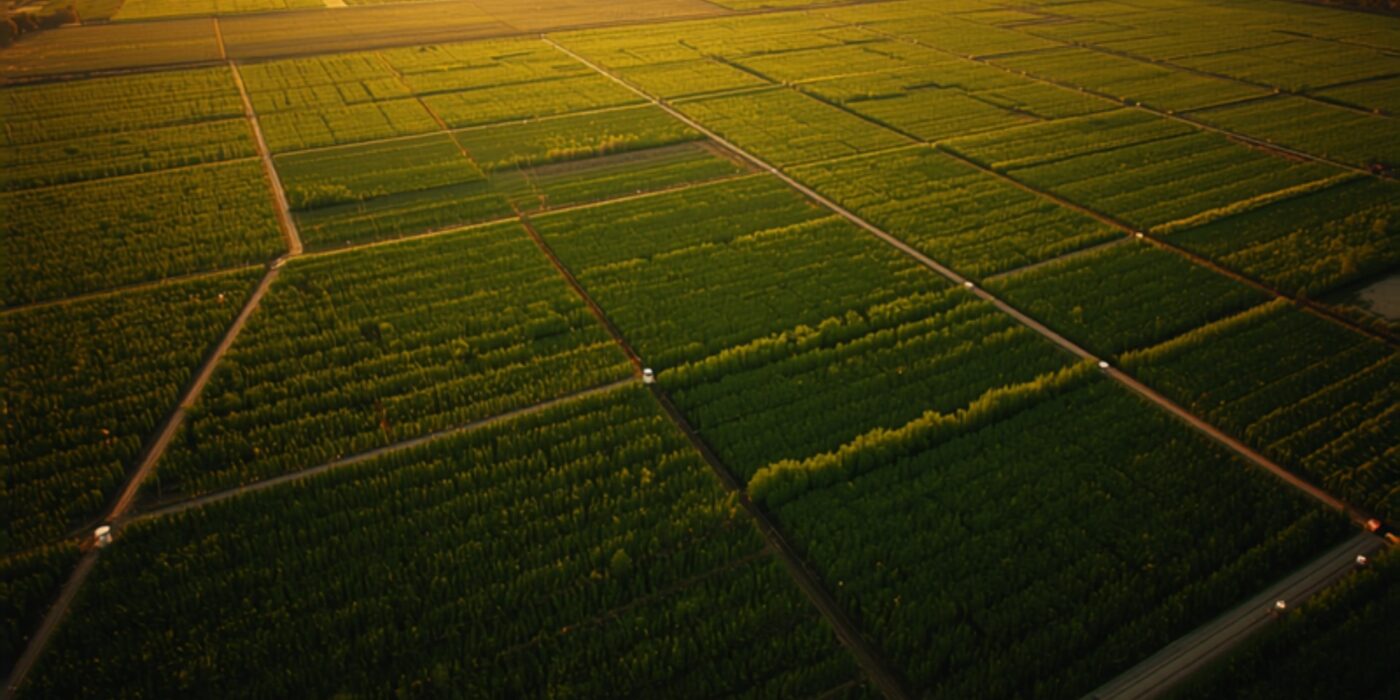
Aerial view of a road cutting through green agricultural fields divided into rectangular plots at sunset
CategoriesLand Investment

NA Conversion Process in Maharashtra: Cost, Timeline & Step-by-Step Guide 2026

THE EDGE — Direct Answer

Converting agricultural land to Non-Agricultural (NA) status in Maharashtra involves filing an application with the District Collector (or delegated Tehsildar) under Sections 42/44 of the Maharashtra Land Revenue Code 1966, along with the 7/12 extract, survey map, and proof of zoning compatibility. Processing typically takes 3–6 months for straightforward applications with no title disputes, forest, or CRZ complications — longer if any exist. The cost has two components: the NA conversion premium (a one-time government charge, typically ₹50–300 per sq.m depending on location and applicable rate), plus legal/documentation fees. Once approved, the NA order updates the 7/12 extract via a mutation entry, after which the land can be legally sold to non-farmers, developed, and bank-financed.

TL;DR — KEY TAKEAWAYS

  • NA conversion is filed under Sections 42/44 of the Maharashtra Land Revenue Code 1966 with the District Collector or delegated Tehsildar.
  • Typical timeline is 3–6 months for clean applications; complications (forest proximity, CRZ, title disputes) extend this significantly.
  • Cost = conversion premium (₹50–300/sq.m, location-dependent) + documentation/legal fees — budget accordingly before committing to a purchase price.
  • Maharashtra has a “deemed NA” provision — if the Collector doesn’t respond within the statutory period, conversion can be treated as granted, though this route carries more risk than an explicit order.

Buyers evaluating agricultural land often underestimate what NA conversion actually involves — treating it as a formality rather than a multi-month regulatory process with real cost and real risk of delay. This guide walks through the exact process, realistic timelines, and what determines whether your specific parcel converts smoothly or gets stuck.

Reading time: 11 minutes | Last updated: July 2026 | Author: Girish Chhalwani, Founder & CEO, THE EDGE Developments

Under Sections 42 and 44 of the Maharashtra Land Revenue Code, 1966, any occupant of agricultural land wishing to use it for a non-agricultural purpose must apply for and obtain permission from the Collector. Using agricultural land for non-agricultural purposes without such permission is itself a violation that can attract penalties and complicate future title transactions. — Source: Maharashtra Land Revenue Code 1966, Sections 42, 44

What is the legal basis for NA conversion in Maharashtra?

The Maharashtra Land Revenue Code, 1966 governs land classification statewide. By default, land is presumed agricultural unless formally converted. Section 42 covers the general power of the Collector to permit non-agricultural use; Section 44 sets out the application process a landholder must follow. The Collector’s power is often delegated to the Sub-Divisional Officer or Tehsildar for routine cases, which is typically the practical point of filing.

Step-by-step: how does the NA conversion process work?

  1. Obtain the current 7/12 extract for the survey number from mahabhulekh.maharashtra.gov.in, confirming current agricultural classification and ownership.
  2. Prepare supporting documents: ownership proof, measurement/survey map (from the Land Records department), no-dues certificate for land revenue, and — where applicable — a layout plan if the conversion is for a plotted development.
  3. File the application (Form as prescribed) with the Tehsildar or Sub-Divisional Officer having jurisdiction, along with the prescribed application fee.
  4. Site inspection: revenue department officials verify the land’s actual condition, boundaries, and confirm no encroachment or ongoing disputes.
  5. Zoning and compatibility check: confirmation the intended non-agricultural use (residential, commercial, industrial) aligns with the applicable Development Plan or Regional Plan zoning for that area.
  6. Payment of the NA conversion premium: a one-time charge calculated as a percentage of the land’s Ready Reckoner value, varying by district and zone.
  7. Issuance of the NA order: the Collector’s formal order granting non-agricultural status, specifying the permitted use (residential/commercial/industrial).
  8. Mutation entry: the 7/12 extract is updated to reflect the NA order, which is the final, checkable proof of conversion.

How long does NA conversion actually take?

Scenario Realistic timeline
Clean title, no encroachment, straightforward residential zoning 3–6 months
Land near forest boundary requiring Forest Department NOC 6–12 months or longer
Land within Coastal Regulation Zone (CRZ) Significantly longer; may require Coastal Zone Management Authority clearance
Disputed title or unclear succession Indefinite until the underlying title issue is resolved first

Maharashtra also has statutory provisions under which, if the Collector fails to respond within a prescribed period from a complete application, the conversion can be treated as deemed granted. In practice, buyers and developers still prefer to secure an explicit written NA order — a deemed conversion, while legally provided for, is harder to prove definitively to a future buyer, bank, or RERA authority than a physical order with a reference number.

What does NA conversion cost?

Two components make up the real cost:

  • NA conversion premium: A government charge, typically in the range of ₹50–300 per square metre, varying significantly by district, zone classification, and the applicable Ready Reckoner Rate for that survey number — areas with higher RR rates generally carry a higher conversion premium.
  • Documentation and professional fees: Survey/measurement charges, application processing fees, and — where a landowner engages an advocate or liaison consultant to manage the filing — professional fees on top of the statutory premium.

For a 10,000 sq.ft (approximately 929 sq.m) plot, total NA conversion costs commonly fall in the ₹2–10 lakh range depending on location, though this can vary meaningfully — always get a location-specific estimate before finalising a purchase price that assumes conversion is “included” or trivial.

What can delay or block NA conversion?

  • Unclear or disputed title — the Collector will not process conversion on land with an unresolved ownership dispute.
  • Proximity to forest land — requires a No Objection Certificate from the Forest Department, which can take considerably longer than the standard process.
  • Coastal Regulation Zone restrictions — land near the coastline may face construction restrictions regardless of NA status, requiring separate CRZ clearance.
  • Zoning incompatibility — if the Development Plan designates the land for agricultural or no-development use, NA conversion for residential/commercial purposes may be refused outright.
  • Pending revenue dues — unpaid land revenue must be cleared before conversion is processed.

Frequently Asked Questions

Can I convert agricultural land to NA myself, or do I need a developer?

Any landowner can file an NA conversion application directly with the Collector/Tehsildar — a developer is not legally required, though many buyers engage an advocate or liaison consultant to navigate the process, particularly for larger or more complex parcels.

How much does NA conversion cost per acre in Maharashtra?

Cost scales with area and location-specific Ready Reckoner Rate. As a rough guide, the conversion premium alone (excluding professional fees) commonly ranges from ₹2–12 lakh per acre depending on district and zone, with significant variation between high-demand corridors and slower-moving rural areas.

Is NA conversion mandatory before selling agricultural land to a non-farmer?

Selling restrictions on agricultural land to non-farmers are separate from NA conversion, but land generally cannot be legally developed for residential or commercial use without NA status, and most buyers require NA conversion (or a clear commitment to it) before purchase.

What happens if I build on land without completing NA conversion?

Construction on land without NA conversion is a violation of the Maharashtra Land Revenue Code and can result in penalties, demolition orders, and significant complications when attempting to sell, mortgage, or register the property later.

Can NA conversion be denied?

Yes — if the land falls in a no-development zone, has unresolved title disputes, sits within protected forest or CRZ boundaries without the required clearances, or has outstanding revenue dues, the Collector can refuse conversion.

Citations & Sources

  1. Maharashtra Land Revenue Code, 1966 — Sections 42, 44
  2. Maharashtra Revenue and Forest Department — NA conversion procedural guidelines
  3. Maharashtra Coastal Zone Management Authority — CRZ clearance requirements

Skip the Conversion Wait — Buy Already-NA Land

THE EDGE Developments offers plots that are already NA-converted, RERA-registered, and title-verified — no multi-month conversion process, no uncertainty.

Contact: connect@theedgedevelopments.com | +91-9664662938 | edgere.in


Aerial view at golden hour showing a row of houses bordering an open green field, illustrating built property next to vacant land
CategoriesLand Investment

Home Loan vs Plot Loan in India 2026: Which Should You Choose?

THE EDGE — Direct Answer

Choose a home loan if you’re buying a ready or under-construction house/flat; choose a plot loan if you’re buying land (typically an NA-converted plot) with no immediate construction plan. Plot loans carry a lower loan-to-value ratio (usually 70–75% vs 80–90% for home loans), shorter tenure (often capped near 15 years vs up to 30), and slightly higher interest rates (roughly 0.5–1.5% above equivalent home loan rates) — because raw land is considered lower-quality collateral than a completed structure. Critically, plot loan interest and principal do not qualify for Section 24(b) or 80C tax deductions unless the land is later linked to an approved construction loan and building is completed within 5 years — a pure land purchase alone carries no income-tax benefit.

TL;DR — KEY TAKEAWAYS

  • Plot loans fund land only — typically 70–75% LTV, shorter tenure, and no tax benefit unless later combined with a construction loan.
  • Home loans fund a built or under-construction dwelling — higher LTV (80–90%), longer tenure up to 30 years, and full Section 24(b)/80C tax benefits.
  • Only NA-converted land qualifies for a plot loan — banks will not finance agricultural land under any circumstances.
  • A composite plot + construction loan structure is the most tax-efficient way to buy land and build, since interest becomes deductible once construction is complete.

Buyers planning to purchase land often assume a “plot loan” works exactly like a home loan with a different name — it doesn’t. The two products differ meaningfully in how much a bank will lend, how long you have to repay, what it costs, and — critically — whether you get any income tax benefit at all.

Reading time: 10 minutes | Last updated: July 2026 | Author: Girish Chhalwani, Founder & CEO, THE EDGE Developments

What is the core difference between a home loan and a plot loan?

A home loan finances the purchase or construction of a residential dwelling — a completed flat, an under-construction unit, or a self-construction project. A plot loan finances only the land itself, with no obligation (or in some structures, an obligation) to build within a defined period. Banks treat these as different risk categories because a built structure is more liquid, easier to value, and faster to resell than vacant land.

Parameter Home Loan Plot Loan
What it finances Ready or under-construction residential property NA-converted land only, no construction obligation
Typical Loan-to-Value (LTV) 80–90% of property value 70–75% of land value
Typical tenure Up to 30 years Usually capped at 15 years
Interest rate (indicative) ~8.35–9.25% ~9–10.5% (typically 0.5–1.5% higher)
Tax benefit — Section 24(b) interest deduction Available (up to ₹2 lakh/year for self-occupied) Not available for pure land purchase
Tax benefit — Section 80C principal deduction Available Not available for pure land purchase
Eligible land type N/A — structure already exists or is approved NA (Non-Agricultural) converted land only; agricultural land is never financed

Why do plot loans have a lower loan-to-value ratio?

Banks lend more conservatively against land because it’s harder to value precisely, slower to liquidate in a default scenario, and carries higher regulatory risk if NA status, layout approval, or title isn’t airtight. A completed home has an established market comparable and immediate resale value; raw land — even NA-converted, RERA-registered plotted land — is priced with more variance and requires deeper due diligence before a bank will lend against it.

Why don’t plot loans get the same tax benefits as home loans?

Income tax deductions under Section 24(b) (interest) and Section 80C (principal) are tied to the concept of a “residential house property” — the deduction exists to encourage home ownership, not land banking. A loan taken purely to buy vacant land, with no construction plan, does not create a residential house and therefore does not qualify.

The exception: if you take a plot loan and subsequently take (or convert to) a construction loan to build a home on that land, and construction completes within 5 years of the end of the financial year in which the loan was taken, the interest paid during construction becomes eligible for deduction — claimable in 5 equal instalments starting from the year construction completes. This is why banks increasingly offer combined “plot + construction” loan products rather than treating them as entirely separate applications.

How does a combined plot + construction loan work?

  1. Plot loan disbursed first — typically 70–75% of land value, to complete the land purchase.
  2. Construction loan sanctioned alongside or shortly after, often by the same lender, based on an approved building plan and cost estimate.
  3. Construction tranches disbursed against progress — banks typically release funds in stages (foundation, plinth, superstructure, finishing) verified by a bank-appointed engineer, similar to how developer construction finance is disbursed.
  4. Tax benefits activate once construction completes within the 5-year window, and the combined loan is then treated for tax purposes as a home loan from that point.

What do banks check before approving a plot loan?

  • NA conversion order — agricultural land is never eligible, regardless of intended use.
  • Approved layout plan and RERA registration (for plotted development projects above the regulatory threshold).
  • Clear title — typically a 13–30 year title search by the bank’s empanelled advocate.
  • Land use zoning — confirmation the plot is zoned for residential use under the applicable Development Plan.
  • Builder/project track record — for plots within a branded plotted development, banks assess the developer’s RERA compliance history.

Frequently Asked Questions

Can I get a home loan to just buy a plot of land?

No. A home loan specifically finances a residential structure. To buy land, you need a plot loan, which has different LTV, tenure, and tax treatment than a home loan.

Do plot loans qualify for any income tax deduction?

Not on their own. A pure plot loan gets no Section 24(b) or 80C benefit. If the land is later combined with a construction loan and building completes within 5 years, interest becomes deductible from that point.

Can I get a loan to buy agricultural land?

No. Banks do not finance agricultural land purchases under plot loan schemes. The land must be NA (Non-Agricultural) converted before it is loan-eligible.

What is the maximum tenure for a plot loan in India?

Most lenders cap plot loan tenure around 15 years, shorter than the up-to-30-year tenure typically available on home loans, reflecting the higher risk profile banks assign to land-only financing.

Is it cheaper to take a plot loan now and a construction loan later, or a combined loan upfront?

A combined plot + construction loan structured upfront with the same lender is generally more efficient — it avoids a second full underwriting process and positions the loan to qualify for tax benefits once construction completes, compared to treating the two as entirely separate, unrelated loans.

Citations & Sources

  1. Income Tax Act 1961 — Sections 24(b) and 80C
  2. Reserve Bank of India — Master Directions on Housing Finance
  3. National Housing Bank — Guidelines on Land/Plot Loans

Finance Your Land Purchase the Right Way

THE EDGE Developments’ plots are NA-converted, RERA-registered, and pre-approved by leading lenders for plot financing — making bank approval straightforward.

Contact: connect@theedgedevelopments.com | +91-9664662938 | edgere.in


Upward view of a modern glass and stone office building against a clear blue sky
CategoriesLand Investment

GST on Land and Plotted Development in India 2026: Complete Guide

THE EDGE — Direct Answer

The outright sale of land in India is not subject to GST — under Schedule III of the CGST Act 2017, “sale of land” is treated as neither a supply of goods nor a supply of services, so it falls entirely outside GST’s scope. This applies to plotted development plots too, provided what you are buying is genuinely land with a completed or non-existent construction component. GST becomes relevant only when a construction or works-contract element is bundled into the transaction — such as an under-construction villa, clubhouse, or internal infrastructure billed separately from the land itself, which can attract GST at rates typically between 1% and 18% depending on the exact structure. Stamp duty and registration charges are separate, state-level taxes that apply regardless of GST and are never replaced by it.

TL;DR — KEY TAKEAWAYS

  • Pure land sale is outside GST entirely — Schedule III of the CGST Act excludes it from being treated as a supply.
  • GST applies to construction/works-contract components, not to the land value — this matters for plotted developments with amenities or built structures.
  • Ready-to-move properties with an Occupancy Certificate are GST-exempt; only under-construction components attract GST.
  • Stamp duty and registration are unaffected by GST — they are separate state-level levies charged regardless.

One of the most common questions land buyers ask is whether GST applies on top of the price they’ve negotiated. For a straightforward plot purchase, the answer is usually no — but the moment a developer bundles construction, infrastructure development, or amenities into the sale, GST can enter the picture in ways that are easy to miss until the final invoice.

Reading time: 10 minutes | Last updated: July 2026 | Author: Girish Chhalwani, Founder & CEO, THE EDGE Developments

Schedule III of the Central Goods and Services Tax Act, 2017 lists activities or transactions that are treated as neither a supply of goods nor a supply of services — and therefore fall entirely outside the GST framework. Entry 5 of this schedule covers “sale of land and, subject to clause (b) of paragraph 5 of Schedule II, sale of building.” This is why a plain land transaction in India carries no GST component, regardless of the sale value. — Source: CGST Act 2017, Schedule III

Why doesn’t GST apply to land sales?

GST is a tax on the supply of goods and services. Land itself is immovable property — it is neither “goods” (which must be movable) nor a “service” under GST’s statutory definitions. Schedule III explicitly carves land sales out of the GST net, which is why registration of a plain sale deed for land does not generate a GST liability, no matter how large the transaction.

This is distinct from stamp duty, which is a state subject charged on the instrument of transfer (the sale deed itself) and has nothing to do with GST’s central framework. Every land transaction still attracts stamp duty and registration charges — GST exemption does not reduce or replace these.

When does GST become relevant in a plotted development purchase?

GST enters the picture the moment a construction or works-contract element is part of what you’re paying for — not the land itself, but something built on or for it.

Scenario GST treatment
Pure land/plot sale, no construction obligation No GST — outside Schedule III scope entirely
Ready-to-move property with Occupancy/Completion Certificate already issued No GST — sale of completed immovable property is exempt
Under-construction villa or built unit sold before completion certificate GST applicable on the construction value — typically 5% without input tax credit for standard residential, 1% for affordable housing category
Development/infrastructure charges billed as a separate works contract (roads, common amenities under construction) GST typically applicable on that specific component at works-contract rates

Rates and treatment reflect the GST Council’s 2019 restructuring of real estate GST rates and general CGST Act principles; specific project structuring can affect actual liability — always confirm the applicable rate with your developer’s GST invoice and, where material, a chartered accountant.

How do developers typically structure plotted developments to manage GST?

Most organised plotted-development projects structure the transaction as a sale of land with infrastructure already completed at the time of sale — internal roads, boundary walls, and utility connections built and paid for by the developer before individual plots are sold. When this is the case, the buyer is purchasing completed land, not commissioning ongoing construction, and the transaction falls under the land-sale exemption.

Where a project instead sells plots with infrastructure development ongoing or promised as part of the buyer’s payment obligation, tax authorities and various Advance Ruling decisions have taken the view that the development-charge component can be treated as a taxable supply, separate from the land value itself. This is an area where structuring matters — buyers should ask specifically whether infrastructure is complete at the time of booking, and whether any portion of the price is invoiced separately as a development or construction charge.

What about GST on brokerage and legal services?

Unlike the land itself, professional services connected to a land transaction — brokerage/agency commission, legal fees for title verification and drafting, and architect or surveyor fees — are standard taxable services under GST, typically at 18%. These are charged on the service fee, not on the land value, and are a routine, expected cost separate from the land-sale exemption discussed above.

Frequently Asked Questions

Do I have to pay GST when buying a plot of land in India?

No. The outright sale of land is excluded from GST under Schedule III of the CGST Act 2017. You will still pay stamp duty and registration charges, which are separate state-level taxes unaffected by GST.

Is GST applicable on plotted development projects?

Generally no, if what you’re buying is completed land with infrastructure already built. GST can apply if a construction or development-charge component is billed separately as an ongoing works contract rather than being part of a completed land sale.

What GST rate applies to under-construction property in India?

Following the GST Council’s 2019 restructuring, under-construction residential property typically attracts 5% GST without input tax credit for standard housing, and 1% for projects qualifying under the affordable housing category. Ready-to-move property with a completion certificate is GST-exempt.

Does GST replace stamp duty on a land purchase?

No. GST and stamp duty are entirely separate levies — GST is a central tax on supply of goods/services, while stamp duty is a state tax on the transfer instrument. Land sales are GST-exempt but always attract stamp duty and registration charges.

Is GST charged on brokerage fees for a land transaction?

Yes. Brokerage, legal, and professional service fees connected to a land transaction are standard taxable services, typically at 18% GST, charged on the service fee — this is separate from and unaffected by the land sale itself being GST-exempt.

Citations & Sources

  1. Central Goods and Services Tax Act, 2017 — Schedule III
  2. GST Council — 33rd & 34th GST Council Meeting decisions on real estate GST rates (2019)
  3. Central Board of Indirect Taxes and Customs (CBIC) — GST FAQs on real estate sector

Buy Clear-Title Land With No Hidden Tax Surprises

THE EDGE Developments sells completed, RERA-registered plotted land in the Karjat–MMR corridor — infrastructure built before sale, transparent pricing with no ambiguous development charges.

Contact: connect@theedgedevelopments.com | +91-9664662938 | edgere.in
This article is general information, not tax advice. Consult a qualified chartered accountant for your specific transaction.


Aerial view of subdivided green farmland plots in Maharashtra at golden hour, marked into rectangular parcels by roads and boundary lines
CategoriesLand Investment

Stamp Duty, Registration & Ready Reckoner Rate on Land in Maharashtra 2026

Reading time: 13 minutes | Last updated: July 2026 | Author: Girish Chhalwani, Founder & CEO, THE EDGE Developments

TL;DR — Key Takeaways

  • Stamp duty on land in Maharashtra is charged on the higher of the agreement value or the Ready Reckoner (RR) Rate — never on whichever figure is lower, so under-declaring the agreement price does not reduce your duty.
  • Standard stamp duty is 6% for male buyers in Mumbai (5% base + 1% metro cess) and 5% for female buyers; in Pune, Nagpur, and Thane it is 7% for male buyers and 6% for female buyers.
  • Registration charges are 1% of the property value, capped at ₹30,000 for properties valued above ₹30 lakh.
  • The Ready Reckoner Rate is revised every April by the Maharashtra government; 2026 saw an average 3–5% increase, with localities near new infrastructure — Metro Line 3, Coastal Road, and the Navi Mumbai International Airport (NMIA) — seeing up to 8–10% increases.
  • The applicable RR rate is looked up by district, taluka, village, and survey number on the state’s e-ASR portal (part of igrmaharashtra.gov.in) — not negotiated or estimated.
  • On a typical ₹50 lakh land purchase in an MMR growth corridor, total transaction cost (stamp duty + registration + legal) typically adds up to 6.5–8.5% on top of the purchase price — a cost every land investor must model before comparing “net returns” across markets.

Executive Summary

How much will I actually pay in stamp duty and registration when I buy land in Maharashtra? You will pay stamp duty (5–7% depending on city and buyer gender) plus registration charges (1%, capped at ₹30,000) — calculated on whichever is higher: your agreement price or the government’s Ready Reckoner Rate for that specific plot. This single rule is the most misunderstood part of Maharashtra land transactions, and it is the reason two buyers paying the same negotiated price for similar plots in different villages can end up with materially different total costs.

Introduction: The Cost Line Every Land Investor Underestimates

Land investment return calculations across MMR routinely account for purchase price, holding period, and expected CAGR — but frequently understate the acquisition cost stack, which is dominated by stamp duty and registration. Because Maharashtra calculates duty on the higher of the agreement value or the government Ready Reckoner Rate, an investor cannot simply negotiate a lower price to reduce this cost.

This matters even more in infrastructure-linked growth corridors — Karjat, Khopoli, Panvel, Uran, Boisar — because RR rates in these belts have been revised upward faster than the state average precisely because of the infrastructure projects driving investor demand in the first place.

What Is the Ready Reckoner Rate?

The Ready Reckoner (RR) Rate — officially the Annual Statement of Rates (ASR) — is the Maharashtra government’s minimum benchmark valuation for land and property in every village, taluka, and district in the state. It is published and revised annually (typically every April) by the Inspector General of Registration (IGR), Maharashtra, and serves two core purposes: it sets the floor value on which stamp duty is calculated, and it is used as a reference for property tax assessments and bank loan valuations.

Maharashtra Stamp Duty Rates 2026 — City-Wise Comparison

City / Region Stamp duty (Male buyer) Stamp duty (Female buyer) Registration charge
Mumbai (Municipal Corporation limits) 6% (5% base + 1% metro cess) 5% (4% base + 1% metro cess) 1%, capped at ₹30,000
Pune, Nagpur, Thane (Municipal Corporation) 7% 6% 1%, capped at ₹30,000
Municipal Council areas (e.g., Karjat, Khopoli town limits) ~4–5% ~3–4% 1%, capped at ₹30,000
Gram Panchayat / rural areas ~3–4% ~2–3% 1%, capped at ₹30,000

Rates are indicative and vary by local body classification — always confirm the exact applicable rate for the specific taluka before transacting. Sources: ClearTax, Godrej Capital, Bajaj Finserv Markets, 1acre.in stamp duty calculators (2026).

How Stamp Duty Is Actually Calculated: A Worked Example

Scenario Agreement price Applicable RR rate value Duty calculated on Stamp duty (at 6%)
A: Agreement price above RR rate ₹60,00,000 ₹50,00,000 ₹60,00,000 (agreement price, since it’s higher) ₹3,60,000
B: Agreement price below RR rate ₹40,00,000 ₹55,00,000 ₹55,00,000 (RR rate, since it’s higher) ₹3,30,000

Scenario B is the case that catches buyers off guard: even though the buyer negotiated and paid ₹40 lakh, they must pay stamp duty as though they paid ₹55 lakh, because that is the government’s minimum benchmark value for that plot.

Step-by-Step: How to Look Up the Ready Reckoner Rate for Any Plot

  1. Visit the Maharashtra IGR portal (igrmaharashtra.gov.in) and navigate to the e-ASR (Annual Statement of Rates) section.
  2. Select the district, taluka, and village where the plot is located.
  3. Select the property type — open land (NA or agricultural), residential, commercial, or industrial — since RR rates differ by land-use category.
  4. Enter the survey number / CTS number if prompted, or select the applicable zone within the village.
  5. Note the rate per square metre (for land) — this is the government’s minimum benchmark value for that specific parcel.
  6. Multiply by the plot area to arrive at the RR-based valuation, then compare against your negotiated agreement price — stamp duty applies to whichever figure is higher.

2026 Ready Reckoner Revision: What Changed

The Maharashtra government’s 2026 RR revision applied an average increase of 3–5% across most localities statewide. However, revisions were not uniform — villages and zones near completed or advancing infrastructure projects (Mumbai Metro Line 3, the Coastal Road, and the Navi Mumbai International Airport corridor) saw disproportionately higher revisions of up to 8–10%.

Total Transaction Cost Comparison Table

Cost component Typical rate Notes
Stamp duty 5–7% (varies by city/local body and buyer gender) Calculated on higher of agreement price or RR rate
Registration charge 1%, capped at ₹30,000 Applies above ₹30 lakh property value
Legal/documentation (title search, drafting) 0.5–1% Varies by advocate and complexity of title chain
Brokerage (if applicable) 1–2% Negotiable; not applicable on direct developer purchases
Typical total 6.5–8.5% (excluding brokerage) Must be added to purchase price when calculating net entry cost and CAGR

Documents Required at the Time of Registration

Document Purpose
7/12 extract (Satbara Utara) Confirms current ownership, area, and land classification
Sale agreement / sale deed draft The instrument being stamped and registered
PAN cards of buyer and seller Mandatory for property transactions above specified thresholds
Aadhaar cards of buyer and seller Identity verification at the sub-registrar’s office
NA order (if applicable) Confirms non-agricultural conversion status
Encumbrance certificate Confirms no pending mortgages or legal claims on the property
Proof of stamp duty payment (e-challan/GRAS receipt) Required before the sub-registrar will proceed with registration

Expert Opinion

“Buyers spend weeks negotiating the last two or three percent off a plot’s price, and then get blindsided by a stamp duty bill calculated on a Ready Reckoner Rate they never checked. The RR rate lookup takes five minutes and should happen before you make an offer, not after you sign the agreement.” — Girish Chhalwani, Founder & CEO, THE EDGE Developments

Risk Factors and Common Mistakes

  • Assuming stamp duty is calculated only on the agreement price — it is calculated on whichever is higher between agreement price and RR rate.
  • Using a generic online stamp duty calculator without checking the specific village’s RR rate — generic calculators frequently default to city-wide averages, not the exact survey number’s rate.
  • Not accounting for the April revision cycle — if you are close to finalising a purchase in March, confirm whether the current or upcoming RR rate will apply at your actual registration date.
  • Overlooking the female co-ownership discount — registering a property solely or jointly in a woman’s name can reduce the stamp duty rate by 1% in most Maharashtra cities.
  • Ignoring local body classification — the same village can straddle Municipal Council and Gram Panchayat jurisdiction with different applicable rates.

Actionable Insights

  1. Always check the e-ASR portal for the specific survey number before signing an agreement — never rely on a broker’s verbal estimate of the RR rate.
  2. Model total transaction cost at 6.5–8.5% of the higher of agreement price or RR value when calculating expected net returns.
  3. Consider registering jointly with a female family member where legally and practically appropriate, to access the 1% stamp duty discount.
  4. Time registration around the April RR revision cycle if a purchase is near finalisation and the current year’s rate is more favourable.
  5. Re-run the RR rate check for every parcel separately — even adjoining plots can carry different RR valuations.

Conclusion

Stamp duty and registration charges are not a rounding error in a Maharashtra land transaction — they are a 6.5–8.5% cost line that can shift meaningfully higher if the applicable Ready Reckoner Rate is not checked before the agreement is signed. For land investors and developers operating across MMR’s fast-moving growth corridors, a five-minute e-ASR lookup, done before every offer, is the single most cost-effective piece of due diligence available.

Frequently Asked Questions

What is the Ready Reckoner Rate in Maharashtra?

It is the state government’s minimum benchmark valuation for land and property in every village and taluka, published annually by the Inspector General of Registration and used to calculate stamp duty.

Is stamp duty calculated on the agreement price or the Ready Reckoner Rate?

On whichever is higher — if the RR rate for a plot exceeds the agreement price, stamp duty is charged on the RR rate, not the negotiated price.

What is the current stamp duty rate in Mumbai?

6% for male buyers (5% base plus 1% metro cess) and 5% for female buyers.

What are the registration charges in Maharashtra?

1% of the property value, capped at a maximum of ₹30,000 for properties valued above ₹30 lakh.

Does GST apply on top of stamp duty for a land purchase?

No. GST and stamp duty are entirely separate levies — pure land sales are exempt from GST under Schedule III of the CGST Act, while stamp duty always applies regardless. See THE EDGE’s complete guide to GST on land for the full breakdown.

How often is the Ready Reckoner Rate revised?

Typically every year in April, by the Maharashtra government.

Citations & Sources

  1. ClearTax — “Stamp Duty and Registration Charges in Maharashtra 2026”
  2. Godrej Capital — “Stamp Duty and Registration Charges in Maharashtra 2026”
  3. Bajaj Finserv Markets — “What is the Ready Reckoner Rate 2026 & How Does It Affect Property Value?”
  4. 1acre.in — Maharashtra Stamp Duty Calculator 2026
  5. Maharashtra IGR (Inspector General of Registration) — e-ASR portal, igrmaharashtra.gov.in

Model Your Total Acquisition Cost Correctly

THE EDGE Developments helps investors verify RR rates and calculate true transaction costs before committing to any land purchase in the Karjat–MMR corridor.

Contact: connect@theedgedevelopments.com | +91-9664662938 | edgere.in


Laptop showing a Maharashtra land-records website with a 7/12 extract — check property records online Mahabhulekh
CategoriesLand Investment

How to Check Property Records Online in Maharashtra: Mahabhulekh, E-Ferfar and More

THE EDGE — Direct Answer

All land records in Maharashtra are publicly available online for free. The 7/12 extract (Satbara Utara) — the foundational ownership document — is available at mahabhulekh.maharashtra.gov.in within 60 seconds: select Division, District, Taluka, Village, enter the Survey (Gat) Number, and the extract shows the current owner, land type (look for ‘NA’ for non-agricultural status), area, and any encumbrances. For the full transaction history, search IGR Maharashtra (igrmaharashtra.gov.in) for registered sale deeds and encumbrance certificates. Check CERSAI (cersai.org.in) for any bank mortgage registered against the property. Verify a developer project on MahaRERA (maharerait.maharashtra.gov.in). Always use all five portals together — the 7/12 alone does not show transaction history or mortgage history.

TL;DR — KEY TAKEAWAYS

  • All Maharashtra land records are free online — 7/12 extract (Mahabhulekh), mutation register (e-Ferfar), registered deeds (IGR), and mortgages (CERSAI).
  • The 7/12 extract shows owner, NA status, area, and disputes in 60 seconds at mahabhulekh.maharashtra.gov.in.
  • Combine the 7/12 with a 30-year IGR encumbrance search — the 7/12 alone does not show transaction history.
  • Only accept a digitally-signed, QR-coded 7/12 as the authentic version.

You can check land records, ownership, NA status, mutation history, and registered sale deeds for any property in Maharashtra online — completely free. The government portals Mahabhulekh (7/12 extract), e-Ferfar (mutation register), and igrmaharashtra.gov.in (registered documents and encumbrance certificate) cover all the key records. This guide walks you through each portal, step by step.

Reading time: 11 minutes | Last updated: July 2026 | Author: Girish Chhalwani, Founder & CEO, THE EDGE Developments

Maharashtra was one of the first Indian states to fully digitise its revenue land records. The Mahabhulekh portal gives any citizen access to the 7/12 extract — the foundational ownership document — within 60 seconds, from anywhere in the world. There is no reason for any buyer to rely solely on the seller’s document copies when the authentic source is publicly available online. — Source: Maharashtra Revenue Department Digital India Initiative 2024

Which online portals hold Maharashtra property records?

Five government portals cover everything: Mahabhulekh (7/12 and property card), e-Ferfar (mutation), IGR Maharashtra (registered deeds and encumbrance), MahaRERA (project registration), and CERSAI (mortgages). Use them together, not in isolation.

Portal URL What You Can Find
Mahabhulekh mahabhulekh.maharashtra.gov.in 7/12 extract (Satbara Utara), 8A, property card
e-Ferfar / AnyROR mahabhulekh.maharashtra.gov.in Mutation register (Ferfar) — ownership changes
IGR Maharashtra igrmaharashtra.gov.in Registered documents (sale deeds, Index II), stamp duty calculator
MahaRERA maharerait.maharashtra.gov.in RERA registered projects, developer details, complaints
CERSAI cersai.org.in Mortgages and charges registered against the property

How do I check the 7/12 extract (Satbara) on Mahabhulekh?

Go to mahabhulekh.maharashtra.gov.in, select your Division → District → Taluka → Village, choose “7/12,” and enter the Survey (Gat) Number or owner name. The extract appears instantly. The 7/12 (Satbara Utara) shows ownership, survey number, area, land type, and cultivation status.

Step-by-Step

  1. Go to mahabhulekh.maharashtra.gov.in
  2. Select your division (Konkan, Nashik, Aurangabad, Amravati, Nagpur, Pune)
  3. Select District → Taluka → Village
  4. Select “7/12” from the document type menu
  5. Enter Survey Number (Gat Number) or Owner Name
  6. Click “Show” — the 7/12 extract appears immediately

What to read on the 7/12 extract

  • Right column (Malik malja / Owner name): Current registered owner. Should match seller’s name exactly.
  • Land type column: Should say “NA” if Non-Agricultural conversion is complete. If it shows “Jirayat” or “Bagayat,” the land is still agricultural.
  • Area (Aakar): Total area in Hector/Are/Sq.m — verify this matches what seller is claiming.
  • Encumbrance column (Itr Hakka): Shows any mortgages, government claims, or easement rights. A clean plot should show “Nil.”
  • Rights in Dispute column: If anything is entered here, there is an active dispute on the property.

How do I check mutation records (e-Ferfar)?

On the same Mahabhulekh portal, select “Mutation Register” / “Ferfar,” then enter District, Taluka, Village, and Survey Number. The mutation register shows every ownership change recorded after registration — inheritance, sale, gift, partition.

  1. Same Mahabhulekh portal → select “Mutation Register” or “Ferfar” from document menu
  2. Enter District, Taluka, Village, and Survey Number
  3. View all mutations: who sold to whom, date of mutation, type of mutation (sale, inheritance, etc.)

What to check: The most recent mutation should show the current seller as owner. If the last mutation is 10+ years old and shows a different person, the seller may not have completed the legal ownership update — a red flag.

How do I check registered documents on IGR Maharashtra?

Go to igrmaharashtra.gov.in → “Online Services” → “E-Search,” then search by property location or party name. IGR (Index II) shows every document registered at the Sub-Registrar office — sale, mortgage, and gift deeds.

  1. Go to igrmaharashtra.gov.in
  2. Click “Online Services” → “E-Search”
  3. Search by property address (District, Taluka, Village, Survey Number) or seller/buyer name
  4. View Index II entries — all registered transactions for this property
  5. Download certified copies for a nominal fee (₹25–100)

Key check: The chain of registered sale deeds should be unbroken. If you see a gap — e.g., a 2012 sale deed but no transfer registered between 2003–2012 — there may be an unregistered or disputed transfer in between. Flag this for your advocate.

How do I check for mortgages on CERSAI?

Go to cersai.org.in → “Search for Securities Interest,” and enter the property’s state, district, and identifiers to see any bank mortgage or charge registered against it. CERSAI is a central registry of security interests maintained by lenders.

  1. Go to cersai.org.in
  2. Use “Search for Securities Interest” → enter property state, district, and relevant identifiers
  3. Check if any active mortgage or charge is registered against the property

Note: Not all mortgages are registered on CERSAI (older equitable mortgages may not appear). Use this alongside the IGR encumbrance certificate search, not instead of it.

How do I check MahaRERA for developer projects?

Go to maharerait.maharashtra.gov.in → “Registered Projects,” search by project or developer name, and verify the RERA number, status, completion date, and any complaints filed. Learn more about RERA buyer protections before signing with any developer.

  1. Go to maharerait.maharashtra.gov.in
  2. “Registered Projects” → search by project name or developer name
  3. Verify: RERA number, project status (registered/lapsed), completion date, developer details
  4. “File Complaint” section shows complaints filed against the project/developer

What mistakes do buyers make checking records online?

The common errors are searching the wrong village, confusing Survey and Gat numbers, relying on the 7/12 alone, and accepting a 7/12 without a QR code. Avoid all four.

  • Wrong village name: Many villages in Maharashtra share similar names. Verify the exact taluka and village from the seller’s documents before searching.
  • Survey number vs Gat number: In some divisions, “Gat Number” is used for revenue survey. Use the correct terminology for your region.
  • Relying only on 7/12: The 7/12 shows current state — it does not show 30 years of transaction history. Always combine with IGR encumbrance search.
  • Printed 7/12 without QR code: Maharashtra has moved to digitally signed 7/12 extracts with QR codes. Ensure any physical document you receive has the QR code — it is the authenticated version.

Frequently Asked Questions

How do I check land ownership in Maharashtra online?

Visit mahabhulekh.maharashtra.gov.in → select your Division → District → Taluka → Village → enter Survey Number → view 7/12 extract. This shows the current registered owner, land area, type, and any encumbrances. It is free and available 24/7.

Is the Mahabhulekh 7/12 extract legally valid?

Yes — the digitally signed 7/12 extract from Mahabhulekh with QR code is legally valid and accepted as an official revenue document. Ensure any downloaded extract has the digital signature and QR code present. Physical copies without digital signature may not be accepted in transactions.

How do I check if property is under any mortgage or loan in Maharashtra?

Use two checks: (1) IGR Maharashtra’s E-Search for registered mortgage deeds (Index II search), and (2) CERSAI (cersai.org.in) for registered security interests. A formal 30-year encumbrance certificate from the Sub-Registrar office is the most comprehensive check and should be part of every transaction.

How do I check NA conversion status online in Maharashtra?

The 7/12 extract on Mahabhulekh shows the land classification. If it reads “NA” in the land type column, the Non-Agricultural conversion is reflected in revenue records. For full verification, obtain the original NA order copy from the District Collector’s office and cross-reference the order number.

About the Author — Girish Chhalwani

Girish Chhalwani is the Founder & CEO of THE EDGE Developments, a RERA-registered plotted-development company in the Karjat–MMR corridor. With 20+ years in Maharashtra land acquisition, NA conversion, and infrastructure-led land investment, he advises HNI and NRI investors on land strategy near Mumbai.

· About THE EDGE Developments

Buy Land with Fully Verified, Transparent Records

THE EDGE Developments provides the 7/12 extract, NA order, and MahaRERA registration for every plot up front — so your online verification matches reality. Speak with our team for current pricing and a guided site visit.

Book a Consultation →

Bank building and a plot-loan meeting between banker and buyer — how to get a plot loan in India 2026
CategoriesLand Investment

How to Get a Plot Loan in India 2026: Banks, Eligibility and Hidden Rules

THE EDGE — Direct Answer

A plot loan finances 60–70% of a bank’s assessed value of an NA (Non-Agricultural) plot at 8.5–11.5% interest — higher than a standard home loan’s rate. Banks will not finance agricultural land; only NA-converted plots are eligible. The critical trap: banks use their own valuers who typically price the plot 20–30% below market value, so the actual loan disbursed will be less than 65% of what you paid — budget for this shortfall with your own funds. Most banks also require construction to begin within 2–3 years of disbursement or they can recall the loan. RERA-registered plots get faster approval and better LTV. Major lenders: SBI (8.5–9.8%), HDFC (8.7–10.2%), ICICI (8.9–10.5%), Bajaj Housing Finance (8.6–10.5%). Maximum tenure is 15 years. No Section 24 interest deduction applies during the pure land-holding phase.

TL;DR — KEY TAKEAWAYS

  • A plot loan finances 60–70% of an NA plot’s bank-valued price at 8.5–11.5% interest — higher than a home loan.
  • Agricultural land is not eligible — only NA plots — and most banks require construction to start within 2–3 years.
  • LTV is on the bank’s valuation (often 20–30% below market), so budget a larger down payment.
  • RERA-registered plots and a 700+ CIBIL score get faster approval and better terms.

A plot loan (also called a land loan or LAP — Loan Against Property) lets you borrow up to 60–70% of the market value of an NA plot to finance your purchase. Interest rates in 2026 range from 8.5% to 11.5% depending on bank and borrower profile — higher than home loans. This guide covers eligibility, which banks offer the best terms, and the hidden rules that catch buyers off guard.

Reading time: 11 minutes | Last updated: July 2026 | Author: Girish Chhalwani, Founder & CEO, THE EDGE Developments

Plot loans are significantly less standardised than home loans in India. Terms, LTV ratios, and permitted uses vary widely across lenders. A borrower who does not understand the conditions — particularly the construction clause and the agricultural land exclusion — can find their loan recalled or their interest rate revised upward post-disbursement. — Source: RBI Banking Supervision Annual Report 2025

How is a plot loan different from a home loan?

A plot loan finances only NA land at a higher rate (8.5–11.5%), a lower LTV (60–70%), and a shorter tenure (15 years) — and it usually carries a construction obligation and no interest tax deduction while you just hold the land.

Parameter Plot Loan Home Loan
Purpose Purchase of land (NA plot) Purchase/construction of residential property
Interest rate (2026) 8.5–11.5% 8.0–9.5%
LTV (Loan-to-Value) 60–70% of plot value 75–90% of property value
Tenure Typically up to 15 years Up to 30 years
Tax benefit (Section 80C) No (only principal after construction starts) Yes (both principal and interest)
Agricultural land eligible? No — NA plots only N/A
Construction obligation Often yes — must start construction within 2–3 years N/A

Which banks offer plot loans in India in 2026?

Major lenders include SBI, HDFC, ICICI, Axis, PNB Housing, and Bajaj Housing Finance — rates from 8.5% and LTVs of 60–70%, with each imposing location and construction conditions.

Bank / NBFC Interest Rate (2026) Max LTV Max Tenure Notable Condition
SBI (State Bank of India) 8.5–9.8% 70% 15 years Plot must be within municipal limits or approved layout
HDFC Ltd 8.7–10.2% 65% 15 years Approved project preferred; RERA verified
ICICI Bank 8.9–10.5% 65% 15 years Construction must start within 2 years
Axis Bank 9.0–11.0% 60% 15 years Location must be in bank’s approved list
PNB Housing Finance 9.2–11.5% 65% 15 years Charges higher rate for non-RERA projects
Bajaj Housing Finance 8.6–10.5% 70% 15 years Flexible on RERA projects; CIBIL 700+ required

Interest rates are indicative as of July 2026 and subject to change.

What are the hidden rules of plot loans?

Eight conditions trip up buyers: agricultural land is ineligible, construction must start within 2–3 years, LTV is on bank valuation (not price), the plot must be in an approved location, there’s no interest deduction while holding, RERA improves approval, a co-applicant raises eligibility, and NRI loans are restricted.

Rule 1: Agricultural Land Is Ineligible

No Indian bank will finance the purchase of agricultural land with a plot loan. The plot must have valid NA (Non-Agricultural) conversion. If you are buying agricultural land intending to convert, you must fund the purchase from your own sources — bank financing is available only after NA conversion is complete.

Rule 2: Construction Must Start Within 2–3 Years

Most banks require construction to begin within 2–3 years of plot loan disbursement. If construction has not started by then, the bank can: (a) recall the loan, or (b) revise the interest rate to a higher “LAP” rate. Always read this clause carefully.

Rule 3: LTV Is on Bank’s Valuation, Not Market Price

Banks use their own empanelled valuers who often value plots 20–30% below actual market price. If you pay ₹50L for a plot the bank values at ₹35L, you will get a loan of only 65% of ₹35L = ₹22.75L — not 65% of your actual price. Budget for this gap with your own funds.

Rule 4: The Plot Must Be in an Approved Location

Banks maintain internal lists of approved locations. A plot in a village outside city limits, or in an area the bank has not approved for financing, will be rejected regardless of legal quality. Rural plots in remote locations often do not qualify.

Rule 5: No Income Tax Deduction on Interest During Holding

Unlike a home loan (where Section 24 allows ₹2L/year deduction on interest), plot loan interest is not deductible during the land-holding phase. Once construction completes and you convert to a home loan, deductions apply. Pure land holding gets no Section 24 benefit.

Rule 6: RERA Registration Improves Your Approval Chances

Banks strongly prefer RERA-registered plotted projects. For RERA projects, banks often have pre-approved tie-ups with developers, which means faster processing, better LTV, and sometimes slightly lower rates. Non-RERA private plots face higher scrutiny and lower LTV.

Rule 7: Joint Loan Can Increase Eligibility

Adding a co-applicant (spouse, parent) with income significantly increases eligible loan amount. Banks consider combined income for EMI capacity calculations. A couple earning ₹80L combined can qualify for significantly higher plot loan than a single earner at ₹40L.

Rule 8: NRI Plot Loans Are Available but Restricted

NRIs can get plot loans from some Indian banks (SBI NRI Home Loan, ICICI NRI services) for NA plots. However: repayment must come from NRE/NRO account, agricultural land is ineligible, and power of attorney is usually required. Check with your specific bank.

How do you apply for a plot loan, step by step?

Pre-qualify on CIBIL and EMI capacity, compare at least three lenders, submit your documents, get the plot appraised, receive the sanction letter, pass legal verification, and reach disbursement.

  1. Pre-qualification: Check your CIBIL score (700+ preferred). Calculate your EMI capacity (banks typically allow EMI of 40–50% of net monthly income).
  2. Choose lender: Compare at least 3 banks/NBFCs on rate, LTV, processing fees, and construction clause terms.
  3. Document collection: PAN, Aadhaar, 3 months payslip (or 3 years ITR for self-employed), Form 16, bank statements, property documents (7/12, NA order, RERA certificate, sale agreement)
  4. Property appraisal: Bank sends empanelled valuer to assess plot value
  5. Sanction letter: Bank issues sanction specifying approved amount, rate, and conditions
  6. Legal verification: Bank’s advocate verifies title documents
  7. Disbursement: Amount credited to seller’s account; mortgage registered

Frequently Asked Questions

Can I get a bank loan to buy land in Maharashtra?

Yes — most nationalised and private banks offer plot loans for NA plots in Maharashtra. The plot must have valid NA conversion, clear title, and ideally be in a RERA-registered project or an approved location. LTV is typically 60–70% of bank valuation.

What is the maximum tenure for a plot loan in India?

Maximum tenure for a plot loan is typically 15 years at most banks. This is significantly shorter than home loans (30 years), resulting in higher EMIs per lakh borrowed. Plan accordingly when calculating affordability.

Can I get a home loan for a plot purchase in India?

A standard home loan cannot be used for bare land purchase. However, a composite loan — covering both plot purchase and construction — can be structured as a home loan with home loan rates and tax benefits. This requires simultaneous or immediate construction commitment.

Is there any tax benefit on plot loan interest?

No income tax deduction is available on plot loan interest under Section 24 during the land-holding phase. Once you start construction and convert to a home loan, Section 24 (interest deduction up to ₹2L/year) becomes available. Section 80C (principal repayment) benefits also apply only post-construction.

About the Author — Girish Chhalwani

Girish Chhalwani is the Founder & CEO of THE EDGE Developments, a RERA-registered plotted-development company in the Karjat–MMR corridor. With 20+ years in Maharashtra land acquisition, NA conversion, and infrastructure-led land investment, he advises HNI and NRI investors on land strategy near Mumbai.

· About THE EDGE Developments

Buy a Bank-Financeable Plot in Karjat

THE EDGE Developments offers RERA-registered, NA-converted plots — the kind banks prefer to finance, with clean title and approved-location status. Speak with our team about plot loan tie-ups and current pricing.

Book a Consultation →

Banner cover: 'Capital Gains Tax on Land Sale 2026' with a calculator and pen on a financial document behind The Edge Developments logo.
CategoriesLand Investment

Capital Gains Tax on Land Sale in India 2026: Complete Guide with Examples

THE EDGE — Direct Answer

When you sell land held for 24+ months in India, you pay Long-Term Capital Gains (LTCG) tax at a flat 12.5% — with no indexation for properties purchased after 23 July 2024. For land bought before 23 July 2024, you may choose between 12.5% flat or the old 20% with indexation — whichever gives the lower tax bill. Land sold within 24 months is Short-Term Capital Gains (STCG) taxed at your income slab rate, up to 30%. Two legal routes to eliminate LTCG entirely: Section 54F — reinvest the full sale consideration (not just the gain) into a new residential property within 2 years of sale — or Section 54EC — invest up to ₹50 lakh in NHAI or REC bonds within 6 months. For NRI sellers, the buyer must deduct TDS at 12.5%+ (LTCG) or slab rate (STCG) before payment — the seller must apply for a Lower Deduction Certificate (Form 13) to reduce this burden.

TL;DR — KEY TAKEAWAYS

  • Land held 24+ months = LTCG at 12.5% flat (no indexation for property bought after 23 July 2024).
  • Land held under 24 months = STCG taxed at your income slab rate (up to 30%).
  • Property bought before 23 July 2024 can pick 12.5% flat or 20% indexed — whichever is lower.
  • Save tax legally via Section 54F (reinvest in a home) or Section 54EC (up to ₹50L in NHAI/REC bonds).

When you sell land in India, you pay capital gains tax on the profit. The rate depends on how long you held the land: Short-Term Capital Gains (STCG) if sold within 24 months — taxed at your income tax slab rate. Long-Term Capital Gains (LTCG) if held for 24+ months — taxed at 12.5% without indexation (post-Union Budget 2024 amendment). This guide explains every scenario with worked examples.

Reading time: 13 minutes | Last updated: July 2026 | Author: Girish Chhalwani, Founder & CEO, THE EDGE Developments

The Union Budget 2024 changed the LTCG tax structure for real estate. The indexation benefit (which reduced taxable gains by adjusting for inflation) was removed for properties acquired after July 23, 2024, with a flat LTCG rate of 12.5%. For properties acquired before July 23, 2024, taxpayers can choose between the old indexed 20% rate or the new 12.5% flat rate — whichever results in lower tax. — Source: Union Budget 2024, Income Tax Act Section 112A, Finance Act 2024

What is the difference between STCG and LTCG on land?

Land sold within 24 months is STCG, taxed at your slab rate (up to 30%). Land held 24+ months is LTCG, taxed at a flat 12.5% (with the pre-July-2024 option to use 20% with indexation).

Parameter Short-Term Capital Gain (STCG) Long-Term Capital Gain (LTCG)
Holding period Less than 24 months 24 months or more
Tax rate Your income tax slab rate (5%, 20%, or 30%) 12.5% flat (post-Budget 2024, no indexation)
Indexation benefit Not applicable Not available for assets bought after July 23, 2024
Old regime option Not applicable 20% with indexation for properties bought before July 23, 2024
Exemptions available Very limited Section 54F (invest in residential property), Section 54EC (bonds)

How do you calculate capital gains on a land sale?

Take the higher of your sale price or the stamp-duty value, subtract the cost of acquisition (indexed only for pre-July-2024 property), then subtract improvement and transfer costs — the balance is your taxable gain.

Step 1: Determine Sale Consideration

Sale Consideration = Higher of (Actual Sale Price) or (Stamp Duty Value / Circle Rate of property)

If the buyer pays below stamp duty value, the stamp duty value is treated as the actual sale consideration for tax purposes.

Step 2: Determine Cost of Acquisition

For land purchased after July 23, 2024: Cost of acquisition = actual purchase price (no indexation adjustment)

For land purchased before July 23, 2024: You may choose either:

  • Option A: Actual purchase price (for 12.5% flat LTCG calculation)
  • Option B: Indexed purchase price = Purchase Price × (CII of Sale Year ÷ CII of Purchase Year) for 20% LTCG calculation

Choose whichever gives you lower tax outflow.

Step 3: Calculate Capital Gain

Capital Gain = Sale Consideration − Cost of Acquisition − Improvement Costs − Transfer Expenses

Transfer expenses include: stamp duty paid by seller (if any), registration costs, brokerage, legal fees for the sale transaction.

Worked Example 1: Karjat NA Plot Purchased in 2021, Sold in 2026

Parameter Amount
Purchase Year March 2021
Sale Year July 2026
Holding Period 5 years 4 months (LTCG — held 24+ months)
Purchase Price ₹40,00,000
Sale Price ₹1,05,00,000
Transfer expenses (brokerage, legal) ₹2,00,000
Net Sale Consideration ₹1,03,00,000
Capital Gain (12.5% flat, no indexation) ₹1,03,00,000 − ₹40,00,000 = ₹63,00,000
LTCG Tax @ 12.5% ₹7,87,500

Compare with old indexed method (purchased before July 23, 2024 option): CII 2021 = 317, CII 2026 (est.) = 395

Indexed cost = ₹40L × (395/317) = ₹49.84L. Indexed gain = ₹1.03Cr − ₹49.84L = ₹53.16L. Tax @20% = ₹10.63L

Result: 12.5% flat rate (₹7.87L) is better than 20% indexed (₹10.63L) in this case.

Worked Example 2: STCG — Plot Sold Within 18 Months

Parameter Amount
Purchase Price ₹35,00,000
Sale Price (18 months later) ₹44,00,000
Capital Gain (STCG) ₹9,00,000
Investor income tax slab 30% (income above ₹10L/year)
STCG Tax @ 30% slab ₹2,70,000

How can you legally save capital gains tax on a land sale?

Two main routes for LTCG: Section 54F (reinvest the entire sale consideration in a residential property) and Section 54EC (invest up to ₹50 lakh in NHAI/REC bonds within 6 months). A Capital Gains Account Scheme parks funds if you can’t reinvest immediately.

Section 54F: Buy a Residential Property (LTCG Only)

If you reinvest the entire net sale consideration (not just the gain) into a new residential property within:

  • 1 year before or 2 years after the sale date (purchase), OR
  • 3 years after the sale date (construction)

…you get full LTCG exemption. Conditions: You must not own more than one other residential property at the date of sale.

Example: Sell land for ₹1.03 Cr. Reinvest full ₹1.03 Cr into a new residential flat within 2 years → LTCG tax = NIL.

Section 54EC: Capital Gains Bonds (LTCG Only)

Invest up to ₹50 lakh in NHAI or REC infrastructure bonds within 6 months of land sale → LTCG exemption up to ₹50 lakh. Lock-in period: 5 years. Interest rate: ~5.25–5.75% (taxable).

Capital Gains Account Scheme (CGAS)

If you cannot immediately invest in property or bonds, deposit the gains in a CGAS account with a nationalised bank before the ITR filing deadline. Funds must be used within the prescribed period.

What TDS must the buyer deduct on a land sale?

Under Section 194-IA, if the sale consideration exceeds ₹50 lakh, the buyer must deduct 1% TDS before paying the seller. This is not the buyer’s tax — it is an advance deduction from the seller’s tax liability. The seller gets credit for this TDS when filing ITR.

How are capital gains different for NRI sellers?

For NRI sellers, TDS is deducted at much higher rates — 12.5%+ (LTCG) or slab rate (STCG) plus surcharge and cess. A Lower TDS Certificate (Form 13) can reduce this to the actual liability.

  • LTCG properties: Buyer must deduct 12.5% + applicable surcharge + cess (effective rate can be 14–23%)
  • STCG properties: Buyer deducts at income slab rate applicable to NRI
  • Lower TDS certificate: NRI sellers can apply to Income Tax Department for a lower deduction certificate (Form 13) if actual tax liability is lower than standard TDS rate

Frequently Asked Questions

What is the capital gains tax on sale of land in India in 2026?

If held for 24+ months: 12.5% LTCG (flat rate, no indexation for properties bought after July 23, 2024). For properties bought before July 23, 2024: choose between 12.5% flat or 20% with indexation — whichever is lower. If held under 24 months: taxed at your income tax slab rate (up to 30%).

How can I avoid paying capital gains tax on land sale in India?

Legal exemptions: Section 54F (reinvest in residential property — full exemption if entire consideration reinvested), Section 54EC (invest up to ₹50L in NHAI/REC bonds). These are the two main legally sanctioned routes to reduce or eliminate LTCG on land sale.

Is indexation benefit available on sale of land in India in 2026?

No indexation for properties acquired after July 23, 2024 — flat 12.5% LTCG applies. For properties acquired before July 23, 2024: you have the option to use either the old 20% indexed method or the new 12.5% flat method — and can choose whichever results in lower tax.

Do I need to pay GST when selling land in India?

No. GST does not apply to the sale of land (only to construction services). Stamp duty and registration charges apply but these are state-level taxes, not GST. Plot sales in RERA-registered projects also do not attract GST on the land component. See THE EDGE’s complete guide to GST on land for the full explanation of when GST does and doesn’t apply.

About the Author — Girish Chhalwani

Girish Chhalwani is the Founder & CEO of THE EDGE Developments, a RERA-registered plotted-development company in the Karjat–MMR corridor. With 20+ years in Maharashtra land acquisition, NA conversion, and infrastructure-led land investment, he advises HNI and NRI investors on land strategy near Mumbai.

 ·  About THE EDGE Developments

Planning a Land Investment in the Karjat Corridor?

THE EDGE Developments offers RERA-registered, NA-converted plots with clean title and full documentation — the foundation for a tax-efficient long-term hold. Speak with our team for current pricing and a guided site visit.

Book a Consultation →

This article is general information, not tax advice. Consult a qualified chartered accountant for your specific situation.


Indian landscape with an upward financial growth chart and rupee motif — land investment returns timeline
CategoriesLand Investment

How Long Does It Take to Make Money from Land Investment in India?

THE EDGE — Direct Answer

Land investment in India needs a minimum 5-year hold to generate meaningful returns — entry and exit costs together total 10–15% of deal value, wiping out short-term gains. NA plots in prime MMR corridors (Karjat, Panvel, Alibaug) have delivered 15–25% CAGR over 5-year periods from 2019 to 2025. A ₹40 lakh plot compounding at 15% CAGR reaches ₹80 lakh in 5 years and ₹1.06 crore in 7 years — before LTCG tax (12.5%) and exit costs. The best timing to sell is 6–18 months before a major infrastructure project completes in your area — when appreciation is accelerating but before the full completion step-change. Build-and-sell (a villa on your plot) or a Joint Development Agreement (JDA) with a developer can significantly accelerate returns well beyond bare-land appreciation for those with a 7–10 year horizon.

TL;DR — KEY TAKEAWAYS

  • Land investment in India needs a minimum 5-year hold; the best returns come between years 5 and 10.
  • Prime MMR NA plots have delivered 15–25% CAGR — a ₹40L plot can reach ~₹1.06 Cr in 7 years at 15%.
  • Account for ~8–10% entry costs, annual holding costs, and LTCG (12.5%) before calling it profit.
  • Build-and-sell, build-and-rent, or a JDA can accelerate returns well beyond bare-land appreciation.

To make meaningful returns from land investment in India, you need a minimum 5-year holding period — with the best returns typically emerging between year 5 and year 10. Land near Mumbai in infrastructure corridors has delivered 15–25% CAGR over 5 years. This guide shows you exactly how returns build over time, what the break-even timeline looks like, and how to accelerate your return profile.

Reading time: 11 minutes | Last updated: July 2026 | Author: Girish Chhalwani, Founder & CEO, THE EDGE Developments

Land investment is not a sprint — it is a structured capital allocation with a defined growth curve. The investor who holds a quality NA plot in Karjat for 7 years and sells at the right market moment will outperform both the equity market and the rental housing market. The investor who buys speculatively and tries to flip in 18 months will almost certainly not. — Girish Chhalwani, THE EDGE Developments

How do land returns build over time?

Returns are modest in years 0–2 (costs dominate), turn real by years 3–5, and peak between years 5 and 10 as infrastructure completion events drive step-changes.

Holding Period Expected Return Profile Notes
0–2 years 0–15% total (0–7% CAGR) Transaction costs dominate; early appreciation modest
2–3 years 15–30% total (7–12% CAGR) Appreciation beginning; still below break-even after costs for many
3–5 years 30–80% total (12–18% CAGR) Infrastructure narratives start materialising; real appreciation
5–7 years 80–150% total (15–22% CAGR) Peak sweet spot — infrastructure completion events drive step-changes
7–10 years 150–250%+ total (18–25% CAGR) Compounding effect powerful; development optionality becomes real
10+ years 250–500%+ total Long-term land wealth creation; true multi-generational asset

Returns are estimates based on NA plots in prime MMR corridors (Karjat, Panvel, Alibaug) with good legal title. Individual results vary significantly by location, market conditions, and holding period.

What must you account for to calculate break-even?

Add ~8–10% in entry costs to your purchase price, budget annual holding costs, and subtract exit costs (LTCG 12.5%, brokerage, TDS) — only then is the rest profit.

Entry Costs (Add to Purchase Price)

  • Stamp duty: 6% of property value
  • Registration charges: 1% of property value
  • Advocate fees (due diligence): ₹15,000–30,000
  • Broker commission: 1–2% if purchased through a broker
  • Survey/Mojani: ₹5,000–15,000
  • Total entry cost addition: Approximately 8–10% of purchase price

Holding Costs (Annual)

  • Land tax / NA tax: ₹2,000–10,000/year depending on plot area and classification
  • Society/project maintenance fee: ₹12,000–36,000/year in branded projects
  • Opportunity cost on capital: What you could have earned in a fixed deposit (~7% in 2026)

Exit Costs

  • Capital Gains Tax: LTCG (held 2+ years) at 12.5% on gains (post-Union Budget 2024 amendments)
  • Broker commission on sale: 1–2%
  • TDS (buyer deducts 1% for properties above ₹50 lakh)

What does a ₹40 lakh Karjat plot return year by year?

At 15% CAGR, ₹40 lakh grows to about ₹1.06 crore in 7 years — a 165% return; at 20% it reaches ₹1.43 crore.

Year Estimated Value (15% CAGR) Estimated Value (20% CAGR)
0 (Purchase: ₹40L + 8% costs = ₹43.2L all-in) ₹40L plot value ₹40L plot value
Year 1 ₹46L ₹48L
Year 2 ₹52.9L ₹57.6L
Year 3 ₹60.8L ₹69.1L
Year 5 ₹80.4L ₹99.5L
Year 7 ₹1.06 Cr ₹1.43 Cr
Year 10 ₹1.62 Cr ₹2.48 Cr

At 15% CAGR over 7 years: ₹40L becomes ₹1.06 Cr — a 165% return on your initial capital. After LTCG tax (12.5% on gains) and costs, your net return remains very compelling.

How can you accelerate your return?

Development beats bare-land appreciation: build and sell, build and rent, or enter a Joint Development Agreement (JDA) to develop without extra capital.

Option 1: Build and Sell

Build a villa or cottage on your plot, then sell as a ready weekend home. A ₹40L plot + ₹30L build cost = ₹70L investment. Ready villa can sell for ₹1.5–2.5 Cr in Karjat by year 5–7. Returns dramatically outperform bare land appreciation.

Option 2: Build and Rent

Build and operate as a weekend rental. Earn ₹3–6 lakh/year rental income while holding the asset. The rental income partly offsets your carrying costs and gives you a return stream even before you sell.

Option 3: JDA (Joint Development Agreement)

If you own a larger parcel (15,000+ sq.ft), a JDA with a branded developer can give you developed plots or revenue share without investing further capital in construction. Common structure: developer gets 40–50% built plots, landowner gets 50–60%.

Why is 5 years the minimum?

The single biggest driver of land appreciation near Mumbai is infrastructure completion. Infrastructure projects take time. The VAMC was announced in 2019, is currently under construction in 2026, and will complete approximately 2028–2030. Investors who bought in 2020–2021 and will sell in 2028–2030 will capture the full infrastructure appreciation curve. Investors who buy in 2026 and sell in 2028 will capture only a fraction of it.

Match your holding period to the infrastructure delivery timeline in your location — not to your personal comfort with waiting.

Frequently Asked Questions

Is land a good short-term investment in India?

No. Land is inherently illiquid and has meaningful transaction costs (8–10% on entry, tax and costs on exit). Trying to profit from land in under 3 years is extremely difficult and usually results in losses or at best, breaking even after costs. Land is a 5–10 year wealth-building strategy.

What is the average annual return from land investment in India?

In well-chosen locations near Mumbai (NA plots in infrastructure corridors), average annual returns have been 15–22% CAGR over 2019–2025. In less optimal locations or during market slowdowns (2013–2019), returns were much lower — 5–8% annually. Location selection is the primary driver of returns.

When is the best time to sell land in India?

The best time to sell is 6–18 months before a major infrastructure project completes in the area — when price appreciation is accelerating but before the step-change has fully occurred. After completion, prices jump but further upside is slower. Infrastructure completion events are the best sell signals for land investors.

Does land appreciate more than apartments in India?

In peripheral MMR markets (Karjat, Alibaug, Panvel), land has significantly outperformed apartments over 5–10 year periods. Apartments depreciate structurally (ageing building), while land does not. In core Mumbai, the calculus is different — apartments in premium central locations have also done well. For MMR periphery, land wins clearly on appreciation.

About the Author — Girish Chhalwani

Girish Chhalwani is the Founder & CEO of THE EDGE Developments, a RERA-registered plotted-development company in the Karjat–MMR corridor. With 20+ years in Maharashtra land acquisition, NA conversion, and infrastructure-led land investment, he advises HNI and NRI investors on land strategy near Mumbai.

 ·  About THE EDGE Developments

Start Your 5–10 Year Land Investment in Karjat

THE EDGE Developments offers RERA-registered, NA-converted plots positioned for the infrastructure completion window. Speak with our team about matching your holding horizon to the right location.

Book a Consultation →

Aerial of Karjat river valley and green plots amid Sahyadri mountains — Karjat land prices 2026 forecast
CategoriesLand Investment

Karjat Land Prices 2026: Current Rates, Micro-Market Breakdown and 5-Year Forecast

THE EDGE — Direct Answer

Karjat NA plot prices in July 2026 range from ₹700 to ₹3,500 per sq.ft depending on micro-market: the town core and Ulhas riverfront command the highest prices (₹2,000–3,500), while emerging pockets like Palasdari–Ambivli and Shedung–Chowk offer entry at ₹700–1,500. Agricultural land in Karjat trades at ₹180–800/sq.ft — but NRIs cannot buy agricultural land and banks will not finance it. Karjat land appreciated 120–180% between 2020 and 2025 (18–24% CAGR), outperforming the Nifty 50. The 5-year base-case forecast is 14–18% CAGR, taking NA plots to ₹2,200–5,500/sq.ft by 2031, driven by the VAMC, Second Mumbai–Pune Expressway, and NMIA maturation. RERA-registered projects command a 20–35% premium over comparable private plots due to legal certainty and better resale liquidity.

TL;DR — KEY TAKEAWAYS

  • Karjat NA plots cost ₹900–3,500/sq.ft in 2026; agricultural land is ₹200–600/sq.ft.
  • Prices rose 120–180% over 2020–2025 (18–24% CAGR), outperforming the Nifty 50.
  • Town core and Ulhas riverfront are priciest; Palasdari–Ambivli and Shedung–Chowk are the cheapest entry.
  • Base-case 2026–2031 forecast: 14–18% CAGR, reaching ₹2,200–5,500/sq.ft.

Karjat NA plot prices in 2026 range from ₹900 to ₹3,500 per sq.ft, depending on location within the Karjat micro-market, project type, amenities, and proximity to the key infrastructure corridors. Agricultural land in Karjat trades at ₹200–600/sq.ft. This guide gives you a complete micro-market breakdown and a data-backed 5-year forecast.

Reading time: 12 minutes | Last updated: July 2026 | Author: Girish Chhalwani, Founder & CEO, THE EDGE Developments

Karjat land prices have appreciated 120–180% between 2020 and 2025, delivering 18–24% CAGR — outperforming the Nifty 50 and all major alternative asset classes over the same period. This appreciation is not speculative — it is backed by documented infrastructure investment, RERA project registrations, and measurable transaction volume growth. — Source: THE EDGE Developments Market Research, Maharashtra IGR Transaction Data 2025

What are current Karjat land prices by micro-market in 2026?

NA plots run ₹700–3,500/sq.ft across Karjat: highest in the town core and Ulhas riverfront belt, lowest in emerging pockets like Palasdari–Ambivli and Shedung–Chowk.

Micro-Market / Area NA Plot (₹/sq.ft) Agri Land (₹/sq.ft) Infrastructure Access
Karjat Town Core ₹2,000–3,500 ₹500–800 Rail station, NH-48 access
Neral–Matheran Foothills ₹1,500–2,500 ₹400–600 Matheran tourist draw, Neral rail
Ulhas Riverfront Belt ₹1,800–3,000 ₹400–700 Premium location, scenic demand
Karjat–Khopoli Highway Corridor ₹900–1,800 ₹200–450 Mumbai–Pune Expressway proximity
Khalapur–Karjat Junction ₹1,200–2,200 ₹300–550 Second expressway corridor
Palasdari–Ambivli ₹800–1,500 ₹200–400 Quieter, emerging, lower price
Shedung–Chowk ₹700–1,300 ₹180–380 Early stage, speculative upside

What drives price variation within Karjat?

Four factors move Karjat prices: rail-station proximity, RERA developer branding, river frontage, and road connectivity.

1. Rail Station Proximity

Karjat is on the Central Line of Mumbai’s suburban rail network — one of only two locations in the MMR hinterland with direct rail access from CST. Plots within 2–3 km of the rail station command a 30–50% premium over comparable plots 8–10 km away.

2. RERA Developer Projects

Branded RERA-registered projects carry a 20–35% premium over comparable private/unorganised plots. This premium reflects amenities (clubhouse, pool, landscaping), legal certainty, developer brand, and better resale liquidity.

3. River and Water Frontage

Ulhas River frontage commands a significant premium — 40–80% above inland plots in the same micro-market. This is driven by lifestyle demand from HNIs and NRIs seeking scenic settings.

4. Road Connectivity

Plots on or near NH-48 (Mumbai–Pune Highway) or the Karjat–Murbad road have better access and accordingly higher prices. Plots in interior villages with unpaved roads are significantly cheaper but carry access and development risk.

What is the 5-year price forecast for Karjat (2026–2031)?

The base case is 14–18% CAGR, taking NA plots to ₹2,200–5,500/sq.ft by 2031; the bull case (early infrastructure completion) reaches ₹3,000–8,000/sq.ft.

Scenario Driver Forecast 5-Yr CAGR 2031 NA Plot Price (₹/sqft)
Bull Case VAMC + 2nd Expressway complete by 2028; NMIA growth triggers 20–25% ₹3,000–8,000
Base Case Infrastructure delivers on current timeline; steady demand growth 14–18% ₹2,200–5,500
Bear Case Infrastructure delays; economic slowdown; NRI demand softens 8–12% ₹1,600–3,800

Forecasts are based on infrastructure project timelines, historical correlation between MMR infrastructure completion and land appreciation, and current demand indicators. Not financial advice.

What do Karjat transaction trends show (2023–2026)?

  • 2023: Post-pandemic momentum sustains; 840 registered land transactions in Karjat taluka (Q1–Q4)
  • 2024: RERA project launches accelerate; transaction volume +28% YoY; new developers entering from Pune and Nashik
  • 2025: NRI buyer segment becomes significant — estimated 22% of transactions by NRI buyers (NRE bank transfer data)
  • 2026 H1: Monsoon seasonality; prices holding firm; land supply in premium micro-markets increasingly restricted

What can you buy at different budgets in Karjat (2026)?

Budget What You Can Buy in Karjat
₹15–25 lakh Agricultural plot (5,000–10,000 sq.ft) in emerging micro-market; NA conversion needed
₹25–40 lakh NA plot 2,000 sq.ft in branded project (Palasdari–Ambivli or Karjat–Khopoli corridor)
₹40–60 lakh NA plot 2,500–3,000 sq.ft in mid-range branded project with amenities
₹60–100 lakh Premium NA plot near Ulhas River or station area; larger plots 3,000–5,000 sq.ft
₹1 crore+ Riverfront plot, luxury branded project, or large 10,000–25,000 sq.ft private land parcel

How do you research and verify Karjat land prices?

Check actual registered transactions on IGR Maharashtra, compare against jantri values, cross-check multiple RERA projects, and engage a local broker for live data.

  1. Check IGR Maharashtra: igrmaharashtra.gov.in — search recent registered transactions in Karjat taluka to see actual sold prices (more reliable than asking prices)
  2. Jantri (Ready Reckoner) values: Government’s minimum valuation base — actual market prices are typically 1.5–3x jantri values in Karjat
  3. Cross-check multiple projects: Compare at least 3 RERA projects with similar specifications
  4. Engage a local broker: Karjat has an active secondary market; local brokers have real transaction data

Frequently Asked Questions

What is the current price of land in Karjat per acre in 2026?

NA land in Karjat ranges from ₹40 lakh/acre (peripheral micro-markets) to ₹1.5 crore+/acre (riverfront and station-area plots). Agricultural land ranges from ₹8–25 lakh/acre depending on location and irrigation status. One acre = 43,560 sq.ft.

Has Karjat land already appreciated too much to invest in 2026?

Karjat’s appreciation has been real, but pre-VAMC completion pricing means the single largest catalyst — full corridor connectivity — has not yet been priced in. Buyers entering in 2026 are still ahead of the infrastructure completion step-change in value.

What is the price difference between NA plot and agricultural land in Karjat?

NA plots in Karjat command 3–5x the price of agricultural land in the same micro-market. This premium reflects construction rights, legal clarity, NRI purchase eligibility, and bank loan availability. The premium is real and justified.

Are there any Karjat plots available in a RERA project under ₹30 lakh?

In 2026, it is difficult but not impossible. Entry-level RERA-registered plots in Karjat start around ₹25–35 lakh for the smallest sizes (1,500–2,000 sq.ft) in emerging micro-markets like Palasdari and Ambivli. Verify RERA registration before any payment.

About the Author — Girish Chhalwani

Girish Chhalwani is the Founder & CEO of THE EDGE Developments, a RERA-registered plotted-development company in the Karjat–MMR corridor. With 20+ years in Maharashtra land acquisition, NA conversion, and infrastructure-led land investment, he advises HNI and NRI investors on land strategy near Mumbai.

· About THE EDGE Developments

Explore RERA-Registered Plots in Karjat

THE EDGE Developments offers legally clear, NA-converted plots across Karjat’s prime micro-markets — priced in the pre-completion infrastructure window. Speak with our team for current rates and a guided site visit.

Get Current Karjat Rates →

Wooden weekend cottage in green Karjat hills with misty mountains — weekend home near Mumbai under 50 lakh
CategoriesLand Investment

Weekend Home Near Mumbai Under ₹50 Lakh: Where, What and How

THE EDGE — Direct Answer

₹50 lakh near Mumbai in 2026 buys a 2,000–3,000 sq.ft NA plot in Karjat or Khopoli — not a complete ready villa, which starts at ₹75L–1Cr+. The realistic path: ₹30–50L for the plot + ₹18–25L to build a 1BHK cottage = ₹55–75L total for a built weekend home. Karjat is the top recommendation — Sahyadri backdrop, Ulhas River, direct Central Line rail access from CST, and a mature RERA developer ecosystem. Khopoli offers the best price-per-sqft (₹20–35L for a plot) with high upside from the Second Expressway. Before paying anything, verify NA status on the 7/12 extract at mahabhulekh.maharashtra.gov.in and confirm RERA registration at maharerait.maharashtra.gov.in. A built Karjat weekend home earns ₹3–6 lakh/year in rental (3–5% yield) plus 15–22% capital appreciation.

TL;DR — KEY TAKEAWAYS

  • Under ₹50 lakh near Mumbai buys an NA plot in Karjat, Khopoli, or Pen–Roha — not usually a ready villa.
  • Best value: a 2,000–3,000 sq.ft NA plot in Karjat (₹30–50L) plus a ₹18–25L cottage build.
  • Always verify NA status and RERA registration before paying any token.
  • A built weekend home in Karjat can earn ₹3–6 lakh/year in rental (3–5% yield) plus appreciation.

A weekend home near Mumbai under ₹50 lakh is achievable in 2026 — primarily as an NA plot purchase in Karjat, Khopoli, or the Pen-Roha corridor. A ready-to-move villa or furnished getaway at this budget is very rare, but buying land and planning your own build is a realistic, rewarding path. This guide covers exactly where to look, what you get at different price points, and the step-by-step process.

Reading time: 11 minutes | Last updated: July 2026 | Author: Girish Chhalwani, Founder & CEO, THE EDGE Developments

Weekend home demand near Mumbai has grown by 340% since 2020, driven by hybrid work, desire for green space, and COVID-era lifestyle shifts that permanently altered urban preferences. The ₹30–60 lakh NA plot segment in Karjat and Khopoli has been the fastest-growing segment — buyers who purchase today lock in land at pre-VAMC-completion prices. — Source: THE EDGE Developments Market Research, ANAROCK Weekend Homes India Report 2025

What does ₹50 lakh actually get you near Mumbai in 2026?

₹50 lakh buys a 2,000–3,000 sq.ft NA plot in Karjat or a larger one in Khopoli/Pen — but rarely a complete ready villa, which starts at ₹75L–₹1Cr+.

Budget Location What You Get
₹20–35 lakh Khopoli, Pen, Roha NA plot 2,000–4,000 sq.ft in a gated project or private
₹35–50 lakh Karjat, Khalapur NA plot 2,000–3,000 sq.ft in a branded RERA project with amenities
₹35–50 lakh Shahapur, Igatpuri Small agri plot (5,000–10,000 sq.ft) + basic farm shed
₹50–75 lakh Karjat NA plot 3,000–5,000 sq.ft in premium project or plot + small cottage build
₹50 lakh total Any location Rarely a ready villa — prices start at ₹75L–₹1Cr+ for furnished weekend homes

Note: ₹50 lakh budget for a COMPLETE built weekend home typically works only in Khopoli or emerging locations, if you build frugally. In Karjat, plan ₹75 lakh+ for plot + construction.

Where should you buy under ₹50 lakh?

Karjat is the best all-round lifestyle choice; Khopoli is the budget option with the highest upside; Shahapur/Igatpuri suit large, low-cost agri-tourism parcels.

1. Karjat — Best Overall (₹30–50 Lakh for Plot)

Karjat is the top recommendation for lifestyle buyers — clean air, Ulhas River, Sahyadri backdrop, waterfalls, trekking. It has evolved from a rustic village to a semi-planned eco-luxury corridor with branded developer projects.

What ₹30–50L gets you: 2,000–3,000 sq.ft NA plot in a RERA-registered gated project.

Build cost: ₹1,800–2,500/sq.ft for a basic cottage to ₹3,500–5,000/sq.ft for a premium villa finish.

Travel time from Mumbai: 65–80 km, currently 90–120 minutes; post-new expressway ~55–65 minutes

2. Khopoli — Budget Option with High Upside (₹20–35 Lakh for Plot)

Khopoli offers the best price-per-sqft among all NA plot locations near Mumbai. It is on the existing Mumbai–Pune Expressway and will benefit from the second expressway corridor.

Limitation: Less developed lifestyle infrastructure than Karjat; more industrial character in some pockets

Best for: Pure investors or budget-conscious buyers willing to wait for the area to develop

3. Shahapur / Igatpuri — Thane District Alternative (₹15–35 Lakh)

North of Mumbai in the Thane and Nashik direction, Shahapur and Igatpuri offer large land parcels at lower prices. Popular for agri-tourism and organic farming plots.

Limitation: Slower appreciation than VAMC/NMIA corridors; fewer branded developer projects

Best for: Agri-tourism entrepreneurs, buyers wanting large land area for low cost

How do you buy a weekend plot near Mumbai, step by step?

Define your goal, shortlist RERA-verified projects, do a site visit and legal due diligence, complete token-agreement-registration, then build.

Step 1: Define Your Goal (Plot Only vs Plot + Build)

  • Plot only (investment): Buy now, hold, sell or build later. Capital appreciation is the primary return.
  • Plot + build (weekend home): Buy now, build over 12–18 months. Lifestyle + appreciation.
  • Ready villa (ready to use): Very limited under ₹75L near Mumbai; mostly found in secondary resale market.

Step 2: Shortlist Projects with RERA Verification

  • Go to maharerait.maharashtra.gov.in and search for projects in your target taluka
  • Shortlist RERA-registered plotted developments
  • Check: completion deadline, escrow compliance, developer’s past projects

Step 3: Site Visit and Due Diligence

  • Visit at least 2–3 projects before deciding
  • Check road connectivity — is the access road paved and on government record?
  • Verify water availability, electricity connection, and mobile network
  • Check the 7/12 extract and NA order for the specific survey number
  • Engage an independent local property advocate (budget ₹15,000–25,000)

Step 4: Token, Agreement, Registration

  • Pay 10% as token after RERA verification
  • Execute registered Agreement to Sale within 30 days of token
  • Complete remaining payment as per instalment schedule
  • Execute Sale Deed and register at Sub-Registrar office
  • Update mutation (Ferfar) in revenue records after registration

Step 5: Building Your Weekend Home

  • Engage a local architect familiar with Gram Panchayat / MMRDA building rules
  • Apply for building plan approval (typically 2,000–4,000 sq.ft built area permitted on 2,000 sq.ft plot at 1.0 FSI)
  • Budget ₹18–25 lakh for a 1BHK cottage (500–700 sq.ft) to ₹35–45 lakh for a 2BHK villa (900–1,200 sq.ft)
  • Total budget (plot + construction): ₹60–80 lakh in Karjat for a complete weekend home

What rental income can a weekend home generate?

A well-designed 2BHK villa in Karjat can earn ₹3–6 lakh/year — a 3–5% gross yield — on top of capital appreciation.

  • Weekend rental (2 days): ₹5,000–15,000/weekend via AirBnB or Stayzilla
  • Peak season (Oct–May): 70–80% weekend occupancy
  • Annual rental income estimate: ₹3–6 lakh per year (on a property worth ₹75L–1.5Cr)
  • Gross rental yield: 3–5% — modest but real, alongside capital appreciation

What mistakes should you avoid?

  • Buying agricultural land thinking you can build a villa: You cannot legally. Ensure NA status first.
  • Trusting verbal promises of “NA conversion coming soon”: If it is not already NA, factor in conversion risk and timeline.
  • No site visit before booking: Never pay a token without visiting the site personally.
  • Ignoring access road: Many rural plots have no legal road access — check this before anything else.
  • Building without building plan approval: Unauthorised construction can be demolished by local authorities.

Frequently Asked Questions

Can I get a weekend home near Mumbai for ₹50 lakh in 2026?

For a complete ready-to-use villa, ₹50 lakh is very difficult near Mumbai in 2026. However, you can buy a 2,000–3,000 sq.ft NA plot in Karjat or Khopoli for ₹30–50 lakh and build a small cottage for an additional ₹18–25 lakh — total ₹55–75 lakh for a built weekend home.

What is the best location for a weekend home near Mumbai in 2026?

Karjat is the most balanced choice — best combination of natural setting (Sahyadri, Ulhas River), infrastructure (expressway, NMIA proximity), and branded developer ecosystem. Alibaug is the premium coastal alternative for higher budgets.

How do I finance a weekend home purchase near Mumbai?

Plot loans (LAP on land) are available from banks like SBI, HDFC, and Axis at 8.5–10.5% for NA plots. Construction loans are available once building permission is granted. LTV on plots is typically 60–70% of market value. Plan for 30–40% own funds.

Is a weekend home near Mumbai a good investment?

Yes — combining lifestyle use, weekend rental income (3–5% yield), and capital appreciation (10–20% CAGR in prime corridors), a weekend home in Karjat offers solid risk-adjusted returns while also giving you a personal retreat to enjoy.

About the Author — Girish Chhalwani

Girish Chhalwani is the Founder & CEO of THE EDGE Developments, a RERA-registered plotted-development company in the Karjat–MMR corridor. With 20+ years in Maharashtra land acquisition, NA conversion, and infrastructure-led land investment, he advises HNI and NRI investors on land strategy near Mumbai.

 ·  About THE EDGE Developments

Find Your Weekend Home Plot in Karjat

THE EDGE Developments offers RERA-registered, NA-converted weekend home plots in Karjat with river and mountain settings. Speak with our team for current pricing and a guided site visit.

Book a Site Visit →