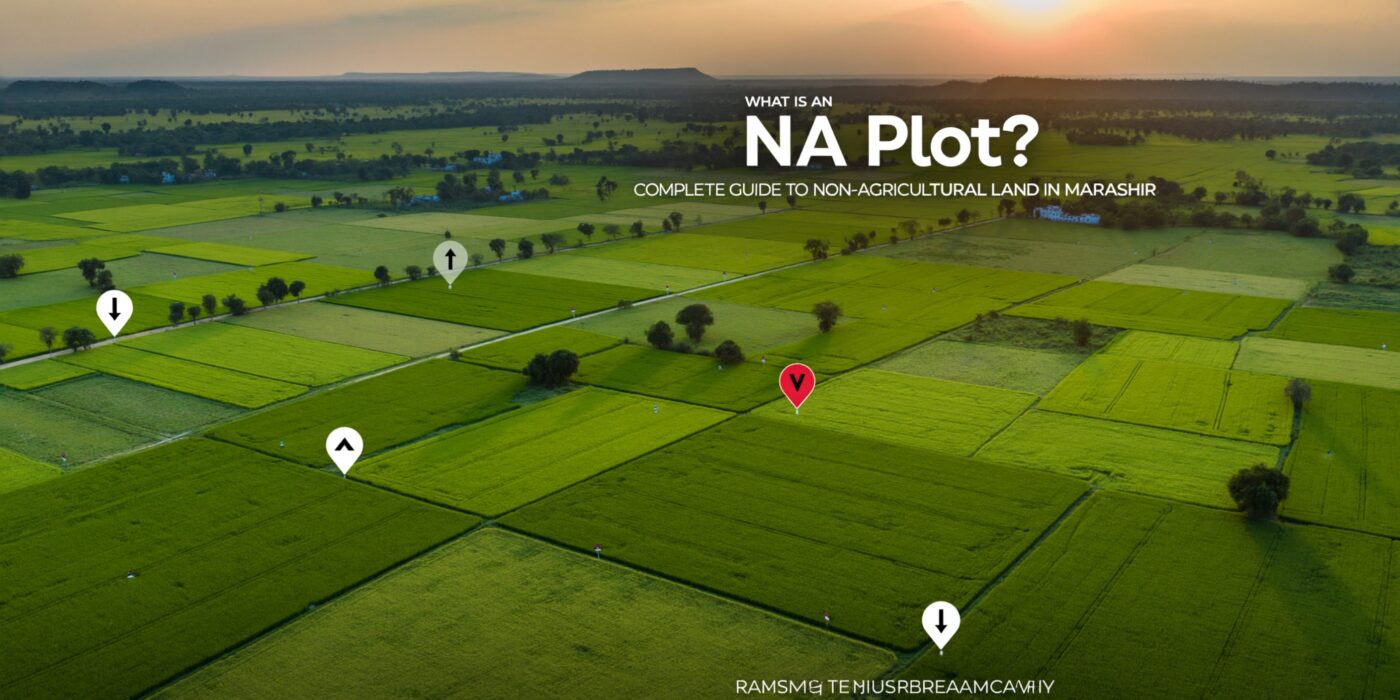
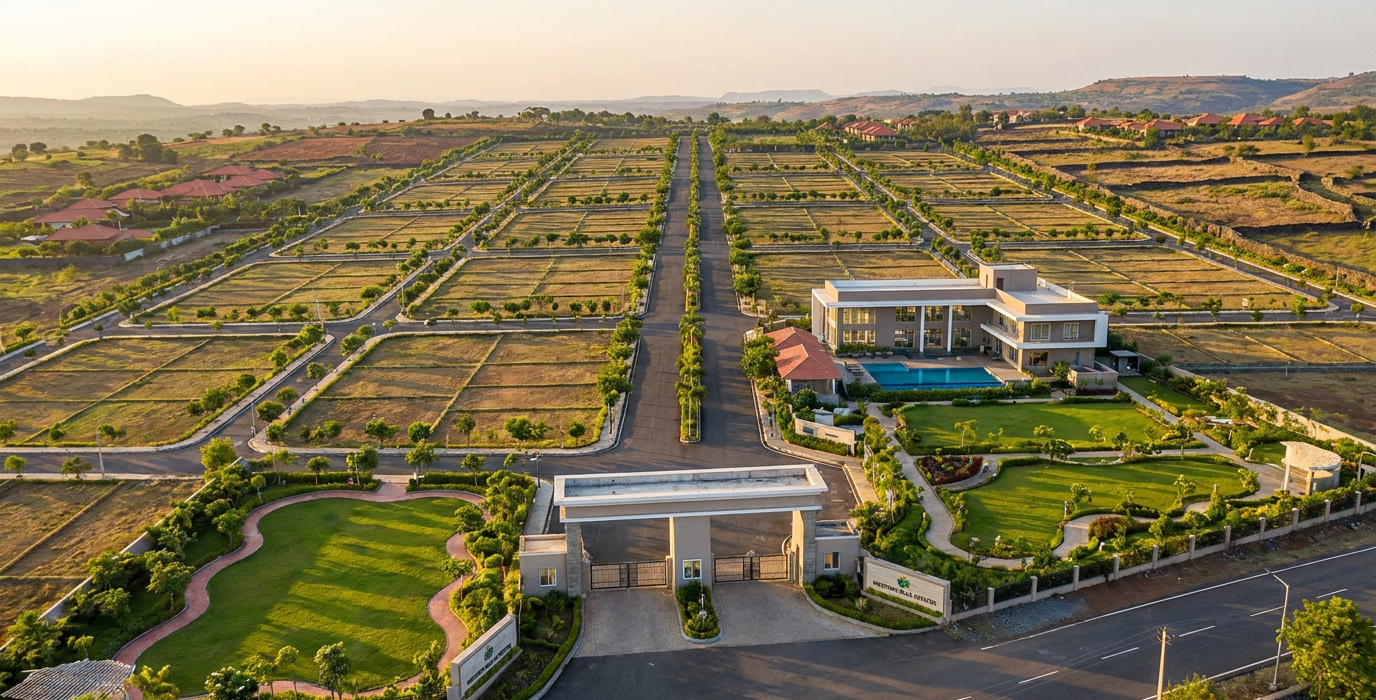
Aerial view of a gated residential estate with neatly lined plots, a central road, and a modern clubhouse with a swimming pool.
CategoriesLand Investment

What Is a Branded Plotted Development? How It Differs from Raw Land & Why Investors Choose It

TL;DR — KEY TAKEAWAYS

  • A branded plotted development is an NA-converted, RERA-registered, layout-approved plot project sold under a developer’s brand with an infrastructure and amenity promise — raw land has none of these protections.
  • Branded plots command a 30–60% premium over other MMR plotted layouts and up to 300–400% over raw agricultural land, reflecting legal compliance costs, infrastructure, and reduced buyer due diligence.
  • Only RERA-registered plots with NA conversion and layout approval are eligible for bank home/plot loans from SBI, HDFC, ICICI, and Axis — raw agricultural land generally is not.
  • Always verify MahaRERA registration, NA conversion order, and 7/12 extract independently before buying — don’t rely on a developer’s claims alone.

When a buyer hears the words “plot for sale near Mumbai,” they are usually picturing two very different things without realising it. One is a raw agricultural or unplanned land parcel — offered without legal clarity, without infrastructure, and without any assurance of what the neighbourhood will look like in five years. The other is a branded plotted development: a RERA-registered, infrastructure-complete NA plot layout designed, developed, and sold by a reputed developer with a defined project promise.

The difference between these two is not merely price — it is the difference between an investment and a gamble.

Reading time: 13 minutes | Last updated: July 2026 | Author: Girish Chhalwani, Founder & CEO, THE EDGE Developments

Branded plotted developments — RERA-registered, infrastructure-ready NA plot layouts — have grown from a niche segment to one of the fastest-growing real estate product categories in India. In the Mumbai Metropolitan Region, branded plotted development launches grew by 68% between 2021 and 2024, with THE EDGE Developments, Mahindra Lifespaces, and Godrej Properties leading the category. These developments command a 30–60% price premium over raw land in the same geography — and have demonstrated superior liquidity in resale markets. — Source: ANAROCK Research 2024; JLL India Plotted Development Report 2024

What Defines a Branded Plotted Development?

A branded plotted development is a planned residential plot layout that satisfies five specific criteria — NA conversion, RERA registration, layout approval, developer branding, and infrastructure provision. Each is explained below:

  1. Non-Agricultural (NA) conversion: The land has been formally converted from agricultural to NA residential use by the relevant Revenue Authority
  2. RERA registration: The project is registered with MahaRERA (or the relevant state RERA), providing buyer protection under RERA Act 2016
  3. Layout approval: The plot layout has received planning approval from the district collector, town planning authority, or local body
  4. Developer branding: The project is launched and sold under a reputed developer’s brand, with a defined project name, amenity promise, and delivery commitment
  5. Infrastructure provision: Roads within the layout, basic utilities (water connection point, electricity provision), and common amenities are provided/committed by the developer

Branded Plotted Development vs Raw Land: Full Comparison

Parameter Raw Agricultural Land Raw NA Land (unplanned) Branded Plotted Development
Legal status Agricultural — cannot build residential without NA conversion NA but no layout approval NA + layout approved + RERA registered
RERA registration Not required Usually not done Mandatory (if 500+ sq.m or 8+ plots)
Infrastructure None (buyer’s responsibility) Usually none Roads, utilities, amenities — developer’s responsibility
Resale liquidity Low — limited buyer pool Moderate High — larger buyer pool, bank financing possible
Bank loan eligibility Generally not eligible Difficult Eligible (most major banks fund RERA plots)
Price (Karjat 2026) ₹400–800/sq.ft ₹800–1,200/sq.ft ₹1,500–2,500/sq.ft
Price premium vs raw land Baseline +50–100% +200–400%

Why Does a Branded Plotted Development Command a Price Premium?

The premium reflects four factors: legal risk elimination, bank financing availability, infrastructure certainty, and neighbourhood quality control.

1. Legal Risk Elimination

Buyers of branded plotted developments pay for peace of mind. The developer has absorbed the legal complexity — NA conversion, 7/12 extract clearing, encumbrance removal, layout approval, RERA registration — before the buyer arrives. This reduces the buyer’s due diligence burden to near zero.

2. Bank Financing Availability

Most banks will not lend on raw agricultural or unplanned NA land. RERA-registered plotted developments are financeable with home loans from major banks (SBI, HDFC, Axis). This expands the buyer pool dramatically and supports price appreciation.

3. Infrastructure Certainty

A branded development promises specific infrastructure: internal roads, perimeter compound wall, gated entry, water connection points, electrical provisioning, and defined common amenities. Raw land offers none of this.

4. Neighbourhood Quality

When you buy in a branded development, your neighbours are buying from the same quality-controlled project. In raw land markets, the plot next door could be used for industrial purposes tomorrow.

In the Karjat region of Raigad district, the gap between raw agricultural land prices and branded plotted development prices widened from approximately 2x in 2018 to 3.5–4x in 2026. This premium expansion reflects both the regulatory cost of getting NA and RERA approvals AND the growing buyer preference for legally clear, infrastructure-ready plots as a first-time real estate investment. NRIs especially prefer branded plotted developments because they can transact and monitor the project remotely without engaging local legal counsel for every step. — Source: THE EDGE Developments Market Analysis; Raigad Sub-Registrar Transaction Data 2026

Who Should Buy a Branded Plotted Development?

Buyer Profile Branded Plot Suitability Reason
NRI investor High Remote transaction possible, bank financing available, clear title
First-time real estate investor High Reduced legal risk, lower ticket size than apartment, RERA protection
HNI looking for 5–10 year land banking Medium-High Liquidity premium on exit, but lower yield potential vs raw land
Weekend home builder High Build when ready, no immediate construction pressure, clear buildability
Pure land speculator (max ROI) Medium Lower relative ROI vs raw land — premium already paid upfront

How Do You Verify a “Branded” Plotted Development Before Buying?

Not every project claiming to be a branded development actually meets the criteria — verify each of the following independently before you sign anything:

  1. Confirm MahaRERA registration number and verify on maharera.mahaonline.gov.in
  2. Check NA conversion order from the revenue department (not just developer’s word)
  3. Verify 7/12 extract shows current ownership and NA status
  4. Review the layout plan approval from the District Collector or relevant authority
  5. Check whether the developer has a track record of project completions (not just launches)
  6. Verify that the development agreement/sale deed will convey clear title to each plot
  7. Confirm infrastructure (roads, boundary wall) is either already in place or covered under RERA escrow

FAQs: Branded Plotted Developments

What is a branded plotted development in India?
A branded plotted development is a planned NA (non-agricultural) residential plot layout sold under a developer’s brand with RERA registration, layout approval, and a defined infrastructure promise (roads, utilities, amenities). It differs from raw land primarily through legal clarity, infrastructure readiness, and formal developer accountability.
Why do branded plotted developments cost more than raw land?
The premium (typically 30–60% in MMR micro-markets in 2026, and up to 300–400% over raw agricultural land) reflects the legal compliance cost (NA conversion, RERA registration, layout approval), infrastructure cost (roads, utilities), developer’s brand value, and the reduced due diligence burden for buyers.
Are branded plotted developments eligible for home loans?
Yes. RERA-registered plotted developments with NA conversion and layout approval are eligible for home/plot loans from most major Indian banks including SBI, HDFC Bank, ICICI Bank, and Axis Bank. Agricultural land and unregistered raw land are generally not eligible for bank financing.
How do I verify that a plotted development is legitimately RERA-registered?
Visit maharera.mahaonline.gov.in (for Maharashtra), enter the project name or developer name, and verify that the MahaRERA registration number matches what the developer provided. Also check the project status, promoter details, and complaint history on the portal.

Explore THE EDGE’s RERA-Registered NA Plot Projects in Karjat

THE EDGE Developments offers fully RERA-registered, NA-converted, infrastructure-complete plotted developments in Karjat and the MMR corridor. All projects include clear title guarantee, township-grade amenities, and full legal documentation.

Contact: info@edgerea.com | +91-9664662938 | edgere.in
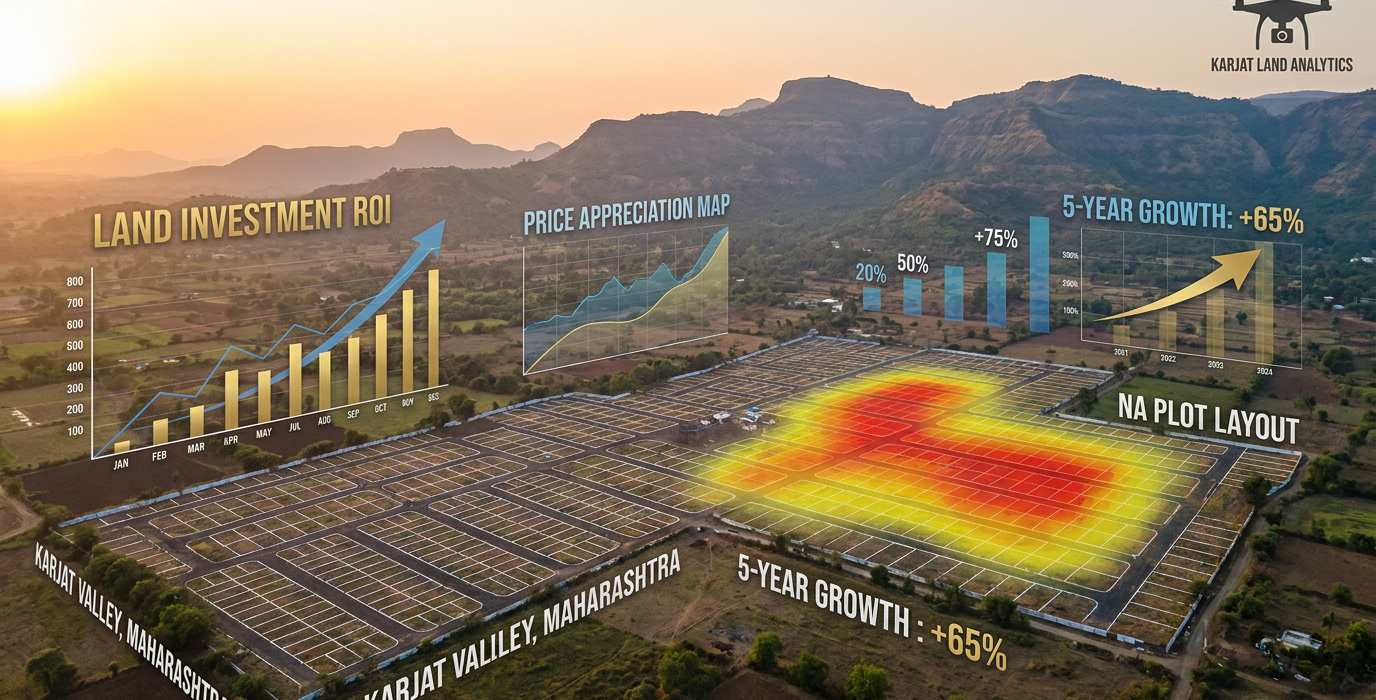
Aerial view of subdivided farmland with overlaid graphs and labels for Land Investment ROI, Price Appreciation Map, and 5‑Year Growth on Karjat Valley plots.
CategoriesLand Investment

How to Calculate Land Investment ROI: Formula, Case Studies & 10-Year Projections

TL;DR — KEY TAKEAWAYS

  • Real land ROI isn’t sale-minus-purchase — it’s net CAGR after stamp duty, legal, carrying costs, brokerage and 12.5% LTCG.
  • Use CAGR = (Sale/Purchase)^(1/years) − 1; a strong net result is 12–18% over 5–10 years.
  • Karjat/Khopoli NA plots delivered ~15–22% gross CAGR (2016–2026) — beating FDs, gold and Mumbai flats.
  • Hold 5–8 years to match the infrastructure build cycle; returns moderate once an area is built-up.

Most land investors make the mistake of evaluating ROI only on paper — they look at the price they paid and the price they can sell at, and calculate a percentage. Real land investment ROI is far more nuanced: it accounts for the time value of money, carrying costs, transaction costs, tax, and the opportunity cost of the capital deployed. This guide gives you the exact formula, three real case studies from Karjat, and a 10-year projection model for MMR corridor land.

Reading time: 15 minutes | Last updated: July 2026 | Author: Girish Chhalwani, Founder & CEO, THE EDGE Developments

Land in infrastructure corridors adjacent to India’s major metros has historically delivered 15–25% CAGR over 5–10 year periods — significantly outperforming most other asset classes including equities, gold, and residential apartments in the same cities. The Karjat–Khopoli corridor of the Mumbai Metropolitan Region has seen land prices appreciate from ₹200–400/sq.ft in 2015 to ₹1,200–2,500/sq.ft in 2026, representing a 10-year CAGR of approximately 18–22%. — Source: THE EDGE Developments Market Research; Maharashtra land registration data 2015–2026

What is the complete land investment ROI formula?

Simple ROI (Not Recommended for Long-Term Analysis)

Simple ROI = [(Sale Price − Purchase Price) / Purchase Price] × 100

Annualised ROI / CAGR (The Right Metric)

CAGR = [(Sale Price / Purchase Price) ^ (1/Years)] − 1

Net ROI (Accounting for All Costs)

Net Sale Value = Sale Price − LTCG Tax − Brokerage − Legal Costs
Net Purchase Cost = Purchase Price + Stamp Duty + Registration + Legal Due Diligence
Net CAGR = [(Net Sale Value / Net Purchase Cost) ^ (1/Years)] − 1

What to include in your cost calculation

Cost Type Typical Amount Include in ROI?
Purchase price As agreed Yes
Stamp duty (Maharashtra) 5–6% of value Yes
Registration fee 1% (max ₹30,000) Yes
Legal due diligence ₹25,000–75,000 Yes
Annual property tax ₹500–5,000/year Yes (annualised)
Maintenance/security ₹0–50,000/year Yes (if any)
LTCG tax on sale 12.5% of gain post-Budget 2024 Yes
Brokerage on sale 1–2% Yes

Case Study 1: Karjat Core Agricultural Land (2016–2026)

Parameter Detail
Land type Agricultural, 1 acre, Karjat taluka
Purchase year 2016
Purchase price ₹25 lakh/acre
Total acquisition cost (incl. stamp duty, legal) ₹28.5 lakh
Annual carrying cost (property tax + misc.) ~₹4,000/year
Sale price in 2026 ₹1.4 Cr/acre
Net sale proceeds (after tax @12.5% LTCG, 2% brokerage) ~₹1.10 Cr
Holding period 10 years
Net CAGR ~14.5%
Simple CAGR (gross) ~18.8%

Key driver: Infrastructure — announcement and construction of Second Mumbai-Pune Expressway and Virar-Alibaug Multimodal Corridor drove sustained demand from Mumbai buyers.

Case Study 2: NA Plot in Branded Development (2019–2026)

Parameter Detail
Land type NA plot, 2,000 sq.ft in RERA-registered branded development, Khopoli
Purchase year 2019
Purchase price ₹900/sq.ft = ₹18 lakh
Total acquisition cost ₹21 lakh (incl. 15% development charges)
Annual carrying cost ₹12,000/year (maintenance)
Sale price in 2026 ₹2,400/sq.ft = ₹48 lakh
Net sale proceeds ~₹40 lakh
Holding period 7 years
Net CAGR ~9.7%
Simple CAGR (gross) ~15.0%

Key insight: NA plotted developments carry higher upfront costs (stamp duty, development charges) but offer liquidity premium when selling — they attract buyers who want ready, legally clear land without conversion risk.

The distinction between gross CAGR and net CAGR matters enormously. A land investment that appears to deliver 20% gross CAGR often yields only 13–15% net CAGR once stamp duty, registration, LTCG tax at 12.5%, and annual carrying costs are factored in. In the Karjat–MMR corridor, the best-structured land investments — NA plots in infrastructure corridors with clear title — have delivered net 14–18% CAGR over 7–10 year holding periods. — Source: THE EDGE Developments Transaction Analysis, 2026

Case Study 3: Weekend Home Plot with Rental Income (2020–2026)

Parameter Detail
Asset type 3,000 sq.ft NA plot + weekend home (₹1.1 Cr construction)
Total investment (2020) ₹1.6 Cr (land + construction)
Annual rental income (2021–2026) ₹8–12 lakh/year (Airbnb/direct)
Total rental collected (5 years) ~₹45 lakh
Current market value (2026) ₹3.5 Cr
Total return ₹3.5 Cr + ₹45 lakh rental − ₹1.6 Cr = ₹2.35 Cr profit
Holding period 6 years
Blended net CAGR (capital + income) ~18.5%

What are the 10-year ROI projections for MMR corridor land (2026–2036)?

Location Current Price (2026) CAGR Projection Projected Value (2031) Projected Value (2036)
Karjat core (NA plot) ₹1,500–2,000/sq.ft 14–18% ₹2,900–4,500/sq.ft ₹5,600–9,700/sq.ft
Khopoli/Khalapur corridor ₹1,200–1,800/sq.ft 12–16% ₹2,100–3,700/sq.ft ₹3,700–7,900/sq.ft
Alibaug (sea-facing NA) ₹3,000–5,000/sq.ft 10–14% ₹4,800–9,600/sq.ft ₹7,800–18,500/sq.ft
Panvel (near NMIA) ₹4,000–7,000/sq.ft 12–18% ₹7,000–16,000/sq.ft ₹12,400–35,000/sq.ft

Projections are based on infrastructure timelines (VAMC Phase 1, NMIA completion, expressway widening) and historical appreciation rates. Past performance is not a guarantee of future results.

FAQs: Land Investment ROI India

What is a good CAGR for land investment in India?

A net CAGR of 12–18% over a 5–10 year holding period is considered strong for land investment in India’s peri-urban infrastructure corridors. This outperforms FD rates (6–7%), gold (8–10%), and is comparable to well-managed equity mutual funds over the same period — but with physical asset backing and lower volatility.

How long should you hold land for maximum ROI?

In infrastructure-driven corridors like Karjat–MMR, the ideal holding period aligns with key project milestones — the period between announcement of major infrastructure and completion of Phase 1 construction. This is typically 5–8 years. Holding beyond 10 years in rapidly developing corridors often yields diminishing marginal returns as the area becomes built-up and land supply shrinks.

Is land a better investment than apartments in MMR?

Over the 2016–2026 period, NA land in the Karjat–Khopoli MMR corridor appreciated at 15–22% CAGR, compared to 4–8% CAGR for apartments in established Mumbai micro-markets. Land offers superior capital appreciation but no rental income (unless developed). Apartments offer lower appreciation but consistent rental yield of 2–3% in Mumbai suburbs.

What is the impact of Budget 2024 on land investment ROI?

Budget 2024’s switch to 12.5% flat LTCG (without indexation) reduced the net ROI for investors who bought land at low cost many years ago. For recent purchases (2019–2024) where indexation would have provided limited benefit anyway, the new flat rate at 12.5% is actually more favourable than the previous 20% (with indexation).

Want a Custom ROI Projection for a Specific Land Parcel?

THE EDGE Developments provides detailed investment analysis for NA plots and land parcels across the Karjat–MMR corridor. Contact us for a site-specific ROI model.

Contact: info@edgerea.com | +91-9664662938 | edgere.in

Desk with tax forms, property deed, money stacks, and a calculator for financial documents and planning
CategoriesLand Investment

Land Investment Tax Guide India 2026: Capital Gains, Section 54F & Budget Changes

TL;DR — KEY TAKEAWAYS

  • Budget 2024 replaced 20%-with-indexation LTCG with a flat 12.5% (no indexation) for land sold after 23 July 2024.
  • Section 54F fully exempts LTCG if you reinvest the whole net sale proceeds in one home (capped at ₹10 Cr).
  • Buyers must deduct 1% TDS on property ≥₹50L (Section 194IA); NRI sellers face much higher TDS.
  • Maharashtra stamp duty is 5–6% (1% lower for women) + 1% registration; a JDA defers gains via Section 45(5A).

Budget 2024 changed everything for land investors in India. The removal of indexation benefits and introduction of a flat 12.5% LTCG rate has fundamentally altered how land investments are taxed — and how they should be structured. This is the complete 2026 guide to understanding and legally optimising your tax liability on land investments in India.

Reading time: 16 minutes | Last updated: July 2026 | Author: Girish Chhalwani, Founder & CEO, THE EDGE Developments

Union Budget 2024 reduced Long-Term Capital Gains (LTCG) tax on land and real property from 20% with indexation to 12.5% flat without indexation (for assets sold after July 23, 2024). This is one of the most significant changes to real estate taxation in India in the past decade. For land held over 2+ years, the net tax impact varies substantially based on the holding period and original purchase price — investors who bought land in 2015–2018 at low prices and sell now may actually pay more tax under the new regime despite the lower headline rate. — Source: Finance Act 2024, Income Tax Act 1961, CBDT Notifications

What changed for land investors in Budget 2024?

Parameter Pre-Budget 2024 (Before July 23, 2024) Post-Budget 2024 (After July 23, 2024)
LTCG rate on land/real estate 20% with indexation benefit 12.5% flat, no indexation
Holding period for LTCG 24 months 24 months (unchanged)
STCG rate Slab rate (up to 30% for HNIs) Slab rate (unchanged)
Section 54F exemption Available Available (capped at ₹10 Cr for new residential property)
TDS on property purchase 1% (Section 194IA) 1% (unchanged)

How does the 12.5% flat LTCG rate work on land?

When Does the 12.5% Rate Apply?

  • Land held for more than 24 months (2 years) from date of acquisition
  • Sold after July 23, 2024
  • Applies to individuals, HUFs, and NRIs

How LTCG Is Computed on Land

LTCG = Sale Consideration − Cost of Acquisition − Cost of Improvement − Transfer Expenses

  • Sale Consideration: The actual sale price or stamp duty value (whichever is higher under Section 50C)
  • Cost of Acquisition: Original purchase price (no indexation benefit post-Budget 2024)
  • Cost of Improvement: Any capital expenditure on the land (levelling, fencing, etc.)
  • Transfer Expenses: Stamp duty, registration fees, brokerage paid by seller

Worked Example: LTCG on Karjat Land

Scenario With Old Regime (Indexation) With New Regime (No Indexation)
Land purchased in 2018 for ₹20 lakh Indexed cost ~₹28 lakh (CII adjustment) Cost of acquisition = ₹20 lakh
Sold in 2026 for ₹80 lakh LTCG = ₹52 lakh; Tax @20% = ₹10.4 lakh LTCG = ₹60 lakh; Tax @12.5% = ₹7.5 lakh
Net tax saving — ₹2.9 lakh lower under new regime

For land acquired at very low cost (eg. inherited land, land bought before 2001), the loss of indexation benefit under Budget 2024 can result in significantly higher tax despite the lower 12.5% rate. In such cases, Section 54F exemption becomes even more critical as a tax-saving strategy. — Source: CBDT Tax Calculator, Finance Act 2024

What is Section 54F and how does it save tax?

What Is Section 54F?

Section 54F of the Income Tax Act allows a land seller to claim FULL exemption from capital gains tax if the net sale proceeds are invested in purchasing or constructing a residential property within the prescribed time limit.

Conditions for Section 54F Exemption

  1. The asset sold must be a long-term capital asset other than a residential property (land qualifies)
  2. The entire net sale proceeds must be invested in one new residential property
  3. The new property must be purchased within 1 year before or 2 years after the date of sale — OR constructed within 3 years after the date of sale
  4. The investor must not own more than one residential property (other than the new one) on the date of transfer
  5. Budget 2023 cap: Maximum exemption capped at ₹10 crore for the investment amount

Proportional Exemption Under Section 54F

If only part of the net proceeds is invested: Exemption = (Amount Invested / Net Sale Proceeds) × Capital Gains

Example: Sell land for ₹1 Cr net proceeds; LTCG = ₹60 lakh; Invest ₹75 lakh in new house → Exemption = (75/100) × 60 = ₹45 lakh exempt; Tax payable on ₹15 lakh only

Capital Gains Account Scheme (CGAS)

If you cannot identify and purchase the new property before the ITR filing deadline, deposit the unutilised sale proceeds in a Capital Gains Account Scheme bank account. This preserves your Section 54F exemption while you search for the right property.

Who deducts TDS on a land transaction?

Section 194IA — TDS for Buyers

  • Applies when: immovable property (other than agricultural land) is purchased for ₹50 lakh or more
  • TDS rate: 1% of the purchase price (or stamp duty value, whichever is higher)
  • Who deducts: The buyer is responsible for deducting and depositing TDS
  • How to deposit: Form 26QB online via TIN-NSDL portal within 30 days of month of payment
  • Form issued to seller: Form 16B (TDS certificate for property)

NRI sellers face higher TDS rates: buyers purchasing property from NRIs must deduct TDS at 20% plus surcharge and cess on the entire sale consideration (not just the gain), under Section 195 of the Income Tax Act. NRI sellers can apply to the Assessing Officer for a lower TDS certificate if their actual LTCG is significantly less than 20% of total consideration. — Source: Income Tax Act 1961, Section 195; FEMA guidelines, RBI Circular

What is the stamp duty on land purchase in Maharashtra?

Transaction Type Stamp Duty (Maharashtra) Registration Fee
Agricultural land purchase (male buyer) 5% 1% (max ₹30,000)
Agricultural land purchase (female buyer) 4% 1% (max ₹30,000)
NA plot purchase (male buyer) 6% 1% (max ₹30,000)
NA plot purchase (female buyer) 5% 1% (max ₹30,000)
Purchase under JDA (developer side) 1% on development rights value 1% (max ₹30,000)

What are 5 legal tax-saving strategies for land investors in 2026?

  1. Invest in Section 54F-eligible residential property: Reinvest net sale proceeds in a new home to claim full LTCG exemption (subject to ₹10 Cr cap).
  2. Gift to spouse or parent before sale: If combined income allows spreading gains across family members in lower tax brackets (consult a CA for clubbing provision analysis).
  3. Invest in Capital Gains Bonds (Section 54EC): Invest up to ₹50 lakh in NHAI/REC/IRFC bonds within 6 months of sale. The exemption is capped at ₹50 lakh.
  4. Structure via JDA to defer recognition: Under Section 45(5A), entering a JDA instead of an outright sale defers capital gains recognition to the year of Completion Certificate issuance — often 2–4 years later.
  5. Buy agricultural land and claim exemption: Agricultural land in rural areas is not a capital asset under Section 2(14) and is exempt from capital gains. Specific conditions on population and distance from municipality apply.

FAQs: Land Investment Tax India 2026

What is the LTCG tax rate on land sale in India in 2026?

From July 23, 2024 onwards, LTCG on land held for more than 24 months is taxed at a flat 12.5% without indexation benefit. Before that date, the rate was 20% with indexation. Short-term capital gains (land held ≤24 months) are taxed at slab rates.

Can I avoid capital gains tax on land sale using Section 54F?

Yes. Section 54F of the Income Tax Act allows full exemption of capital gains if the entire net sale proceeds from a land sale are reinvested in one new residential property within 2 years (purchase) or 3 years (construction). The exemption is proportional if only partial proceeds are invested, and is capped at ₹10 crore since Budget 2023.

Who pays TDS when purchasing land above ₹50 lakh?

The buyer is responsible for deducting TDS at 1% on the higher of purchase price or stamp duty value under Section 194IA and depositing it via Form 26QB within 30 days. This applies to all immovable property transactions (excluding rural agricultural land) of ₹50 lakh or more.

How is land inherited from parents taxed?

Inherited land is not taxable at the time of inheritance. When the heir sells the inherited land, capital gains are computed using the original cost to the previous owner (or the Fair Market Value as on April 1, 2001, if land was acquired before that date) as the cost of acquisition. The holding period includes the previous owner’s holding period.

What are Section 54EC capital gains bonds?

Section 54EC bonds (issued by NHAI, REC, IRFC) allow land sellers to invest up to ₹50 lakh of LTCG within 6 months of sale and claim full exemption on the invested amount. These bonds have a 5-year lock-in period and currently offer 5–5.25% annual interest (taxable).

Planning a Land Investment in the Karjat–MMR Corridor?

THE EDGE Developments helps investors structure land acquisitions and JDA arrangements with full tax efficiency. We work with experienced CAs on transaction structuring to minimise LTCG liability.

Contact: info@edgerea.com | +91-9664662938 | edgere.in

This article is general information, not tax advice. Consult a qualified chartered accountant for your specific situation.

Two men shake hands over a desk with folders at a construction site during sunset.
CategoriesLand Investment

Joint Development Agreement (JDA) in Maharashtra: Complete Guide for Landowners 2026

TL;DR — KEY TAKEAWAYS

  • A JDA lets a landowner develop with a builder without selling — keep title, share the finished units/revenue, and typically earn 30–80% more than an outright sale.
  • Four structures: revenue share, area share, profit share, or hybrid (advance + area share, the Karjat norm).
  • Section 45(5A) defers your capital-gains tax to the year the Completion Certificate is issued — a 2–5 year deferral.
  • Non-negotiable clauses: title-retention, milestone penalties, a no-mortgage undertaking, and termination/reversion rights.

A Joint Development Agreement (JDA) is the most powerful wealth-creation instrument available to a Maharashtra landowner today — yet most landowners sign one without fully understanding what they are giving away, what they are keeping, and what they are entitled to receive.

This guide explains every clause that matters, the ratio structures that actually work in 2026, the red flags in developer-drafted agreements, and exactly how to negotiate a JDA that maximises your returns across the Karjat–MMR corridor.

Reading time: 17 minutes | Last updated: July 2026 | Author: Girish Chhalwani, Founder & CEO, THE EDGE Developments

A Joint Development Agreement (JDA) is a legally binding contract between a landowner and a real estate developer where the landowner contributes land and the developer contributes capital, construction expertise, and marketing capability. In exchange, both parties share the developed units, revenue, or profit in agreed proportions. JDAs have become the dominant land monetisation model in Maharashtra’s peri-urban corridors, accounting for over 60% of new plotted development launches in the Karjat–MMR region between 2022 and 2025. — Source: THE EDGE Developments Market Research, CREDAI-MCHI 2024

What is a Joint Development Agreement?

A JDA is a contract under which a landowner and a developer collaborate to develop land without the landowner having to sell it outright. The landowner retains title to the land while granting the developer a development right — in exchange for a share of the developed project’s value.

This is fundamentally different from simply selling land:

Parameter Outright Land Sale Joint Development Agreement
Land ownership during development Transfers to buyer immediately Stays with landowner until agreed milestone
Upfront payment to landowner Full sale consideration Partial advance + balance on delivery
Upside in market appreciation None — buyer captures it Shared — landowner benefits from higher project value
Risk for landowner Low (money in hand) Moderate (dependent on developer execution)
Tax efficiency Capital gains at time of sale Capital gains deferred to time of unit/revenue receipt
Typical return vs. outright sale Baseline 30–80% higher over project lifecycle

Why are JDAs the dominant model in MMR peri-urban corridors?

In the Mumbai 3.0 corridor — encompassing Karjat, Khopoli, Khalapur, Panvel, and Raigad — JDAs have become the preferred development model for three reasons:

  1. Landowner reluctance to sell at current prices: With the Second Mumbai–Pune Expressway and NMIA driving appreciation, informed landowners don’t want to sell — they want to participate in the upside.
  2. Developer capital efficiency: Developers can launch projects with lower upfront capital outlay by paying landowners through developed units or revenue share rather than upfront purchase price.
  3. Tax deferral for landowners: Under Section 45(5A) of the Income Tax Act (introduced in Budget 2017), capital gains on JDA land are taxable only upon receipt of completion certificate — not at the time of signing the JDA. This provides a 2–4 year tax deferral, a significant advantage.

What are the types of JDA structures?

1. Revenue Share JDA

The developer sells all units and shares a percentage of gross revenue with the landowner. The landowner receives cash, not units.

  • Typical ratio: Landowner gets 10–30% of gross sales revenue
  • Best for: Landowners who want cash, not property
  • Risk: Revenue share means landowner depends entirely on developer’s sales ability and pricing

2. Area Share / Built-Up Area JDA

The developer constructs the project and delivers a percentage of the built-up area (units/plots) to the landowner. The landowner can sell or retain these units independently.

  • Typical ratio: Landowner receives 15–45% of saleable area in the project
  • Best for: Landowners who want to hold assets or sell units at their own pace
  • Risk: Landowner’s return depends on what price units can command at time of delivery

3. Profit Share JDA

Profits after all development costs are shared between landowner and developer in an agreed ratio.

  • Typical ratio: 40:60 or 50:50 (landowner:developer)
  • Best for: Large land parcels where developer costs are well-defined upfront
  • Risk: Developer may inflate costs, reducing net profit for landowner

4. Hybrid JDA

Combines upfront advance payment to landowner + area share or revenue share on completion. Most common structure in Karjat and MMR today.

  • Typical structure: ₹20–50 lakh advance (security deposit/advance against future deliverables) + 35% area share
  • Best for: Landowners who need some immediate liquidity but also want upside participation

Under Section 45(5A) of the Income Tax Act 1961 (inserted by Finance Act 2017), capital gains arising from a Joint Development Agreement are taxable in the year the project’s Completion Certificate is issued — not in the year the JDA is executed. This provision applies when the landowner receives development rights in exchange for land under a “specified agreement.” The benefit is a tax deferral of typically 2–5 years, providing significant time-value advantage. — Source: Income Tax Act 1961, Section 45(5A); CBDT Circular

What key clauses must every JDA contain?

1. Development Rights and Power of Attorney

The JDA grants the developer a Development Right — the legal authority to develop your land. This is typically backed by a General Power of Attorney (GPA) registered in the developer’s favour. Critical check: The GPA should be limited strictly to development of the subject land and must not allow the developer to mortgage, sell, or create third-party rights on your land without your consent.

2. Land Title Retention Clause

The agreement must explicitly state that land ownership (title) remains with the landowner throughout the development period. The developer acquires only development rights, not ownership.

3. Completion Timeline with Penalties

One of the most abused clauses in JDAs. The developer must commit to: RERA registration date, commencement of construction date, completion of infrastructure date, and Completion Certificate date. Each milestone must carry a penalty for non-compliance — typically a monthly penalty of 1–2% of the landowner’s share value per month of delay, or the right to terminate the JDA and recover land.

4. Landowner’s Share Specification

Be very specific about what you are receiving. If it’s area share: exact plot numbers, dimensions, location within the layout, facing, and amenity proximity must be specified. Vague clauses like “35% of saleable area to be determined” are a trap.

5. Non-Encumbrance Undertaking by Developer

The developer must not mortgage your land to raise construction finance without your explicit written consent.

6. Termination and Reversion Rights

If the developer fails to meet key milestones, you must have the right to terminate the JDA and have all development rights revert to you without legal complication.

JDA ratio benchmarks: Karjat–MMR 2026

Land Parcel Size Location Typical Landowner’s Share Advance
1–3 acres Karjat core 15–25% area share ₹15–30 lakh
3–10 acres Karjat premium corridor 25% area share ₹30–75 lakh
10–25 acres Khalapur / Khopoli 25–35% area share ₹50 lakh–1.5 Cr
25+ acres MMR fringe 15–30% revenue share ₹1–3 Cr

In Maharashtra’s Karjat–Khalapur corridor, Joint Development Agreements for plotted developments typically offer landowners 10–35% area share of the developed layout. Landowners with clear-title NA-converted land parcels with good road connectivity command the higher end of this range. The average advance payment to landowners in this corridor increased from ₹15–20 lakh per acre in 2022 to ₹30–60 lakh per acre in 2025, reflecting the infrastructure-driven demand surge. — Source: THE EDGE Developments Transaction Data, Karjat–MMR Market 2026

What are the tax implications of a JDA for landowners?

Section 45(5A) — The Key Provision

For JDAs executed after April 1, 2017 involving “specified agreements”, capital gains are taxed in the year the Completion Certificate is issued — not the year of JDA execution.

What this means in practice:

  • You sign a JDA in 2026 → Project completes and CC is issued in 2029 → Capital gains are computed and taxed in FY 2029–30
  • You get 3 years of tax deferral — during which your money is working in the development

FAQs: JDA Maharashtra 2026

Is a JDA better than selling land outright?

In active infrastructure corridors like Karjat and MMR, JDAs typically yield 30–80% higher total returns compared to outright sale — because the landowner participates in both construction value creation and market appreciation. However, JDAs carry execution risk (developer default), which outright sales do not. The right choice depends on the developer’s credibility, your liquidity needs, and your risk appetite.

Can a JDA be cancelled if the developer doesn’t perform?

Yes, if the JDA contains proper termination clauses with defined trigger events (missed milestones, RERA violations, non-commencement of construction). The JDA must be registered and stamped for termination to be legally enforceable. Always include a reversion clause so that development rights automatically revert to you upon termination.

Does a JDA need to be registered?

Yes. Under the Registration Act 1908, a JDA that creates development rights over immovable property for a period exceeding one year must be compulsorily registered. An unregistered JDA is inadmissible as evidence in legal proceedings. Stamp duty at 1% of the higher of market value or consideration value applies in Maharashtra.

When are capital gains taxed in a JDA under Section 45(5A)?

Under Section 45(5A) of the Income Tax Act (applicable to JDAs entered after April 1, 2017), capital gains are computed and taxed in the previous year in which the Completion Certificate for the project is issued — not in the year the JDA is signed. The cost of acquisition is the stamp duty value of the land as on the date of execution of the JDA.

What is a fair area share ratio for a Karjat landowner in 2026?

For NA-converted, clear-title land with road access in the Karjat core corridor, a fair area share ratio is 35–42% of total developed saleable area. For agricultural land requiring NA conversion, the ratio drops to 25–32%.

Own Land in Karjat or MMR? Let’s Talk.

THE EDGE Developments has structured JDA agreements across 45+ projects in the Karjat–MMR corridor. We advise landowners on fair ratio structures, development timelines, and risk-protected agreements before signing.

Contact: info@edgerea.com | +91-9664662938 | edgere.in
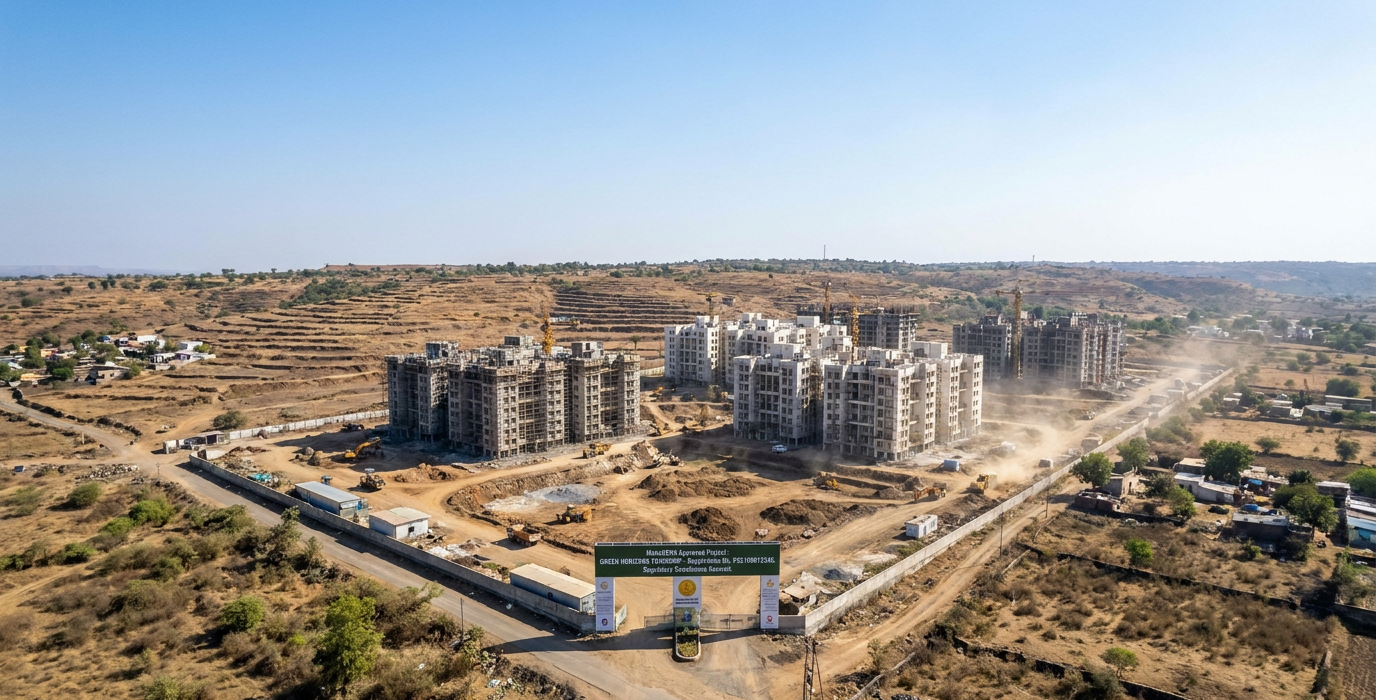
A construction site with several unfinished multi-story buildings, cranes overhead, and a dusty yard at the entrance gate.
CategoriesLand Investment

RERA Maharashtra Guide 2026: Homebuyer Rights, Complaints & What Land Buyers Need to Know

RERA Maharashtra (MahaRERA) has registered over 52,000 real estate projects and resolved more than 23,000 consumer complaints since 2017 — making it India’s most active state RERA authority. Yet most buyers, including NRIs and first-time land investors, still don’t know how to use RERA as a protection tool before booking, during construction, or in the event of a dispute. This complete MahaRERA guide explains every provision that matters for land buyers, plotted development investors, and weekend home buyers in 2026.

Reading time: 16 minutes | Last updated: June 2026 | Author: Girish Chhalwani, Founder & CEO, THE EDGE Developments

The Real Estate (Regulation and Development) Act, 2016 (RERA) came into force on May 1, 2017. Maharashtra’s RERA authority, MahaRERA, is consistently ranked as India’s best-performing state RERA for transparency, grievance redressal speed, and project compliance enforcement. As of 2026, MahaRERA has registered over 52,000 projects and enabled recovery of over ₹1,200 crore for home buyers through its complaint resolution mechanism. — Source: MahaRERA Annual Report 2024, Ministry of Housing and Urban Affairs

What Is RERA and Why Was It Created?

Before RERA, Indian real estate was one of the most opaque, unregulated industries in the world. Developers routinely:

  • Delayed projects by 3–7 years without penalty
  • Diverted buyer funds to other projects or personal use
  • Changed project specifications without consent
  • Made false claims about approvals, amenities, and completion dates
  • Sold the same unit to multiple buyers in fraudulent cases

RERA was enacted in 2016 and made operational from May 2017 to systematically address all of these problems.

What Is MahaRERA?

MahaRERA (Maharashtra Real Estate Regulatory Authority) is the state-level implementation body of RERA for Maharashtra. MahaRERA:

  • Registers all qualifying real estate projects in Maharashtra
  • Maintains a public database of all registered projects and their status
  • Receives and adjudicates consumer complaints
  • Issues orders for compensation, refunds, and penalties against developers
  • Manages a dedicated Conciliation Forum for out-of-court settlements

MahaRERA official portal: maharerait.maharashtra.gov.in

Which Projects Must Register Under MahaRERA?

Project Type Minimum Threshold for Registration
Residential / commercial construction projects Plot area > 500 sq.m OR more than 8 units
Plotted development (NA plots) Plot area > 500 sq.m
Ongoing projects (incomplete as of May 2017) Mandatory if completion certificate not obtained
Renovation or repair projects Exempt
Projects with CC obtained before May 2017 Exempt

Key point for land buyers: Branded plotted developments and NA plot projects with total land area exceeding 500 sq.m MUST be RERA-registered before sales begin. A developer selling plots without a RERA number is operating illegally under RERA Section 3.

Under Section 3 of RERA 2016, no promoter shall advertise, market, book, sell or offer for sale any real estate project without registering it with the Real Estate Regulatory Authority. Violation attracts penalties of up to 10% of estimated project cost under Section 59, and repeated violations can lead to imprisonment up to 3 years. — Source: RERA Act 2016, Sections 3 and 59

How to Verify MahaRERA Registration: Step-by-Step

  1. Visit maharerait.maharashtra.gov.in
  2. Click on “Registered Projects” in the main navigation
  3. Search by project name, developer name, or RERA registration number
  4. On the project page, verify: registration number and validity date, promoter name, approved layout plans, completion date, units sold vs. total, Quarterly Progress Reports (QPR), and any complaints filed
  5. Download the approved sanction letter to verify approvals

Your Rights as a Buyer Under MahaRERA

1. Right to Information

The developer must disclose on MahaRERA: complete project details, layout approvals, list of encumbrances, commencement certificates, occupancy certificate timeline, and quarterly progress updates.

2. Right to Structural Defect Rectification

If any structural defect is found within 5 years of possession, the developer must rectify it at no cost within 30 days.

3. Right to Compensation for Delay

If the developer fails to deliver on the agreed date, you are entitled to interest at SBI MCLR + 2% for every month of delay. Alternatively, you can claim full refund with interest.

4. Right to Accurate Area Computation

RERA mandates properties be sold on carpet area basis, not super built-up area.

5. Right to Proportional Refund on Area Reduction

If delivered area is less than agreed (by more than 3%), you have the right to a proportional refund or cancellation with full refund plus interest.

6. Right to Maintenance Charges Transparency

The developer cannot charge maintenance beyond what is disclosed in the registered agreement.

7. Right to Formation of Society/Association

The developer must facilitate formation of a residents’ welfare association within 3 months of handing over the majority of units.

RERA’s Escrow Protection: The Most Important Buyer Safeguard

Section 4(2)(l)(D) of RERA: A minimum of 70% of all amounts received from buyers must be deposited in a separate designated bank account and withdrawn only for the specific project’s land cost and construction expenses, in proportion to project completion.

This prevents the pre-RERA fraud where developers collected ₹100 crore from Project A buyers and used it to launch Project B. Under RERA’s escrow mandate:

  • The escrow account is project-specific
  • Withdrawals must be certified by an architect, engineer, and CA
  • MahaRERA can order forensic audit of escrow accounts in case of complaints

RERA and Land / Plotted Development Investments

What Plotted Development RERA Registration Means

  • The NA conversion must be in place before registration
  • Approved layout plan is publicly available on MahaRERA
  • Road widths, open spaces, and amenity plots in the layout are locked — developer cannot change them
  • Plot dimensions in your allotment must match the approved layout

Checklist: RERA Verification for Plotted Developments

  1. Verify MahaRERA registration number (starts with “P51” for Maharashtra projects)
  2. Download the approved layout plan and match your plot number
  3. Check that NA conversion date precedes RERA registration date
  4. Verify that road access to your specific plot is shown on the approved layout
  5. Check the committed infrastructure completion date
  6. Verify the site is free of encumbrances in the RERA disclosure

How to File a MahaRERA Complaint

  1. Register on the portal — maharerait.maharashtra.gov.in → Complainant Login → New Registration
  2. File complaint under Section 31 (against promoter/agent), Section 12 (recovery of amount), or Section 18 (delayed possession)
  3. Attach documents: Sale agreement, payment receipts, correspondence with developer
  4. Pay filing fee: ₹5,000 for individuals (up to 10 complainants can file jointly)
  5. Conciliation first: MahaRERA routes complaints to the Conciliation Forum. If unresolved in 30 days, it escalates to adjudication
  6. Order timeline: MahaRERA orders typically issued within 60–90 days of complaint admission

MahaRERA Conciliation Forum has resolved over 18,000 complaints through mediated settlements as of 2024, with average resolution time of 45–60 days. NRIs and outstation buyers can complete the entire filing process digitally without physical presence. — Source: MahaRERA Conciliation Forum Annual Report 2024

Penalties for Developers Under MahaRERA

Violation Penalty
Non-registration of qualifying project Up to 10% of project cost
False disclosure in RERA registration Up to 5% of project cost
Violation of RERA order by developer Up to 10% of project cost, or imprisonment up to 3 years
Violation of RERA order by agent Up to ₹10,000 per day; up to 5% of transaction value
Failure to form society / convey title Contempt of MahaRERA order; severe penalties

MahaRERA in Karjat and MMR: What Land Buyers Must Know

In the Karjat corridor — one of MMR’s fastest-growing land investment zones — MahaRERA registration applies to all plotted developments with total layout area exceeding 500 sq.m. When evaluating any Karjat land project:

  • Confirm the P51 RERA registration number is on all marketing material
  • Download the approved layout from MahaRERA and locate your specific plot
  • Confirm NA conversion is reflected in the RERA disclosure documents
  • Verify Quarterly Progress Reports (QPR) are being updated regularly

As of 2026, Raigad district (which includes Karjat, Khopoli, Panvel, and Alibaug) has over 3,200 RERA-registered projects on MahaRERA. The district has seen the fastest project registration growth in Maharashtra over 2023–2025. — Source: MahaRERA Project Registry 2026, Raigad District

5 Red Flags That Signal RERA Non-Compliance

  1. No RERA number on marketing material — Every ad, brochure, and website must display the RERA registration number.
  2. RERA registration expired — Developers must renew RERA registration before expiry.
  3. Zero Quarterly Progress Reports on portal — If QPRs haven’t been updated in 2+ quarters, the developer is in violation.
  4. Complaints visible on portal — Multiple unresolved complaints against one developer/project are a serious warning.
  5. Mismatch between advertised layout and MahaRERA-approved layout — The developer is misrepresenting the project.

FAQs: MahaRERA for Land Buyers 2026

Is RERA registration mandatory for all land and plot projects?
Yes, for all plotted developments with total area exceeding 500 sq.m (approximately 5,382 sq.ft). Any project below this threshold does not require RERA registration, though it should still have proper NA conversion and layout approvals.
Can I get a refund if my Karjat plot project is delayed under RERA?
Yes. Under Section 18 of RERA, if the developer fails to deliver possession by the date stated in your registered sale agreement, you have the right to either: (a) claim interest on your investment at SBI MCLR+2% for the period of delay, or (b) cancel the booking and receive full refund with interest.
What is the P51 registration number format for Maharashtra?
Maharashtra RERA registration numbers follow the format: P51XXXXXXXXXXXXX — where P denotes “project”, 51 is Maharashtra’s state code, followed by the district code and unique project number. This number must appear on all project advertisements, brochures, and sale agreements.
How long does it take to resolve a MahaRERA complaint?
MahaRERA aims to resolve complaints within 60 days of filing. The Conciliation Forum handles the first stage (mediation, typically 30–45 days). If unresolved, it goes to the Adjudicating Officer. Complex cases can take 3–6 months, but this is far faster than civil court proceedings.
Can NRIs file MahaRERA complaints from abroad?
Yes. MahaRERA complaints can be filed entirely online. NRIs can file through the portal without being physically present. An advocate can also represent you in hearings.
Does RERA apply to resale properties?
No. RERA applies only to the first sale from promoter/developer to buyer. Resale transactions between individual buyers are not governed by RERA.

Summary: MahaRERA Buyer Protection Checklist

  • ✅ Always verify P51 RERA registration number on MahaRERA portal before booking
  • ✅ Download approved layout plan and match your plot number
  • ✅ Confirm 70% escrow compliance is stated in sale agreement
  • ✅ Check Quarterly Progress Reports for regular developer updates
  • ✅ Verify broker’s individual MahaRERA agent registration
  • ✅ Read the committed possession date in the registered agreement carefully
  • ✅ Cross-check RERA disclosures with independent legal due diligence
  • ✅ File online complaint immediately if possession is delayed beyond agreement date

What to Read Next

Buying Land Near Mumbai? We Help You Do It Right.

THE EDGE Developments specialises in RERA-registered, NA-converted plotted developments in the Karjat–MMR corridor. Every THE EDGE project comes with complete MahaRERA compliance, transparent disclosures, and dedicated buyer support.
Contact us: info@edgerea.com | +91-9664662938 | edgere.in
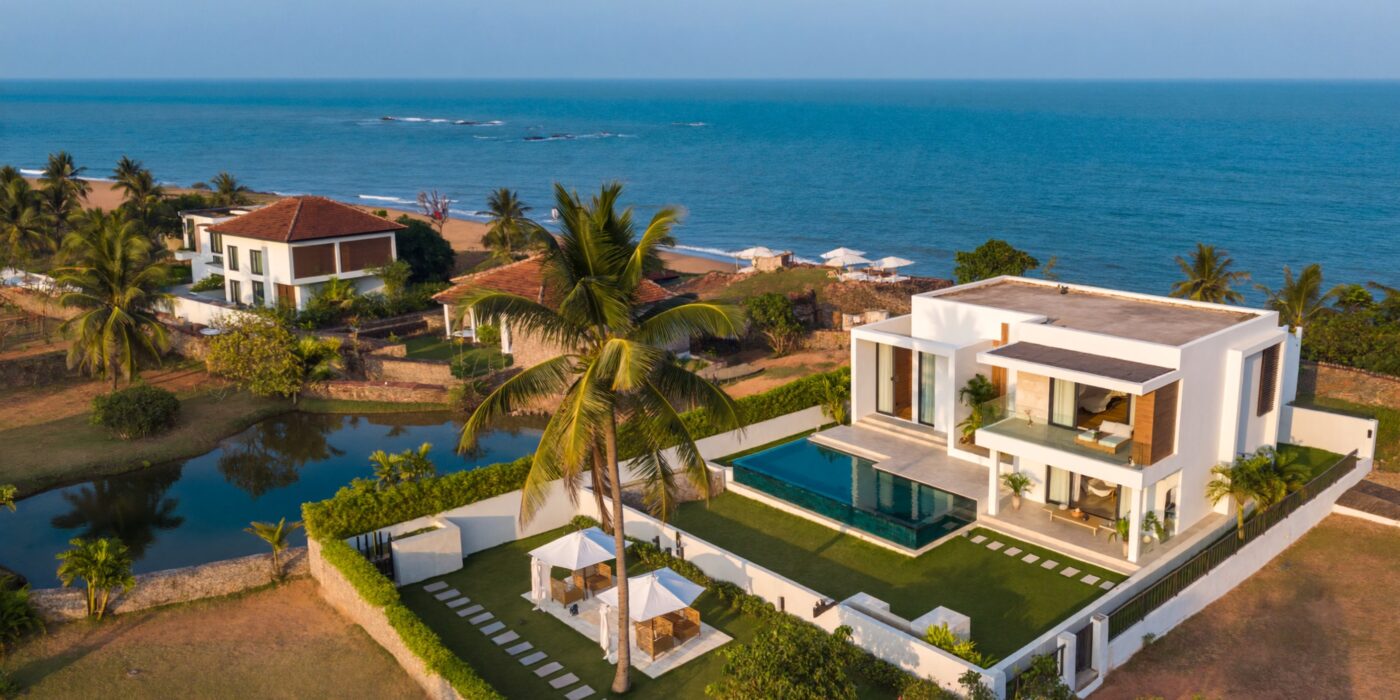
Alibaug coastal Maharashtra luxury weekend villa sea view – real estate investment guide 2025 land prices CRZ by Girish Chhalwani, THE EDGE Developments
CategoriesLand Investment Uncategorized Weekend Homes

Alibaug Real Estate Investment Guide 2025: Land, Second Homes & Market Data

TL;DR — KEY TAKEAWAYS

  • Alibaug remains Mumbai’s #1 coastal investment due to a 70-minute Ro-Ro ferry from Gateway of India, an established luxury ecosystem, CRZ-driven supply constraints, and strong social cachet.
  • 2025 prices range from ₹1,200/sq.ft in the Pen-Roha hinterland to ₹15,000/sq.ft for beachfront NA plots, with ultra-luxury beachfront villas reaching ₹10–25 crore.
  • CRZ (Coastal Regulation Zone) classification is the single most important legal factor — a plot near the beach may legally be unbuildable under CRZ-I or CRZ-III-B, so a CRZ map overlay and CZMA verification are essential before purchase.
  • Expected returns are 8–15% CAGR on well-located, CRZ-compliant NA plots through 2025–2030 — capital-safe but lower percentage upside than emerging Mumbai 3.0 corridor markets like Karjat.

Alibaug is Mumbai’s most coveted coastal address — a 1.5-hour ferry ride from Gateway of India, a Bollywood and business family favourite, and the only coastal destination near Mumbai that has maintained premium pricing through multiple real estate cycles. For serious real estate investors, understanding Alibaug means understanding a distinct market with its own rules, dynamics, and constraints.

This guide by Girish Chhalwani, Founder & CEO of THE EDGE Developments, provides a comprehensive, data-backed analysis of Alibaug’s 2025 real estate market — prices, trends, legal framework, and how Alibaug fits into a broader MMR investment strategy.

Reading time: 12 minutes | Last updated: July 2026 | Author: Girish Chhalwani, Founder & CEO, THE EDGE Developments


Why Does Alibaug Remain Mumbai’s #1 Coastal Investment?

Alibaug’s premium positioning rests on four durable advantages: ferry-based proximity to South Mumbai, an established luxury ecosystem, CRZ-driven supply constraints, and social cachet.

  1. Time-distance from South Mumbai: The Ro-Ro ferry from Gateway of India to Mandwa Jetty takes 1 hour 10 minutes — making Alibaug closer to South Mumbai in travel time than many Mumbai suburbs. For South Mumbai HNIs, this is irreplaceable.
  2. Established luxury ecosystem: Alibaug hosts restaurants, resorts, golf courses, and luxury retail that no other near-Mumbai coastal destination can match. The infrastructure for a premium lifestyle already exists.
  3. CRZ-driven supply constraint: Coastal Regulation Zone rules restrict beachfront and near-coastal development, creating a natural supply ceiling that supports price stability.
  4. Social premium: Alibaug carries an address premium that few other destinations in India can match — owning in Alibaug signals a specific tier of wealth that buyers actively value.

What Do 2025 Alibaug Real Estate Prices Look Like?

Alibaug prices range from ₹1,200/sq.ft in the Pen-Roha hinterland to ₹15,000/sq.ft for prime beachfront NA plots.

Location / Type Price Range (₹/sq.ft.) Typical Plot Size
Beachfront NA plots (Alibaug beach zone) ₹8,000–₹15,000 10,000–30,000 sq.ft.
Kihim-Nagaon premium NA plots ₹5,000–₹10,000 5,000–20,000 sq.ft.
Alibaug hinterland (3-5 km from beach) ₹2,500–₹5,000 5,000–15,000 sq.ft.
Pen-Roha corridor (Alibaug adjacent) ₹1,200–₹2,500 3,000–10,000 sq.ft.
Luxury villa (ready, Alibaug beach zone) ₹3–₹8 crore (total) 3,000–6,000 sq.ft. built-up
Ultra-luxury villa (beachfront) ₹10–₹25 crore (total) 5,000–12,000 sq.ft. built-up

Data as of H1 2025. Prices vary significantly by micro-location, legal status, and property condition.


What Are the CRZ Regulations Every Alibaug Buyer Must Know?

Coastal Regulation Zone (CRZ) classification is the single most important legal factor in any Alibaug land purchase — it determines whether a plot near the coast can legally be built on at all. The CRZ notification issued by the Ministry of Environment classifies coastal land into four zones:

  • CRZ-I (A and B): Intertidal zone and ecologically sensitive areas. No construction permitted. Typically 0-200m from high-tide line in sensitive areas.
  • CRZ-II: Urban or urban-equivalent areas already developed. Construction regulated but permitted in alignment with local laws.
  • CRZ-III (A and B): Rural coastal land. CRZ-III A (densely populated) permits limited construction; CRZ-III B (less densely populated) has more restrictions. The 200m no-development zone applies here.
  • CRZ-IV: Aquatic areas including water bodies and their coastal stretches. Fishing and related activities only.

What this means for buyers: A plot visually next to the beach may be CRZ-I or III-B — legally unbuildable. Always obtain a CRZ map overlay and CZMA verification before any Alibaug coastal land purchase. This single check prevents the single most common Alibaug investment mistake.


Alibaug or the Mumbai 3.0 Corridor: Which Should You Choose?

Alibaug and the Mumbai 3.0 corridor (Karjat, Khopoli, Panvel) serve different investment philosophies — Alibaug for lifestyle and price stability, Mumbai 3.0 for higher percentage appreciation.

  • Alibaug is an established premium market with strong price stability, limited supply, and lifestyle value. Best for HNIs with ₹3 crore+ budgets seeking an address with social cachet.
  • Karjat / Mumbai 3.0 is an emerging appreciation play — earlier in its infrastructure cycle, with greater percentage upside and more accessible entry points from ₹25 lakh.

The most sophisticated MMR investors hold both: a Karjat or Khopoli plot as a financial appreciation asset, and an Alibaug villa as a lifestyle asset. The two complement rather than compete with each other.

What Are the Top Locations Within Alibaug for Investment?

Alibaug Beach Road, Kihim, Nagaon, Chondi-Mandwa, and the Pen-Roha hinterland each suit a different investor profile and budget.

  1. Alibaug Beach Road: Premium address, highest prices, best for lifestyle buyers. CRZ compliance is critical — many plots here are non-buildable despite having road frontage.
  2. Kihim: Slightly north of Alibaug, quieter beach, strong expat and media industry buyer base. More available land at slightly lower prices.
  3. Nagaon: Emerging as a more accessible entry into the Alibaug ecosystem. Better price-to-quality ratio than central Alibaug for newer buyers.
  4. Chondi-Mandwa: Ferry access zone — closest to Mumbai by sea, strong rental demand from corporate and entertainment sector. Premium for water-adjacent plots.
  5. Pen-Roha Hinterland: 15-25 km from Alibaug beach, 40-60% lower prices, similar appreciation trajectory. Best financial return relative to capital deployed in the Alibaug vicinity.

What Is the Alibaug Investment Verdict for 2025?

Alibaug remains one of India’s most resilient luxury real estate markets, with an expected 8–15% CAGR through 2025–2030 on well-located, CRZ-compliant NA plots. It has maintained strong pricing through multiple economic cycles — a testament to its structural supply constraints and premium demand base. For 2025-2030, the key catalysts are:

  • Improved Ro-Ro ferry frequency and capacity
  • The Virar-Alibaug Multimodal Corridor potentially improving road access
  • Growing domestic luxury travel demand driving villa rental yields
  • Post-pandemic continuation of HNI demand for nature-adjacent premium real estate

Expected return: 8-15% CAGR on well-located, CRZ-compliant NA plots in the 2025-2030 period. Not the highest percentage in MMR, but among the most capital-safe and lifestyle-rich options available.

Building a Balanced MMR Portfolio?

THE EDGE Developments offers RERA-registered NA plots in Karjat — the Mumbai 3.0 growth corridor that complements an Alibaug lifestyle asset with stronger percentage appreciation potential.

Contact: info@edgerea.com | +91-9664662938 | edgere.in


About the Author

Girish Chhalwani is the Founder & CEO of THE EDGE Developments, a Mumbai-based real estate strategist with 20+ years of experience across 45+ project launches and ₹8,500 Cr in influenced real estate transactions in the Mumbai Metropolitan Region. He specialises in land investment, NA plots, branded plotted developments, and eco-luxury villa advisory in Karjat and the wider MMR. Read Girish’s full profile →

THE EDGE Developments — Alibaug Real Estate Investment Guide

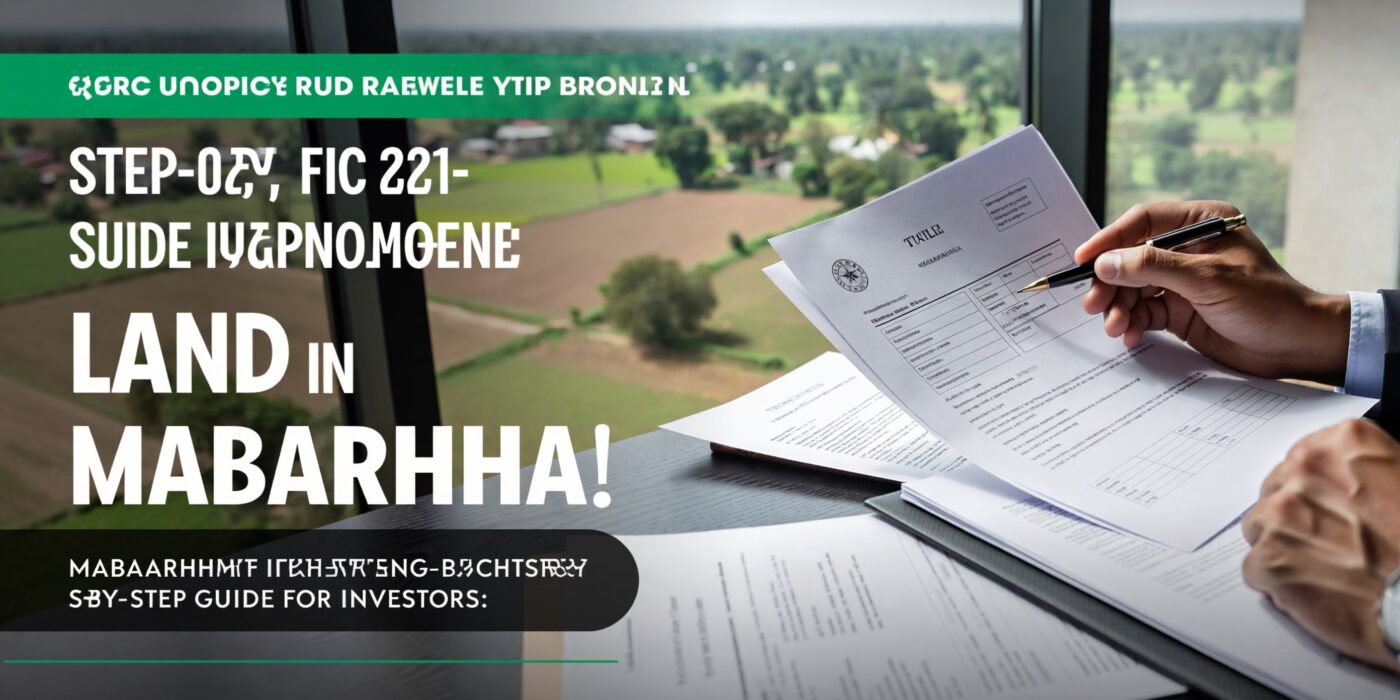
Close-up of a hand holding investment documents over a desk with a scenic window view; banner promotes a step-by-step guide for investors.
CategoriesLand Investment Uncategorized

How to Buy Land in Maharashtra: Step-by-Step Guide for Investors

TL;DR — KEY TAKEAWAYS

  • Buying land in Maharashtra has 8 distinct legal steps — skipping any one can invalidate ownership or block future development.
  • The 7/12 Extract (Satbara Utara) is the primary document — check it free on mahabhulekh.maharashtra.gov.in before spending a rupee.
  • Always commission independent legal due diligence (₹15,000–50,000) — the single best money spent in any land transaction.
  • Budget stamp duty (5%) + registration (1%, max ₹30,000), then file Mutation (Ferfar) after registration — critical and often skipped.

Buying land in Maharashtra — especially near Mumbai — is one of the most rewarding wealth-building decisions an investor can make. It is also one of the most legally complex real estate transactions in India. Unlike buying a flat in a registered building, land purchases require independent legal verification of documents most buyers have never seen before.

This step-by-step guide walks you through the complete process of buying land in Maharashtra — from identifying the right plot to registering the sale deed. Follow every step. Skip none.

Reading time: 13 minutes | Last updated: July 2026 | Author: Girish Chhalwani, Founder & CEO, THE EDGE Developments

Step 1: Define your investment goal

Before searching for land, answer three questions clearly:

  • What is the purpose? Capital appreciation, weekend home, farming, eco-resort development, or all of the above?
  • What is the holding period? 3 years (speculative), 5–7 years (growth), 10+ years (legacy)?
  • What is the budget? Include purchase price, registration costs (5–6% stamp duty), legal fees, development costs, and a 10–15% contingency.

These answers determine whether you are looking at an NA residential plot, agricultural land with conversion potential, a farmhouse plot, or a commercial development site — all of which have different legal frameworks.

Step 2: Identify the right location

For land investment near Mumbai, the key criteria are:

  • Infrastructure pipeline: Which new roads, airports, ports, or corridors will reduce time-distance to Mumbai in the next 5 years?
  • Current vs. potential pricing: Look for locations where prices reflect current status, not future potential.
  • Legal clarity: Some corridors have cleaner NA conversion records than others. Karjat and Khopoli have well-established NA plot markets. Coastal and forest-adjacent areas carry more legal complexity.
  • Accessibility today: Can you reach the plot easily? Remote locations with no current connectivity have uncertain timelines to appreciation.

Step 3: Request and verify land documents

For any plot you are seriously considering, collect and verify these documents:

  1. 7/12 Extract (Satbara Utara): The primary revenue document. Shows land area, survey number, owner name, crops, and any encumbrances or NA orders. Access online via mahabhulekh.maharashtra.gov.in or request from the Talathi office.
  2. 8-A Extract: Shows ownership records and right-of-way entries. Confirms that the seller is the recorded owner.
  3. NA Order Certificate (if applicable): Government certificate converting the land from agricultural to non-agricultural use. Verify the order number matches the 7/12 entry.
  4. Title Chain Documents: All previous sale deeds going back at least 30 years. Confirms unbroken chain of ownership with no gaps, disputes, or conflicting claims.
  5. Encumbrance Certificate (EC): Issued by the Sub-Registrar’s office. Confirms no outstanding mortgages, loans, or legal charges on the property.
  6. Village Map (Gaon Naksha): Shows the plot’s position within the village survey map. Verify the survey number and boundary match the physical plot.
  7. Zone Certificate: Confirms the land’s position in the local Development Plan (DP) or Regional Plan. Determines permitted uses and FSI/FAR.
  8. CRZ Map Check: For coastal properties, verify the plot’s CRZ zone status with the Maharashtra Coastal Zone Management Authority.

Step 4: Commission independent legal due diligence

Do not rely on the seller’s lawyer or the broker’s verbal assurances. Appoint an independent advocate who specialises in Maharashtra land law to:

  • Verify all documents listed in Step 3
  • Search the local Sub-Registrar’s records for any pending disputes
  • Confirm the seller’s identity and legal capacity to sell
  • Check for any government acquisition or reservation notices on the plot
  • Confirm there are no tenancy rights (Kul Kaydha) registered against the land

Legal due diligence fees for land in Maharashtra typically range from ₹15,000 to ₹50,000 depending on the complexity of the title chain. This is the single best money you will spend in any land transaction.

Step 5: Commission a physical survey

Hire a licensed government surveyor to physically demarcate the plot boundaries. This step confirms:

  • The plot area matches the 7/12 entry
  • There are no encroachments by neighbours or public roads
  • The plot shape and boundaries match the village map
  • Access roads exist and are legally demarcated

Step 6: Negotiate and execute a sale agreement

Once due diligence is complete, execute a registered Agreement for Sale:

  • Specifies the agreed price, payment schedule, possession date, and conditions
  • Must be registered at the local Sub-Registrar office (stamp duty on agreement: 0.1% of consideration in Maharashtra)
  • Provides legal protection during the payment and title transfer period

Step 7: Pay stamp duty and execute the sale deed

The final step is registration of the Sale Deed at the Sub-Registrar office:

  • Stamp duty: 5% of the market value (government-assessed ready reckoner rate) or actual consideration — whichever is higher
  • Registration fee: 1% of the consideration (maximum ₹30,000 in Maharashtra)
  • Both buyer and seller must be present with original identity documents
  • Two witnesses are required
  • Original documents are submitted and a certified copy is returned within 30–60 days

Step 8: Update revenue records (Mutation)

After sale deed registration, file for Mutation (Ferfar) at the Talathi office to update the 7/12 extract in the new buyer’s name. This is a critical, often-skipped step. Until mutation is complete, the government’s revenue records still show the previous owner’s name — which can create complications for future sales, development permissions, or dispute resolution.

Mutation is typically completed within 3–6 months of application. Track it on the Mahabhulekh portal.

Summary: land purchase checklist in Maharashtra

  • ✅ Define investment goal and budget (including 5–6% stamp duty + legal costs)
  • ✅ Identify location based on infrastructure pipeline and legal clarity
  • ✅ Collect and verify 7/12, 8-A, NA Order, Title Chain, EC, Zone Certificate
  • ✅ Commission independent legal due diligence
  • ✅ Commission physical boundary survey
  • ✅ Register Sale Agreement
  • ✅ Pay stamp duty and register Sale Deed
  • ✅ File for Mutation at Talathi office

The most expensive mistake I see investors make is skipping independent legal due diligence to save ₹30,000. That ₹30,000 can uncover a mortgage, a pending dispute, or a title gap that protects a ₹50 lakh purchase. In 20 years of land transactions, I have never seen a properly executed due diligence that didn’t pay for itself a hundred times over. — Girish Chhalwani, Founder & CEO, THE EDGE Developments

Frequently Asked Questions

What are the steps to buy land in Maharashtra?

There are 8 legal steps: (1) define your goal and budget, (2) select the location, (3) collect and verify documents (7/12, 8-A, NA order, title chain, EC, zone certificate), (4) commission independent legal due diligence, (5) run a physical boundary survey, (6) execute a registered Agreement for Sale, (7) pay stamp duty and register the Sale Deed, and (8) file for Mutation (Ferfar) to update revenue records.

What documents are required to buy land in Maharashtra?

The core documents are the 7/12 extract (Satbara Utara), 8-A extract, NA conversion order (if non-agricultural), a 30-year title chain of sale deeds, an Encumbrance Certificate, the village map (Gaon Naksha), and a zone certificate. Coastal plots also need a CRZ status check.

How much is stamp duty on land in Maharashtra?

Stamp duty is 5% of the higher of the ready-reckoner (market) value or actual consideration, plus a 1% registration fee capped at ₹30,000. The Agreement for Sale attracts a nominal 0.1% stamp duty.

What is Mutation (Ferfar) and is it necessary?

Mutation (Ferfar) is the process of updating the 7/12 extract to show the new buyer’s name after the Sale Deed is registered. It is essential — until it is completed, revenue records still show the previous owner, which can complicate future sales, development permissions, and dispute resolution. File it at the Talathi office and track it on Mahabhulekh.

Looking for a legally clear NA plot near Mumbai?

THE EDGE Developments offers RERA-registered, NA-clear, fully surveyed eco-luxury plots in the Karjat–MMR corridor — with 30-year title search and full documentation handed over at booking.

Contact: info@edgerea.com | +91-9664662938 | edgere.in
Aerial view of patchwork green fields with scattered trees and a distant mountain range on the horizon.
CategoriesLand Investment Uncategorized Weekend Homes

Farm Plots Near Mumbai: The Complete Investment Guide 2025

TL;DR — KEY TAKEAWAYS

  • “Farm plot” is a marketing term covering four distinct legal categories in Maharashtra — agricultural land, NA farm house plots, NA residential plots, and plantation/forest land — each with very different buildability and resale rights.
  • Karjat is the best overall location for farm plot investment, with NA residential plots priced ₹800–2,000/sq.ft and entry points from ₹25 lakh, aided by Navi Mumbai Airport proximity (55 minutes).
  • Historical returns range from 10–35% CAGR (2018–2025) across MMR corridors, with Shrivardhan early buyers seeing the highest gains near Dighi Port announcements.
  • An eight-point due diligence checklist — covering 7/12 extract, NA order, CRZ status, and RERA registration — prevents the most common and costly farm plot mistakes.

Farm plots near Mumbai represent one of the fastest-growing, most misunderstood investment categories in Indian real estate. With land scarcity in the city itself and infrastructure unlocking entire new corridors in the Mumbai Metropolitan Region, more investors are looking at agricultural and farm plot options as a wealth-building vehicle.

But there are critical distinctions — between farm plots, NA plots, agricultural land, and farmhouse plots — that most buyers get wrong, often with costly consequences. This guide by Girish Chhalwani, Founder & CEO of THE EDGE Developments, covers everything you need to know before buying a farm plot near Mumbai.

Reading time: 13 minutes | Last updated: July 2026 | Author: Girish Chhalwani, Founder & CEO, THE EDGE Developments


What Is a Farm Plot? Understanding the Different Categories

“Farm plot” is used loosely in real estate marketing, but Maharashtra’s legal framework recognises four distinct land categories that get called by that name.

  1. Agricultural Land: Classified on the 7/12 extract as Jirayat (rain-fed) or Bagayat (irrigated). Can only be sold to farmers. Cannot be developed. No construction permitted except farm structures.
  2. NA Farm House Plot: Agricultural land with a government-issued “Farm House” NA order — permits construction of a farmhouse of defined dimensions (typically 500 sq.ft. per acre held). A popular but strictly limited category.
  3. NA Residential Plot (tagged as “farm plot” in marketing): Fully converted NA residential land. Legally, this is a standard NA plot — it just happens to be in a semi-rural setting marketed as a “farm.” Can be freely developed, sold, and mortgaged.
  4. Plantation Land / Forest Land: Land with plantation crop entries on the 7/12. Extremely restricted. Near-impossible to develop. Often aggressively mis-sold as “investment land.”

What most people calling a “farm plot” actually want: Category 2 or 3 — a nature-adjacent piece of land within 2-3 hours of Mumbai where they can build a weekend retreat, grow some vegetables, and invest in appreciating land. The legal category matters enormously.


What Are the Best Locations for Farm Plots Near Mumbai in 2025?

Karjat leads for overall investment value, followed by Khopoli-Khalapur for price, Chowk-Bhimashankar for eco retreats, Shrivardhan-Murud for coastal upside, and the Alibaug-Pen hinterland for established value.

1. Karjat — Best Overall for Farm Plot Investment

Karjat is the #1 location for farm plot investment near Mumbai for multiple reasons. The combination of green valleys, river frontage, hill views, and the Navi Mumbai Airport’s proximity (55 minutes) creates a unique lifestyle-investment sweet spot. NA residential plots in Karjat range from ₹800-₹2,000 per sq.ft., with entry-level plots from ₹25 lakh. Edge County Estate by THE EDGE Developments is the flagship eco-luxury project here — 6 villas on legally clear NA land.

2. Khopoli-Khalapur — Best for Value

The Khopoli-Khalapur corridor along the Mumbai-Pune Expressway offers some of the most competitively priced NA plots near Mumbai. Industrial growth from MIDC, combined with the upcoming Second Mumbai-Pune Expressway, is driving demand. Prices: ₹500-₹1,200 per sq.ft. Best for investors seeking maximum land area per rupee spent.

3. Chowk-Bhimashankar Corridor — Best for Eco Retreats

The Chowk area, connecting Karjat to the Bhimashankar wildlife sanctuary, is emerging as a premium eco-retreat destination. The combination of forest proximity, clean air, tribal culture, and extreme natural beauty is attracting ultra-luxury eco-resort and wellness retreat developers. Limited availability but high appreciation potential.

4. Shrivardhan-Murud — Best for Coastal Farm Plots

The Konkan coast between Shrivardhan and Murud offers a unique category of coastal farm plots — agricultural land with sea views and beach access. With Dighi Port development accelerating, this is the highest-risk, highest-potential corridor. Prices are still at 2015 Alibaug levels — which is precisely why early investors are positioning here now.

5. Alibaug-Pen Hinterland — Established Premium Corridor

The hinterland behind Alibaug’s coastal strip — the Pen-Roha-Khalapur area — offers NA farm plots at 40-60% of Alibaug beach-frontage prices, with much of the same connectivity advantage. Less glamorous address, stronger financial returns.


What Should You Check Before Buying a Farm Plot Near Mumbai?

Eight checks form the core due diligence checklist for farm plot investment near Mumbai — from the 7/12 extract to physical boundary verification.

  1. 7/12 Extract (Satbara Utara): The primary revenue document. Check: land use classification, NA order entry, encumbrance entries, and owner name.
  2. NA Order Certificate: If the seller claims NA status, demand the original order. Verify the order number matches the 7/12.
  3. 8-A Extract: Confirms ownership history. Multiple name changes or disputed entries are a red flag.
  4. CRZ Status: For coastal plots, verify CRZ zone — CRZ-I and CRZ-II have strict construction restrictions.
  5. Forest/Eco-Sensitive Zone Check: Plots within 1 km of reserved forests or eco-sensitive zones have development restrictions. Verify distance and applicable rules.
  6. Village Panchayat NOC: Confirm no local objections to land use change or development.
  7. RERA Registration: For plotted layouts, RERA registration is mandatory and provides legal protection.
  8. Physical Boundary Verification: Commission a licensed surveyor to verify plot boundaries match the documents.

What Returns Can You Realistically Expect From Farm Plots?

Historical CAGR from MMR’s emerging corridors ranges from 10% to 35% between 2018 and 2025, depending on location and entry timing.

  • Karjat NA plots (2018-2025): 15-25% CAGR in well-located corridors
  • Khopoli-Khalapur NA plots (2018-2025): 10-18% CAGR
  • Alibaug hinterland (2018-2025): 12-20% CAGR
  • Shrivardhan early buyers (2018-2025): 20-35% CAGR in specific sub-locations near Dighi Port project announcements

Farm plots also offer non-financial returns: fresh air, family weekend use, potential for agri-tourism income, and a psychological hedge against urban density.


What Mistakes Should You Avoid When Buying Farm Plots Near Mumbai?

The most costly farm plot mistakes involve assuming NA conversion will happen later, trusting verbal assurances, and skipping physical verification.

  • Don’t buy agricultural land hoping to “convert it to NA later”: NA conversion is not guaranteed. Check conversion feasibility before purchase, not after.
  • Don’t rely on verbal NA assurances: Always verify the NA order certificate in person — never from a photocopy or WhatsApp image.
  • Don’t buy plantation or forest-adjacent land without expert legal review: These categories can be frozen for decades with no recourse.
  • Don’t skip physical boundary verification: Road-adjacent plots sometimes have encroachment issues that don’t show on documents.
  • Don’t invest in non-RERA plotted layouts: RERA compliance is not optional — it is your legal protection as a buyer.

Explore THE EDGE’s Flagship Farm Plot Project in Karjat

Edge County Estate offers eco-luxury villas on legally clear NA plots in Karjat — the best-positioned farm plot corridor near Mumbai for both lifestyle and appreciation.

Contact: info@edgerea.com | +91-9664662938 | edgere.in
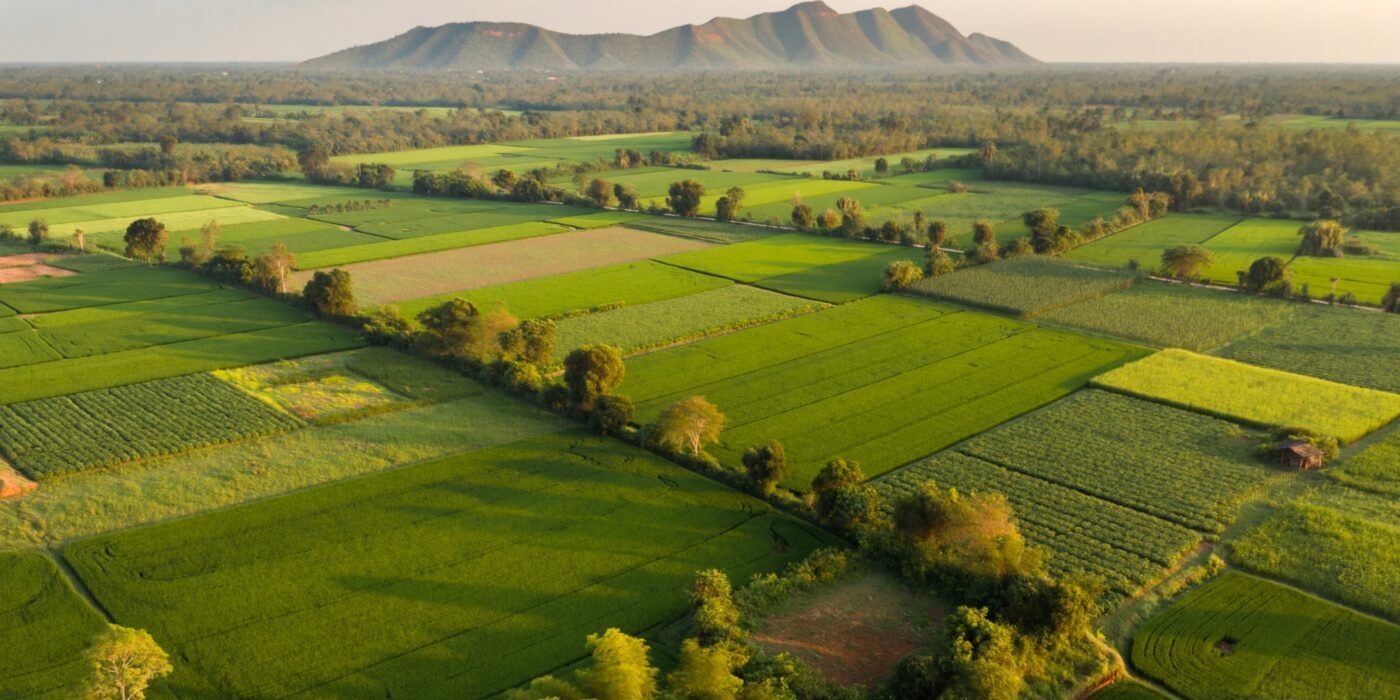

About the Author

Girish Chhalwani is the Founder & CEO of THE EDGE Developments, a Mumbai-based real estate strategist with 20+ years of experience across 45+ project launches and ₹8,500 Cr in influenced real estate transactions in the Mumbai Metropolitan Region. He specialises in land investment, NA plots, branded plotted developments, and eco-luxury villa advisory in Karjat and the wider MMR. Read Girish’s full profile →

THE EDGE Developments — Farm Plot Investment Experts Near Mumbai

Split image comparing Karjat (green hills and river) on the left with Alibaug’s blue ocean beach on the right; headline reads 'Karjat vs Alibaug'.
CategoriesLand Investment Mumbai 3.0 Uncategorized Weekend Homes

Karjat vs Alibaug: Which is Better for Land Investment in 2025?

TL;DR — KEY TAKEAWAYS

  • Karjat offers ₹800–2,000/sq.ft entry pricing and 15–25% CAGR, driven by three converging infrastructure projects — Navi Mumbai Airport, the Second Expressway, and the Virar-Alibaug Corridor.
  • Alibaug commands ₹3,000–12,000/sq.ft in an established ultra-luxury market, delivering 8–15% CAGR from a mature price base.
  • For pure ROI, Karjat delivers higher appreciation per rupee invested because it is earlier in its appreciation cycle relative to the infrastructure timeline.
  • Karjat suits ₹25 lakh–₹2 crore budgets on a 5–10 year horizon; Alibaug suits ₹3 crore+ budgets prioritising lifestyle and address premium.

Karjat and Alibaug are fundamentally different investment propositions, despite both sitting within a 2-hour radius of Mumbai with nature and lifestyle appeal. Two names dominate every conversation about second homes and land investment near Mumbai: Karjat and Alibaug. They differ in buyer profiles, price points, appreciation trajectories, and risk profiles.

This comparison is written by Girish Chhalwani, Founder & CEO of THE EDGE Developments, drawing on two decades of land transactions in both corridors. There is no sales pitch here — only data-backed analysis to help you make the right call for your specific investment goal.

Reading time: 11 minutes | Last updated: July 2026 | Author: Girish Chhalwani, Founder & CEO, THE EDGE Developments


Karjat vs Alibaug: How Do They Compare at a Glance?

Parameter Karjat Alibaug
Distance from Mumbai 55 min from Navi Mumbai Airport; 90 min from South Mumbai 1.5 hr by Ro-Ro ferry from Gateway of India; 3+ hr by road
Land Price (NA residential) ₹800–₹2,000/sq.ft. ₹3,000–₹12,000/sq.ft.
Entry investment (min plot) ₹25–₹60 lakh ₹1.5–₹5 crore
5-yr CAGR (NA plots) 15–25% 8–15%
Primary buyer profile HNIs, investors, upper-mid income Ultra HNIs, Bollywood, industrialists
Infrastructure growth driver Navi Mumbai Airport + Second Expressway Ro-Ro ferry expansion + Coastal Road
Rental yield potential 3–5% (eco-luxury villas) 2–4% (luxury villas)
AQI (annual avg) 40–65 (Good–Moderate) 35–55 (Good)
RERA-compliant projects Growing rapidly Limited, mostly bespoke
Liquidity (resale) Moderate, improving Low (limited buyer pool)

Why Is Karjat the Infrastructure-Led Growth Play?

Karjat’s investment case is built on the convergence of three mega infrastructure projects within a 5-year window.

  • Navi Mumbai International Airport — 55 minutes from Karjat, operational by 2025-26. Creates immediate demand for hospitality, second homes, and logistics land.
  • Second Mumbai–Pune Expressway — 130 km greenfield expressway via Khalapur-Karjat, reducing Mumbai-Pune travel to 90 minutes. Directly unlocks the Karjat-Khalapur land corridor.
  • Virar–Alibaug Multimodal Corridor — 126 km north-south corridor crossing Karjat, connecting it to Navi Mumbai and Thane.

This infrastructure trifecta is without precedent in MMR history. It places Karjat at the intersection of three major arteries — and historically, such intersections create the most durable land appreciation.

Who should invest in Karjat: Investors seeking 5-10 year capital appreciation, buyers wanting an eco-luxury second home with strong rental yield potential, and anyone who wants meaningful exposure to the Mumbai 3.0 growth story at a manageable entry point.


Why Is Alibaug the Established Luxury Market?

Alibaug’s investment case rests on its established luxury ecosystem, ferry connectivity, address premium, and CRZ-protected supply scarcity. Alibaug is the premium Bollywood and business family destination on Mumbai’s coast — it has been for two decades.

  • Established luxury ecosystem — Sula, Amaya, The Machan, Salt Water Cafe, and dozens of premium resorts and restaurants serve an ultra-HNI clientele.
  • Ro-Ro ferry connectivity — 1.5 hours from Gateway of India by sea, giving Alibaug a time-distance advantage over road-only alternatives.
  • Aspirational address premium — Alibaug carries a social cachet that commands price premiums no other location near Mumbai can match.
  • CRZ-protected coastal land — Coastal Regulation Zone rules limit supply of buildable beachfront land, maintaining scarcity.

Who should invest in Alibaug: Ultra-HNIs with ₹3 crore+ budgets seeking a premium address, buyers who prioritise lifestyle and social cachet over financial returns, and investors making a long-term hold on a scarce premium coastal address.


Which Delivers Better Returns: Karjat or Alibaug?

On pure financial return metrics, Karjat currently offers superior appreciation potential relative to capital deployed.

  • A ₹50 lakh NA plot in Karjat today, in the right corridor, has the potential to reach ₹1.5-2 crore in 7-10 years — a 3-4x return — driven by the infrastructure catalysts above.
  • A ₹2 crore Alibaug plot in a comparable corridor may reach ₹4-5 crore in the same period — a 2-2.5x return — from a base that is already largely priced for maturity.

Karjat’s outperformance is structural: it is earlier in its appreciation cycle relative to the infrastructure timeline. Alibaug’s appreciation is real but occurs from a higher base with less remaining upside.

“Alibaug is where you go when you’ve already made your money and want a beautiful address. Karjat is where you go to make it. Both are correct — but they answer different questions.”

Girish Chhalwani, Founder & CEO, THE EDGE Developments — 20+ years in MMR real estate, ₹8,500 Cr in influenced transactions


Karjat vs Alibaug: What Is the Verdict?

Choose Karjat for higher appreciation potential on a moderate budget; choose Alibaug for an established luxury address on a larger budget.
Choose Karjat if:

  • Your budget is ₹25 lakh to ₹2 crore
  • You want maximum appreciation upside in a 5-10 year horizon
  • You want an eco-luxury second home with rental yield potential
  • You are investing in the Mumbai 3.0 infrastructure story

Choose Alibaug if:

  • Your budget is ₹3 crore+
  • The address premium matters as much as returns
  • You want an established luxury ecosystem with Bollywood-tier neighbours
  • You are making a long-term hold on a scarce coastal asset

THE EDGE Developments’ flagship project, Edge County Estate, is designed precisely for buyers choosing the Karjat pathway — 6 exclusive eco-luxury villas on legally clear NA plots, RERA compliant, 55 minutes from Navi Mumbai Airport.

Considering the Karjat Pathway?

Edge County Estate offers 6 exclusive eco-luxury villas on legally clear, RERA-compliant NA plots in Karjat — 55 minutes from Navi Mumbai Airport.

Contact: info@edgerea.com | +91-9664662938 | edgere.in


About the Author

Girish Chhalwani is the Founder & CEO of THE EDGE Developments, a Mumbai-based real estate strategist with 20+ years of experience across 45+ project launches and ₹8,500 Cr in influenced real estate transactions in the Mumbai Metropolitan Region. He specialises in land investment, NA plots, branded plotted developments, and eco-luxury villa advisory in Karjat and the wider MMR. Read Girish’s full profile →

THE EDGE Developments — Karjat vs Alibaug Land Investment Comparison

Aerial view of patchwork green farmland at sunset with location pins and the title about NA Plots and non-agricultural land in Marashir
CategoriesLand Investment Mumbai 3.0 Uncategorized

What is an NA Plot? The Complete Guide to Non-Agricultural Land in Maharashtra

TL;DR — KEY TAKEAWAYS

  • NA (Non-Agricultural) status is government permission to build on land — without it, land near Mumbai cannot be legally developed, financed, or freely resold.
  • Agricultural land can’t be sold to non-farmers, bank-financed, or built on; NA plots can.
  • Verify NA status on the 7/12 extract (NA order number) at mahabhulekh.maharashtra.gov.in — never trust a broker’s word.
  • NA plots cost 15–30% more than agricultural land but carry far lower legal risk — for investors, the only safe choice.

If you are researching land investment near Mumbai, you will encounter the term “NA plot” repeatedly — it is the single most important legal classification that separates a safe, investable land parcel from one that carries legal risk. Yet most buyers — even experienced investors — cannot clearly explain what NA means, how it works, or why it matters.

This is the definitive guide to NA plots in Maharashtra, based on over two decades of land transactions across the Mumbai Metropolitan Region.

Reading time: 11 minutes | Last updated: July 2026 | Author: Girish Chhalwani, Founder & CEO, THE EDGE Developments

What does NA mean in real estate?

NA stands for Non-Agricultural. In Maharashtra, all land is classified under the Maharashtra Land Revenue Code (MLRC). By default, land outside city limits is classified as agricultural land — it can only be used for farming, and its sale to non-farmers is heavily restricted.

An NA order is a government permission that converts a plot from agricultural use to non-agricultural use — allowing it to be used for residential, commercial, or industrial purposes. Once a plot receives NA status, it can be legally purchased by anyone (including non-farmers), developed for construction, and freely sold without restriction.

In simple terms: NA status is what makes land investable and developable. Without it, a “land deal” near Mumbai may be legally unbuildable and almost impossible to resell.

Why does NA status matter for land investment near Mumbai?

Maharashtra’s land classification system creates a critical distinction between two types of plots commonly sold near Mumbai:

  • Agricultural land (7/12 shows “Jirayat” or “Bagayat”): Restricted. Cannot be sold to non-farmers without government permission. Cannot be legally developed. Cannot be bank-financed.
  • NA plot (7/12 shows NA order number): Unrestricted. Can be sold to anyone. Can be developed per DP/TP zoning. Eligible for bank home loans and construction finance.

Buyers who purchase agricultural land thinking it is equivalent to an NA plot discover — often years later — that their land cannot be developed, mortgaged, or easily resold. This is one of the most common and costly mistakes in Maharashtra land investment.

What are the types of NA orders in Maharashtra?

Not all NA plots are the same. The type of NA order determines what you can build:

  • NA Residential: Permitted for residential construction — bungalows, villas, plotted layouts. The most common type sought by second-home and villa buyers in Karjat, Alibaug, and Lonavala.
  • NA Commercial: Permitted for shops, offices, hotels, and hospitality. Relevant for tourism projects and resort developments.
  • NA Industrial: Permitted for factories, warehouses, and manufacturing. Found in MIDC areas and logistics corridors.
  • NA Farm House: A specific category permitting a farm house of defined size on larger agricultural holdings — different from full NA residential conversion.

How do you verify NA status on a plot in Maharashtra?

Check the 7/12 extract for the NA order number, obtain the original NA order certificate from the Collector, cross-check the 8-A for ownership, and confirm everything at source on the Bhulekh portal.

  1. 7/12 Extract (Satbara Utara): The revenue record that shows the plot’s land use classification. An NA plot will show the NA order number in the “Other Rights” (Itar Hakk) column or the mutation entries.
  2. NA Order Certificate: The original government order converting the land to NA status. Must be issued by the District Collector or relevant authority.
  3. 8-A Extract: Shows ownership records — confirm the seller’s name matches the 7/12 and sale documents.
  4. RERA Certificate: For plotted layouts and villa projects, RERA registration confirms the project has undergone regulatory scrutiny including NA verification.
  5. Property Card (Milkat Patrak): For plots within municipal limits — confirms urban land classification.

Pro tip: Always verify NA status directly on the Maharashtra government’s Bhulekh portal (mahabhulekh.maharashtra.gov.in) and cross-reference with the original NA order. Never rely solely on a broker’s verbal assurance.

NA plot vs agricultural land: key differences

Feature NA Plot Agricultural Land
Who can buy Anyone Only farmers (restricted)
Construction permitted Yes Only farm structures
Bank finance available Yes Very limited
Resale ease High Low (restricted buyer pool)
RERA applicable Yes (layouts) No
Price premium Higher (15-30% vs agri) Lower base price
Legal risk Low (if verified) High (if sold to non-farmer)

Where are the best locations for NA plots near Mumbai?

The best locations for legally clear NA plots with strong appreciation potential near Mumbai are:

  1. Karjat — NA residential plots with 15-25% CAGR, 55 minutes from Navi Mumbai Airport. THE EDGE Developments’ Edge County Estate offers RERA-compliant NA plots with full title clearance.
  2. Khopoli-Khalapur — NA residential and commercial plots in the Second Mumbai-Pune Expressway corridor.
  3. Alibaug — Premium NA plots for second homes and eco-resorts, 1.5 hours from South Mumbai by ferry.
  4. Panvel — NA plots in the airport influence zone, strong commercial and residential appreciation expected.
  5. Shrivardhan — Early-stage NA plots on the Konkan coast, significant appreciation potential ahead of Dighi Port development.

Most disputes in Maharashtra land investment trace back to one error: the buyer assumed NA status without verifying the order on the 7/12. An NA certificate shown by a broker is not the same as an NA order recorded on the revenue document. Always verify at source — the Bhulekh portal doesn’t lie, people do. — Girish Chhalwani, Founder & CEO, THE EDGE Developments

Frequently Asked Questions

Can I convert agricultural land to NA myself?

Yes. The process involves filing an application with the District Collector under Section 42 or 44 of the Maharashtra Land Revenue Code. However, conversion is not guaranteed — it depends on the land’s location relative to development zones, CRZ status (coastal areas), forest reservations, and local development plans. See THE EDGE’s complete NA conversion process guide for the full step-by-step filing procedure.

How much does NA conversion cost?

NA conversion fees in Maharashtra depend on the district, land area, and intended use. Typically, conversion fees range from ₹50 to ₹300 per square metre, plus stamp duty on the conversion order. Legal and consultancy fees add to this. Total NA conversion costs for a 10,000 sq.ft. plot in Raigad district typically range from ₹2 to ₹10 lakh.

Is an NA plot safe to buy for investment?

A properly verified NA plot with clear title, registered sale deed, RERA-compliant project documentation, and a valid NA order is one of the safest real estate investments available in Maharashtra. The key is verification — which is why THE EDGE Developments conducts rigorous legal due diligence on every plot in its portfolio before offering it to investors.

How do I check if a plot is NA in Maharashtra?

Download the 7/12 extract from mahabhulekh.maharashtra.gov.in and look for the NA order number in the “Other Rights” column, then cross-check it against the original NA order certificate from the Collector’s office. For projects, also verify MahaRERA registration.

Buy Verified NA Plots Near Mumbai

THE EDGE Developments offers RERA-registered, NA-verified plots with full title clearance across the Karjat–MMR corridor. We do the due diligence so you buy with zero NA-status risk.

Contact: connect@theedgedevelopments.com | +91-9664662938 | edgere.in