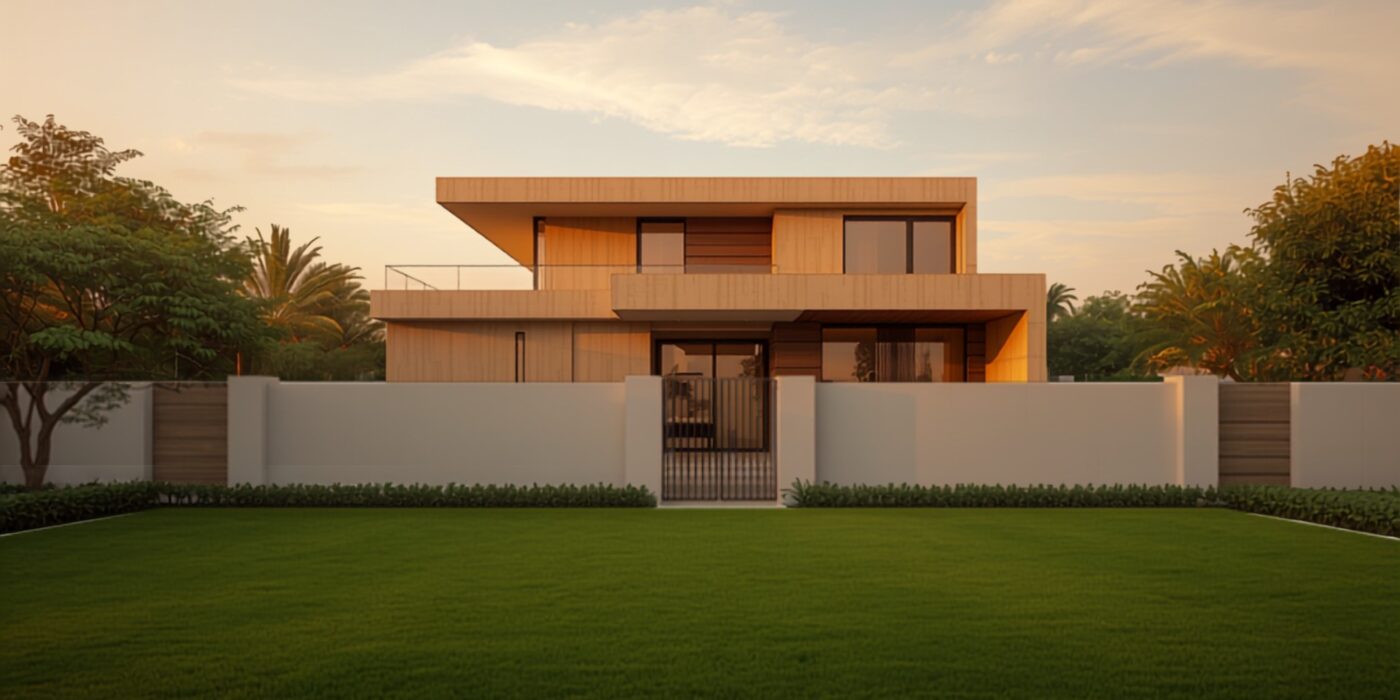

Alibaug coastal Maharashtra luxury weekend villa sea view – real estate investment guide 2025 land prices CRZ by Girish Chhalwani, THE EDGE Developments
CategoriesLand Investment Uncategorized Weekend Homes

Alibaug Real Estate Investment Guide 2025: Land, Second Homes & Market Data

Alibaug Real Estate Investment Guide 2025: Land, Second Homes & Market Data

Alibaug is Mumbai’s most coveted coastal address — a 1.5-hour ferry ride from Gateway of India, a Bollywood and business family favourite, and the only coastal destination near Mumbai that has maintained premium pricing through multiple real estate cycles. For serious real estate investors, understanding Alibaug means understanding a distinct market with its own rules, dynamics, and constraints.

This guide by Girish Chhalwani, Founder & CEO of THE EDGE Developments, provides a comprehensive, data-backed analysis of Alibaug’s 2025 real estate market — prices, trends, legal framework, and how Alibaug fits into a broader MMR investment strategy.


Why Alibaug Remains Mumbai’s #1 Coastal Investment

Alibaug’s premium positioning rests on four durable advantages:

  1. Time-distance from South Mumbai: The Ro-Ro ferry from Gateway of India to Mandwa Jetty takes 1 hour 10 minutes — making Alibaug closer to South Mumbai in travel time than many Mumbai suburbs. For South Mumbai HNIs, this is irreplaceable.
  2. Established luxury ecosystem: Alibaug hosts restaurants, resorts, golf courses, and luxury retail that no other near-Mumbai coastal destination can match. The infrastructure for a premium lifestyle already exists.
  3. CRZ-driven supply constraint: Coastal Regulation Zone rules restrict beachfront and near-coastal development, creating a natural supply ceiling that supports price stability.
  4. Social premium: Alibaug carries an address premium that few other destinations in India can match — owning in Alibaug signals a specific tier of wealth that buyers actively value.

Alibaug Real Estate Market: 2025 Price Data

Location / Type Price Range (₹/sq.ft.) Typical Plot Size
Beachfront NA plots (Alibaug beach zone) ₹8,000–₹15,000 10,000–30,000 sq.ft.
Kihim-Nagaon premium NA plots ₹5,000–₹10,000 5,000–20,000 sq.ft.
Alibaug hinterland (3-5 km from beach) ₹2,500–₹5,000 5,000–15,000 sq.ft.
Pen-Roha corridor (Alibaug adjacent) ₹1,200–₹2,500 3,000–10,000 sq.ft.
Luxury villa (ready, Alibaug beach zone) ₹3–₹8 crore (total) 3,000–6,000 sq.ft. built-up
Ultra-luxury villa (beachfront) ₹10–₹25 crore (total) 5,000–12,000 sq.ft. built-up

Data as of H1 2025. Prices vary significantly by micro-location, legal status, and property condition.


CRZ Regulations: The Most Important Legal Factor in Alibaug

The single most important legal factor in any Alibaug land purchase is Coastal Regulation Zone (CRZ) classification. The CRZ notification issued by the Ministry of Environment classifies coastal land into four zones:

  • CRZ-I (A and B): Intertidal zone and ecologically sensitive areas. No construction permitted. Typically 0-200m from high-tide line in sensitive areas.
  • CRZ-II: Urban or urban-equivalent areas already developed. Construction regulated but permitted in alignment with local laws.
  • CRZ-III (A and B): Rural coastal land. CRZ-III A (densely populated) permits limited construction; CRZ-III B (less densely populated) has more restrictions. The 200m no-development zone applies here.
  • CRZ-IV: Aquatic areas including water bodies and their coastal stretches. Fishing and related activities only.

What this means for buyers: A plot visually next to the beach may be CRZ-I or III-B — legally unbuildable. Always obtain a CRZ map overlay and CZMA verification before any Alibaug coastal land purchase. This single check prevents the single most common Alibaug investment mistake.


Alibaug vs the Mumbai 3.0 Corridor: Which to Choose?

Alibaug and the Mumbai 3.0 corridor (Karjat, Khopoli, Panvel) serve different investment philosophies:

  • Alibaug is an established premium market with strong price stability, limited supply, and lifestyle value. Best for HNIs with ₹3 crore+ budgets seeking an address with social cachet.
  • Karjat / Mumbai 3.0 is an emerging appreciation play — earlier in its infrastructure cycle, with greater percentage upside and more accessible entry points from ₹25 lakh.

The most sophisticated MMR investors hold both: a Karjat or Khopoli plot as a financial appreciation asset, and an Alibaug villa as a lifestyle asset. The two complement rather than compete with each other.


Top Locations Within Alibaug for Investment

  1. Alibaug Beach Road: Premium address, highest prices, best for lifestyle buyers. CRZ compliance is critical — many plots here are non-buildable despite having road frontage.
  2. Kihim: Slightly north of Alibaug, quieter beach, strong expat and media industry buyer base. More available land at slightly lower prices.
  3. Nagaon: Emerging as a more accessible entry into the Alibaug ecosystem. Better price-to-quality ratio than central Alibaug for newer buyers.
  4. Chondi-Mandwa: Ferry access zone — closest to Mumbai by sea, strong rental demand from corporate and entertainment sector. Premium for water-adjacent plots.
  5. Pen-Roha Hinterland: 15-25 km from Alibaug beach, 40-60% lower prices, similar appreciation trajectory. Best financial return relative to capital deployed in the Alibaug vicinity.

Alibaug Investment Verdict: 2025 Outlook

Alibaug remains one of India’s most resilient luxury real estate markets. It has maintained strong pricing through multiple economic cycles — a testament to its structural supply constraints and premium demand base. For 2025-2030, the key catalysts are:

  • Improved Ro-Ro ferry frequency and capacity
  • The Virar-Alibaug Multimodal Corridor potentially improving road access
  • Growing domestic luxury travel demand driving villa rental yields
  • Post-pandemic continuation of HNI demand for nature-adjacent premium real estate

Expected return: 8-15% CAGR on well-located, CRZ-compliant NA plots in the 2025-2030 period. Not the highest percentage in MMR, but among the most capital-safe and lifestyle-rich options available.

Compare locations: Karjat vs Alibaug: Which is Better for Land Investment?

Understand the broader MMR opportunity: What Is Mumbai 3.0? The Vision Redefining Urban Growth in MMR


About the Author

Girish Chhalwani is the Founder & CEO of THE EDGE Developments, a Mumbai-based real estate strategist with 20+ years of experience across 45+ project launches and ₹8,500 Cr in influenced real estate transactions in the Mumbai Metropolitan Region. He specialises in land investment, NA plots, branded plotted developments, and eco-luxury villa advisory in Karjat and the wider MMR. Read Girish’s full profile →

THE EDGE Developments — Alibaug Real Estate Investment Guide

Close-up of a hand holding investment documents over a desk with a scenic window view; banner promotes a step-by-step guide for investors.
CategoriesLand Investment Uncategorized

How to Buy Land in Maharashtra: Step-by-Step Guide for Investors

How to Buy Land in Maharashtra: Step-by-Step Guide for Investors

Buying land in Maharashtra — especially near Mumbai — is one of the most rewarding wealth-building decisions an investor can make. It is also one of the most legally complex real estate transactions in India. Unlike buying a flat in a registered building, land purchases require independent legal verification of documents most buyers have never seen before.

This step-by-step guide by Girish Chhalwani, Founder & CEO of THE EDGE Developments, walks you through the complete process of buying land in Maharashtra — from identifying the right plot to registering the sale deed. Follow every step. Skip none.

Key Takeaways

  • Land purchase in Maharashtra has 8 distinct legal steps — skipping any one can invalidate your ownership or block future development.
  • The 7/12 Extract (Satbara Utara) is the primary document — access it free on mahabhulekh.gov.in before spending a rupee.
  • Always commission independent legal due diligence (₹15,000–₹50,000) — the single best money spent in any land transaction.
  • Budget stamp duty (5% of market value) and registration fee (1%, max ₹30,000) before you commit — these are non-negotiable government charges.
  • After sale deed registration, file for Mutation (Ferfar) at the Talathi office — critical, often skipped, and legally essential.

Step 1: Define Your Investment Goal

Before searching for land, answer three questions clearly:

  • What is the purpose? Capital appreciation, weekend home, farming, eco-resort development, or all of the above?
  • What is the holding period? 3 years (speculative), 5-7 years (growth), 10+ years (legacy)?
  • What is the budget? Include purchase price, registration costs (5-6% stamp duty), legal fees, development costs, and a 10-15% contingency.

These answers determine whether you are looking at an NA residential plot, agricultural land with conversion potential, a farmhouse plot, or a commercial development site — all of which have different legal frameworks.


Step 2: Identify the Right Location

For land investment near Mumbai, the key criteria are:

  • Infrastructure pipeline: Which new roads, airports, ports, or corridors will reduce time-distance to Mumbai in the next 5 years?
  • Current vs. potential pricing: Look for locations where prices reflect current status, not future potential.
  • Legal clarity: Some corridors have cleaner NA conversion records than others. Karjat and Khopoli have well-established NA plot markets. Coastal and forest-adjacent areas carry more legal complexity.
  • Accessibility today: Can you reach the plot easily? Remote locations with no current connectivity have uncertain timelines to appreciation.

Step 3: Request and Verify Land Documents

For any plot you are seriously considering, collect and verify these documents:

  1. 7/12 Extract (Satbara Utara): The primary revenue document. Shows land area, survey number, owner name, crops, and any encumbrances or NA orders. Access online via mahabhulekh.gov.in or request from the Talathi office.
  2. 8-A Extract: Shows ownership records and right-of-way entries. Confirms that the seller is the recorded owner.
  3. NA Order Certificate (if applicable): Government certificate converting the land from agricultural to non-agricultural use. Verify the order number matches the 7/12 entry.
  4. Title Chain Documents: All previous sale deeds going back at least 30 years. Confirms unbroken chain of ownership with no gaps, disputes, or conflicting claims.
  5. Encumbrance Certificate (EC): Issued by the Sub-Registrar’s office. Confirms no outstanding mortgages, loans, or legal charges on the property.
  6. Village Map (Gaon Naksha): Shows the plot’s position within the village survey map. Verify the survey number and boundary match the physical plot.
  7. Zone Certificate: Confirms the land’s position in the local Development Plan (DP) or Regional Plan. Determines permitted uses and FSI/FAR.
  8. CRZ Map Check: For coastal properties, verify the plot’s CRZ zone status with the Maharashtra Coastal Zone Management Authority.

Step 4: Commission Independent Legal Due Diligence

Do not rely on the seller’s lawyer or the broker’s verbal assurances. Appoint an independent advocate who specialises in Maharashtra land law to:

  • Verify all documents listed in Step 3
  • Search the local Sub-Registrar’s records for any pending disputes
  • Confirm the seller’s identity and legal capacity to sell
  • Check for any government acquisition or reservation notices on the plot
  • Confirm there are no tenancy rights (Kul Kaydha) registered against the land

Legal due diligence fees for land in Maharashtra typically range from ₹15,000 to ₹50,000 depending on the complexity of the title chain. This is the single best money you will spend in any land transaction.


Step 5: Commission a Physical Survey

Hire a licensed government surveyor to physically demarcate the plot boundaries. This step confirms:

  • The plot area matches the 7/12 entry
  • There are no encroachments by neighbours or public roads
  • The plot shape and boundaries match the village map
  • Access roads exist and are legally demarcated

Step 6: Negotiate and Execute a Sale Agreement

Once due diligence is complete, execute a registered Agreement for Sale:

  • Specifies the agreed price, payment schedule, possession date, and conditions
  • Must be registered at the local Sub-Registrar office (stamp duty on agreement: 0.1% of consideration in Maharashtra)
  • Provides legal protection during the payment and title transfer period

Step 7: Pay Stamp Duty and Execute the Sale Deed

The final step is registration of the Sale Deed at the Sub-Registrar office:

  • Stamp duty: 5% of the market value (government-assessed ready reckoner rate) or actual consideration — whichever is higher
  • Registration fee: 1% of the consideration (maximum ₹30,000 in Maharashtra)
  • Both buyer and seller must be present with original identity documents
  • Two witnesses are required
  • Original documents are submitted and a certified copy is returned within 30-60 days

Step 8: Update Revenue Records (Mutation)

After sale deed registration, file for Mutation (Ferfar) at the Talathi office to update the 7/12 extract in the new buyer’s name. This is a critical, often-skipped step. Until mutation is complete, the government’s revenue records still show the previous owner’s name — which can create complications for future sales, development permissions, or dispute resolution.

Mutation is typically completed within 3-6 months of application. Track it on the Mahabhulekh portal.


Summary: Land Purchase Checklist in Maharashtra

  • ✅ Define investment goal and budget (including 5-6% stamp duty + legal costs)
  • ✅ Identify location based on infrastructure pipeline and legal clarity
  • ✅ Collect and verify 7/12, 8-A, NA Order, Title Chain, EC, Zone Certificate
  • ✅ Commission independent legal due diligence
  • ✅ Commission physical boundary survey
  • ✅ Register Sale Agreement
  • ✅ Pay stamp duty and register Sale Deed
  • ✅ File for Mutation at Talathi office

Looking for a legally clear NA plot near Mumbai with full documentation? Explore Edge County Estate in Karjat — RERA-registered, NA-clear, fully surveyed eco-luxury plots.

Explore the investment landscape: What Is Mumbai 3.0? The Vision Redefining Urban Growth in MMR

“The most expensive mistake I see investors make is skipping independent legal due diligence to save ₹30,000. That ₹30,000 can uncover a mortgage, a pending dispute, or a title gap that protects a ₹50 lakh purchase. In 20 years of land transactions, I have never seen a properly executed due diligence that didn’t pay for itself a hundred times over.”

Girish Chhalwani, Founder & CEO, THE EDGE Developments — 20+ years in MMR real estate, ₹8,500 Cr in influenced transactions


About the Author

Girish Chhalwani is the Founder & CEO of THE EDGE Developments, a Mumbai-based real estate strategist with 20+ years of experience across 45+ project launches and ₹8,500 Cr in influenced real estate transactions in the Mumbai Metropolitan Region. He specialises in land investment, NA plots, branded plotted developments, and eco-luxury villa advisory in Karjat and the wider MMR. Read Girish’s full profile →

THE EDGE Developments — How to Buy Land in Maharashtra

Aerial view of patchwork green fields with scattered trees and a distant mountain range on the horizon.
CategoriesLand Investment Uncategorized Weekend Homes

Farm Plots Near Mumbai: The Complete Investment Guide 2025

Farm Plots Near Mumbai: The Complete Investment Guide 2025

Farm plots near Mumbai represent one of the fastest-growing, most misunderstood investment categories in Indian real estate. With land scarcity in the city itself and infrastructure unlocking entire new corridors in the Mumbai Metropolitan Region, more investors are looking at agricultural and farm plot options as a wealth-building vehicle.

But there are critical distinctions — between farm plots, NA plots, agricultural land, and farmhouse plots — that most buyers get wrong, often with costly consequences. This guide by Girish Chhalwani, Founder & CEO of THE EDGE Developments, covers everything you need to know before buying a farm plot near Mumbai.


What is a Farm Plot? Understanding the Different Categories

The term “farm plot” is used loosely in real estate. In Maharashtra’s legal framework, there are four distinct land categories that buyers call “farm plots”:

  1. Agricultural Land: Classified on the 7/12 extract as Jirayat (rain-fed) or Bagayat (irrigated). Can only be sold to farmers. Cannot be developed. No construction permitted except farm structures.
  2. NA Farm House Plot: Agricultural land with a government-issued “Farm House” NA order — permits construction of a farmhouse of defined dimensions (typically 500 sq.ft. per acre held). A popular but strictly limited category.
  3. NA Residential Plot (tagged as “farm plot” in marketing): Fully converted NA residential land. Legally, this is a standard NA plot — it just happens to be in a semi-rural setting marketed as a “farm.” Can be freely developed, sold, and mortgaged.
  4. Plantation Land / Forest Land: Land with plantation crop entries on the 7/12. Extremely restricted. Near-impossible to develop. Often aggressively mis-sold as “investment land.”

What most people calling a “farm plot” actually want: Category 2 or 3 — a nature-adjacent piece of land within 2-3 hours of Mumbai where they can build a weekend retreat, grow some vegetables, and invest in appreciating land. The legal category matters enormously.


Best Locations for Farm Plots Near Mumbai in 2025

1. Karjat — Best Overall for Farm Plot Investment

Karjat is the #1 location for farm plot investment near Mumbai for multiple reasons. The combination of green valleys, river frontage, hill views, and the Navi Mumbai Airport’s proximity (55 minutes) creates a unique lifestyle-investment sweet spot. NA residential plots in Karjat range from ₹800-₹2,000 per sq.ft., with entry-level plots from ₹25 lakh. Edge County Estate by THE EDGE Developments is the flagship eco-luxury project here — 6 villas on legally clear NA land.

2. Khopoli-Khalapur — Best for Value

The Khopoli-Khalapur corridor along the Mumbai-Pune Expressway offers some of the most competitively priced NA plots near Mumbai. Industrial growth from MIDC, combined with the upcoming Second Mumbai-Pune Expressway, is driving demand. Prices: ₹500-₹1,200 per sq.ft. Best for investors seeking maximum land area per rupee spent.

3. Chowk-Bhimashankar Corridor — Best for Eco Retreats

The Chowk area, connecting Karjat to the Bhimashankar wildlife sanctuary, is emerging as a premium eco-retreat destination. The combination of forest proximity, clean air, tribal culture, and extreme natural beauty is attracting ultra-luxury eco-resort and wellness retreat developers. Limited availability but high appreciation potential.

4. Shrivardhan-Murud — Best for Coastal Farm Plots

The Konkan coast between Shrivardhan and Murud offers a unique category of coastal farm plots — agricultural land with sea views and beach access. With Dighi Port development accelerating, this is the highest-risk, highest-potential corridor. Prices are still at 2015 Alibaug levels — which is precisely why early investors are positioning here now.

5. Alibaug-Pen Hinterland — Established Premium Corridor

The hinterland behind Alibaug’s coastal strip — the Pen-Roha-Khalapur area — offers NA farm plots at 40-60% of Alibaug beach-frontage prices, with much of the same connectivity advantage. Less glamorous address, stronger financial returns.


What to Check Before Buying a Farm Plot Near Mumbai

The due diligence checklist for farm plot investment near Mumbai:

  1. 7/12 Extract (Satbara Utara): The primary revenue document. Check: land use classification, NA order entry, encumbrance entries, and owner name.
  2. NA Order Certificate: If the seller claims NA status, demand the original order. Verify the order number matches the 7/12.
  3. 8-A Extract: Confirms ownership history. Multiple name changes or disputed entries are a red flag.
  4. CRZ Status: For coastal plots, verify CRZ zone — CRZ-I and CRZ-II have strict construction restrictions.
  5. Forest/Eco-Sensitive Zone Check: Plots within 1 km of reserved forests or eco-sensitive zones have development restrictions. Verify distance and applicable rules.
  6. Village Panchayat NOC: Confirm no local objections to land use change or development.
  7. RERA Registration: For plotted layouts, RERA registration is mandatory and provides legal protection.
  8. Physical Boundary Verification: Commission a licensed surveyor to verify plot boundaries match the documents.

Farm Plot Returns: What to Realistically Expect

Historical data from MMR’s emerging corridors shows:

  • Karjat NA plots (2018-2025): 15-25% CAGR in well-located corridors
  • Khopoli-Khalapur NA plots (2018-2025): 10-18% CAGR
  • Alibaug hinterland (2018-2025): 12-20% CAGR
  • Shrivardhan early buyers (2018-2025): 20-35% CAGR in specific sub-locations near Dighi Port project announcements

Farm plots also offer non-financial returns: fresh air, family weekend use, potential for agri-tourism income, and a psychological hedge against urban density.


Mistakes to Avoid When Buying Farm Plots Near Mumbai

  • Don’t buy agricultural land hoping to “convert it to NA later”: NA conversion is not guaranteed. Check conversion feasibility before purchase, not after.
  • Don’t rely on verbal NA assurances: Always verify the NA order certificate in person — never from a photocopy or WhatsApp image.
  • Don’t buy plantation or forest-adjacent land without expert legal review: These categories can be frozen for decades with no recourse.
  • Don’t skip physical boundary verification: Road-adjacent plots sometimes have encroachment issues that don’t show on documents.
  • Don’t invest in non-RERA plotted layouts: RERA compliance is not optional — it is your legal protection as a buyer.

Explore THE EDGE’s flagship farm plot project in Karjat: Edge County Estate — Eco-Luxury Villas on NA Plots

Understand the bigger investment story: What Is Mumbai 3.0? The Vision Redefining Urban Growth in MMR


About the Author

Girish Chhalwani is the Founder & CEO of THE EDGE Developments, a Mumbai-based real estate strategist with 20+ years of experience across 45+ project launches and ₹8,500 Cr in influenced real estate transactions in the Mumbai Metropolitan Region. He specialises in land investment, NA plots, branded plotted developments, and eco-luxury villa advisory in Karjat and the wider MMR. Read Girish’s full profile →

THE EDGE Developments — Farm Plot Investment Experts Near Mumbai

Split image comparing Karjat (green hills and river) on the left with Alibaug’s blue ocean beach on the right; headline reads 'Karjat vs Alibaug'.
CategoriesLand Investment Mumbai 3.0 Uncategorized Weekend Homes

Karjat vs Alibaug: Which is Better for Land Investment in 2025?

Karjat vs Alibaug: Which is Better for Land Investment in 2025?

Two names dominate every conversation about second homes and land investment near Mumbai: Karjat and Alibaug. Both are within a 2-hour radius of Mumbai. Both offer nature, clean air, and lifestyle appeal. But they are fundamentally different investment propositions — with different buyer profiles, price points, appreciation trajectories, and risk profiles.

This comparison is written by Girish Chhalwani, Founder & CEO of THE EDGE Developments, drawing on two decades of land transactions in both corridors. There is no sales pitch here — only data-backed analysis to help you make the right call for your specific investment goal.

Key Takeaways

  • Karjat: ₹800–₹2,000/sq.ft. entry price; 15–25% CAGR; three infrastructure mega-projects converging — Navi Mumbai Airport, Second Expressway, Virar–Alibaug Corridor.
  • Alibaug: ₹3,000–₹12,000/sq.ft.; established ultra-luxury market; 8–15% CAGR from a mature price base.
  • For pure ROI, Karjat delivers higher appreciation per rupee invested — it is earlier in its appreciation cycle.
  • Karjat suits: budgets ₹25 lakh–₹2 crore, 5–10 year horizon, eco-luxury second home, Mumbai 3.0 investors.
  • Alibaug suits: budgets ₹3 crore+, lifestyle/address premium priority, long-term hold on a scarce coastal asset.

Quick Comparison: Karjat vs Alibaug at a Glance

Parameter Karjat Alibaug
Distance from Mumbai 55 min from Navi Mumbai Airport; 90 min from South Mumbai 1.5 hr by Ro-Ro ferry from Gateway of India; 3+ hr by road
Land Price (NA residential) ₹800–₹2,000/sq.ft. ₹3,000–₹12,000/sq.ft.
Entry investment (min plot) ₹25–₹60 lakh ₹1.5–₹5 crore
5-yr CAGR (NA plots) 15–25% 8–15%
Primary buyer profile HNIs, investors, upper-mid income Ultra HNIs, Bollywood, industrialists
Infrastructure growth driver Navi Mumbai Airport + Second Expressway Ro-Ro ferry expansion + Coastal Road
Rental yield potential 3–5% (eco-luxury villas) 2–4% (luxury villas)
AQI (annual avg) 40–65 (Good–Moderate) 35–55 (Good)
RERA-compliant projects Growing rapidly Limited, mostly bespoke
Liquidity (resale) Moderate, improving Low (limited buyer pool)

Karjat: The Infrastructure-Led Growth Play

Karjat’s investment case is built on infrastructure convergence. Within a 5-year window, three mega projects will converge on Karjat’s doorstep:

  • Navi Mumbai International Airport — 55 minutes from Karjat, operational by 2025-26. Creates immediate demand for hospitality, second homes, and logistics land.
  • Second Mumbai–Pune Expressway — 130 km greenfield expressway via Khalapur-Karjat, reducing Mumbai-Pune travel to 90 minutes. Directly unlocks the Karjat-Khalapur land corridor.
  • Virar–Alibaug Multimodal Corridor — 126 km north-south corridor crossing Karjat, connecting it to Navi Mumbai and Thane.

This infrastructure trifecta is without precedent in MMR history. It places Karjat at the intersection of three major arteries — and historically, such intersections create the most durable land appreciation.

Who should invest in Karjat: Investors seeking 5-10 year capital appreciation, buyers wanting an eco-luxury second home with strong rental yield potential, and anyone who wants meaningful exposure to the Mumbai 3.0 growth story at a manageable entry point.


Alibaug: The Established Luxury Market

Alibaug is the premium Bollywood and business family destination on Mumbai’s coast — it has been for two decades. Its investment case rests on:

  • Established luxury ecosystem — Sula, Amaya, The Machan, Salt Water Cafe, and dozens of premium resorts and restaurants serve an ultra-HNI clientele.
  • Ro-Ro ferry connectivity — 1.5 hours from Gateway of India by sea, giving Alibaug a time-distance advantage over road-only alternatives.
  • Aspirational address premium — Alibaug carries a social cachet that commands price premiums no other location near Mumbai can match.
  • CRZ-protected coastal land — Coastal Regulation Zone rules limit supply of buildable beachfront land, maintaining scarcity.

Who should invest in Alibaug: Ultra-HNIs with ₹3 crore+ budgets seeking a premium address, buyers who prioritise lifestyle and social cachet over financial returns, and investors making a long-term hold on a scarce premium coastal address.


Which Delivers Better Returns: Karjat or Alibaug?

On pure financial return metrics, Karjat currently offers superior appreciation potential relative to capital deployed:

  • A ₹50 lakh NA plot in Karjat today, in the right corridor, has the potential to reach ₹1.5-2 crore in 7-10 years — a 3-4x return — driven by the infrastructure catalysts above.
  • A ₹2 crore Alibaug plot in a comparable corridor may reach ₹4-5 crore in the same period — a 2-2.5x return — from a base that is already largely priced for maturity.

Karjat’s outperformance is structural: it is earlier in its appreciation cycle relative to the infrastructure timeline. Alibaug’s appreciation is real but occurs from a higher base with less remaining upside.

“Alibaug is where you go when you’ve already made your money and want a beautiful address. Karjat is where you go to make it. Both are correct — but they answer different questions.”

Girish Chhalwani, Founder & CEO, THE EDGE Developments — 20+ years in MMR real estate, ₹8,500 Cr in influenced transactions


Karjat vs Alibaug: The Verdict

Choose Karjat if:

  • Your budget is ₹25 lakh to ₹2 crore
  • You want maximum appreciation upside in a 5-10 year horizon
  • You want an eco-luxury second home with rental yield potential
  • You are investing in the Mumbai 3.0 infrastructure story

Choose Alibaug if:

  • Your budget is ₹3 crore+
  • The address premium matters as much as returns
  • You want an established luxury ecosystem with Bollywood-tier neighbours
  • You are making a long-term hold on a scarce coastal asset

THE EDGE Developments’ flagship project, Edge County Estate, is designed precisely for buyers choosing the Karjat pathway — 6 exclusive eco-luxury villas on legally clear NA plots, RERA compliant, 55 minutes from Navi Mumbai Airport.

Explore the full Mumbai 3.0 growth map: What Is Mumbai 3.0? The Vision Redefining Urban Growth in MMR


About the Author

Girish Chhalwani is the Founder & CEO of THE EDGE Developments, a Mumbai-based real estate strategist with 20+ years of experience across 45+ project launches and ₹8,500 Cr in influenced real estate transactions in the Mumbai Metropolitan Region. He specialises in land investment, NA plots, branded plotted developments, and eco-luxury villa advisory in Karjat and the wider MMR. Read Girish’s full profile →

THE EDGE Developments — Karjat vs Alibaug Land Investment Comparison

Aerial view of patchwork green farmland at sunset with location pins and the title about NA Plots and non-agricultural land in Marashir
CategoriesLand Investment Mumbai 3.0 Uncategorized

What is an NA Plot? The Complete Guide to Non-Agricultural Land in Maharashtra

What is an NA Plot? The Complete Guide to Non-Agricultural Land in Maharashtra

If you are researching land investment near Mumbai, you will encounter the term NA plot repeatedly. It is the single most important legal classification that separates a safe, investable land parcel from one that carries legal risk. Yet most buyers — even experienced investors — cannot clearly explain what NA means, how it works, or why it matters.

This is the definitive guide to NA plots in Maharashtra, written by Girish Chhalwani, Founder & CEO of THE EDGE Developments, based on over two decades of land transactions across the Mumbai Metropolitan Region.

Key Takeaways

  • NA (Non-Agricultural) status is government permission to convert land from agricultural to residential, commercial, or industrial use — without it, land near Mumbai cannot be legally developed.
  • Agricultural land in Maharashtra cannot be sold to non-farmers without permission, cannot be bank-financed, and cannot be legally built upon.
  • NA Residential is the most relevant type for second homes and villa buyers in Karjat, Alibaug, and Lonavala.
  • Verify NA status via the 7/12 Extract on mahabhulekh.gov.in — never rely on a broker’s verbal assurance alone.
  • NA plots carry a 15–30% price premium over agricultural land but significantly lower legal risk — for investors, they are the only safe choice.

What Does NA Mean in Real Estate?

NA stands for Non-Agricultural. In Maharashtra, all land is classified under the Maharashtra Land Revenue Code (MLRC). By default, land outside city limits is classified as agricultural land — it can only be used for farming, and its sale to non-farmers is heavily restricted.

An NA order is a government permission that converts a plot from agricultural use to non-agricultural use — allowing it to be used for residential, commercial, or industrial purposes. Once a plot receives NA status, it can be legally purchased by anyone (including non-farmers), developed for construction, and freely sold without restriction.

In simple terms: NA status is what makes land investable and developable. Without it, a “land deal” near Mumbai may be legally unbuildable and almost impossible to resell.


Why NA Status Matters for Land Investment Near Mumbai

Maharashtra’s land classification system creates a critical distinction between two types of plots commonly sold near Mumbai:

  • Agricultural land (7/12 shows “Jirayat” or “Bagayat”): Restricted. Cannot be sold to non-farmers without government permission. Cannot be legally developed. Cannot be bank-financed.
  • NA plot (7/12 shows NA order number): Unrestricted. Can be sold to anyone. Can be developed per DP/TP zoning. Eligible for bank home loans and construction finance.

Buyers who purchase agricultural land thinking it is equivalent to an NA plot discover — often years later — that their land cannot be developed, mortgaged, or easily resold. This is one of the most common and costly mistakes in Maharashtra land investment.


Types of NA Orders in Maharashtra

Not all NA plots are the same. The type of NA order determines what you can build:

  • NA Residential: Permitted for residential construction — bungalows, villas, plotted layouts. The most common type sought by second-home and villa buyers in Karjat, Alibaug, and Lonavala.
  • NA Commercial: Permitted for shops, offices, hotels, and hospitality. Relevant for tourism projects and resort developments.
  • NA Industrial: Permitted for factories, warehouses, and manufacturing. Found in MIDC areas and logistics corridors.
  • NA Farm House: A specific category permitting a farm house of defined size on larger agricultural holdings — different from full NA residential conversion.

How to Verify NA Status on a Plot in Maharashtra

Before purchasing any land in Maharashtra, verify NA status through these documents:

  1. 7/12 Extract (Satbara Utara): The revenue record that shows the plot’s land use classification. An NA plot will show the NA order number in the “Other Rights” (Itar Hakk) column or the mutation entries.
  2. NA Order Certificate: The original government order converting the land to NA status. Must be issued by the District Collector or relevant authority.
  3. 8-A Extract: Shows ownership records — confirm the seller’s name matches the 7/12 and sale documents.
  4. RERA Certificate: For plotted layouts and villa projects, RERA registration confirms the project has undergone regulatory scrutiny including NA verification.
  5. Property Card (Milkat Patrak): For plots within municipal limits — confirms urban land classification.

Pro tip from Girish Chhalwani: “Always verify NA status directly on the Maharashtra government’s Bhulekh portal (mahabhulekh.gov.in) and cross-reference with the original NA order. Never rely solely on a broker’s verbal assurance.”


NA Plot vs Agricultural Land: Key Differences

Feature NA Plot Agricultural Land
Who can buy Anyone Only farmers (restricted)
Construction permitted Yes Only farm structures
Bank finance available Yes Very limited
Resale ease High Low (restricted buyer pool)
RERA applicable Yes (layouts) No
Price premium Higher (15-30% vs agri) Lower base price
Legal risk Low (if verified) High (if sold to non-farmer)

Best Locations for NA Plots Near Mumbai in 2025

The best locations for legally clear NA plots with strong appreciation potential near Mumbai are:

  1. Karjat — NA residential plots with 15-25% CAGR, 55 minutes from Navi Mumbai Airport. THE EDGE Developments’ Edge County Estate offers RERA-compliant NA plots with full title clearance.
  2. Khopoli-Khalapur — NA residential and commercial plots in the Second Mumbai-Pune Expressway corridor.
  3. Alibaug — Premium NA plots for second homes and eco-resorts, 1.5 hours from South Mumbai by ferry.
  4. Panvel — NA plots in the airport influence zone, strong commercial and residential appreciation expected.
  5. Shrivardhan — Early-stage NA plots on the Konkan coast, significant appreciation potential ahead of Dighi Port development.

Common Questions About NA Plots

Can I convert agricultural land to NA myself?
Yes. The process involves filing an application with the District Collector under Section 42 or 44 of the Maharashtra Land Revenue Code. However, conversion is not guaranteed — it depends on the land’s location relative to development zones, CRZ status (coastal areas), forest reservations, and local development plans. An experienced real estate advisor can guide you on feasibility before purchase.

How much does NA conversion cost?
NA conversion fees in Maharashtra depend on the district, land area, and intended use. Typically, conversion fees range from ₹50 to ₹300 per square metre, plus stamp duty on the conversion order. Legal and consultancy fees add to this. Total NA conversion costs for a 10,000 sq.ft. plot in Raigad district typically range from ₹2 to ₹10 lakh.

Is an NA plot safe to buy for investment?
A properly verified NA plot with clear title, registered sale deed, RERA-compliant project documentation, and a valid NA order is one of the safest real estate investments available in Maharashtra. The key is verification — which is why THE EDGE Developments conducts rigorous legal due diligence on every plot in its portfolio before offering it to investors.

Understand the full Mumbai 3.0 land investment opportunity: Read our guide: What Is Mumbai 3.0?

“Most disputes in Maharashtra land investment trace back to one error: the buyer assumed NA status without verifying the order on the 7/12. An NA certificate shown by a broker is not the same as an NA order recorded on the revenue document. Always verify at source — the Bhulekh portal doesn’t lie, people do.”

Girish Chhalwani, Founder & CEO, THE EDGE Developments — 20+ years in MMR real estate, ₹8,500 Cr in influenced transactions


About the Author

Girish Chhalwani is the Founder & CEO of THE EDGE Developments, a Mumbai-based real estate strategist with 20+ years of experience across 45+ project launches and ₹8,500 Cr in influenced real estate transactions in the Mumbai Metropolitan Region. He specialises in land investment, NA plots, branded plotted developments, and eco-luxury villa advisory in Karjat and the wider MMR. Read Girish’s full profile →

THE EDGE Developments — NA Plot and Land Investment Experts

Modern hillside villas with private pools and lush landscaping overlooking a river valley and distant mountains.
CategoriesEco Living Uncategorized Weekend Homes

Sustainable Living Near Mumbai: Top Locations, Lifestyle & Investment Guide 2025

Sustainable Living Near Mumbai: Top Locations, Lifestyle & Investment Guide 2025

The concept of sustainable living near Mumbai has moved from fringe ideology to mainstream investment thesis. In 2025, more Mumbai families than ever are actively searching for ways to live more intentionally — with clean air, organic food sources, natural building materials, and genuine community — while remaining within reach of the city for work and family.

This guide by Girish Chhalwani, Founder & CEO of THE EDGE Developments, maps the best sustainable living destinations near Mumbai, what “sustainable” actually means in the context of near-Mumbai real estate, and how eco-conscious living overlaps with sound investment strategy.


What Does Sustainable Living Near Mumbai Actually Mean?

In the context of near-Mumbai real estate, sustainable living encompasses several dimensions that buyers increasingly treat as non-negotiable:

  • Air quality: Living where the AQI is below 60 (Good category) year-round — a threshold Mumbai’s urban core rarely meets. Karjat, Alibaug, and Bhimashankar-Chowk all qualify.
  • Water independence: Access to borewell water, rainwater harvesting, or natural springs — not dependence on municipal supply that can be intermittent and chemically treated.
  • Food production: Space to grow vegetables, herbs, or fruit trees. Even a 3,000 sq.ft. NA plot can support meaningful kitchen garden production.
  • Natural building materials: Bamboo, stone, lime plaster, and timber — structures that breathe, regulate temperature naturally, and carry no toxic off-gassing from synthetic construction materials.
  • Community: Living among like-minded families with shared values around nature, children’s education, and intentional lifestyle choices.

Top Locations for Sustainable Living Near Mumbai

1. Karjat — Best Overall for Sustainable Living Investment

Karjat leads the near-Mumbai sustainable living landscape for a compelling combination of reasons: AQI consistently below 65, river valley setting with abundant ground water, cooler temperatures (3-5°C below Mumbai on summer days), well-established rail connectivity (Karjat railway station on the Central line), and a growing community of relocating urban families building their second and primary homes here.

THE EDGE Developments’ Edge County Estate is designed around sustainable luxury principles — bamboo and natural stone architecture, passive cooling design, and a site ecology that is enhanced rather than disrupted by development.

Sustainable living indicators: AQI 40-65, groundwater table high (3-8m depth in many areas), average summer temperature 32-35°C (vs. 38-42°C in Mumbai), river frontage available in multiple sub-locations.

2. Bhimashankar-Chowk Corridor — Best for Deep Eco Living

The Bhimashankar Wildlife Sanctuary and the Chowk valley below it represent the most genuinely wild, ecologically rich corridor within 3 hours of Mumbai. This is not mainstream real estate — it is for buyers who want deep immersion in forest living, wildlife proximity, and a near-complete disconnection from urban density.

Sustainable living here means: perennial streams, 100% renewable energy feasibility, organic farm potential on red-laterite soil, and air quality that is exceptional year-round (AQI 25-45). The trade-off: limited social infrastructure, no railway, and an investor market that is early-stage and illiquid.

3. Shrivardhan-Murud (Konkan Coast) — Best for Coastal Sustainable Living

For families drawn to the ocean, Shrivardhan and Murud on the Konkan coast offer a sustainable coastal lifestyle that is almost extinct within 4 hours of any major Indian city. Fishing villages, organic coconut and cashew cultivation, tidal creeks, and sea breezes create a genuinely different quality of life from anything available closer to Mumbai.

With Dighi Port development still in early stages, the pace of change here is slow — which is precisely its appeal for families seeking sustainable lifestyle over rapid urban development.

4. Alibaug — Best Established Sustainable Luxury

Alibaug has led the near-Mumbai eco-luxury market for two decades. Biodynamic farms, farm-to-table restaurants, wellness retreats, and a community of design-conscious, sustainably-minded families make it the most developed sustainable living ecosystem near Mumbai. Price reflects this maturity — but the lifestyle infrastructure is unmatched.

5. Khopoli-Khandala Hills — Best for Elevation Living

The elevated terrain between Khopoli and Khandala (550-780m above sea level) offers natural climate control that no other near-Mumbai location can match — temperatures 6-8°C below Mumbai even in peak summer, morning cloud cover, and dramatic Western Ghats scenery. The Second Mumbai-Pune Expressway is improving access dramatically.


Sustainable Architecture for Near-Mumbai Homes

The most forward-thinking sustainable homes near Mumbai in 2025 share these design principles:

  • Passive cooling: Orientation-optimised design that minimises east and west solar gain, cross-ventilated floor plans, verandah shading. Reduces or eliminates air conditioning requirement in Karjat and Konkan coastal settings.
  • Natural materials: Bamboo (the fastest-renewable structural material; tensile strength comparable to steel), locally quarried stone (shaley basalt in Raigad district), lime plaster (breathable, no VOC), and timber from certified sustainable sources.
  • Water systems: Rainwater harvesting integrated into roof and landscape design; greywater recycling; drip irrigation for food gardens; borewell as primary water source.
  • Energy: Solar PV with battery storage as primary power source — economically viable and increasingly affordable in 2025. Grid connection maintained as backup only.
  • Waste: Composting systems for organic waste; biogas from kitchen waste is viable at the scale of a family home; zero plastic construction materials.

Is Sustainable Living Near Mumbai a Good Investment?

Yes — and the financial case has strengthened in recent years for three reasons:

  1. Demand growth: Post-pandemic research consistently shows that proximity to nature, clean air, and space are top-ranked factors in home-buying decisions for the upper-income segment. This demand is structural, not cyclical.
  2. Supply scarcity: Well-designed, genuinely sustainable eco-luxury properties near Mumbai are extremely scarce. Supply is limited by land availability, regulatory complexity, and the expertise required to execute authentic sustainable design.
  3. Premium pricing: Sustainable eco-luxury properties near Mumbai command a 20-35% premium over conventional construction in the same micro-location — and the premium is widening as awareness grows.

For investors, this means sustainable living properties near Mumbai are not just a lifestyle choice — they are a category with structural supply-demand imbalance favouring price appreciation.


Explore THE EDGE’s approach to sustainable eco-luxury living: Edge County Estate — Karjat’s Premier Eco-Luxury Villa Project

Understand the Mumbai 3.0 growth map: What Is Mumbai 3.0? The Vision Redefining Urban Growth in MMR


About the Author

Girish Chhalwani is the Founder & CEO of THE EDGE Developments, a Mumbai-based real estate strategist with 20+ years of experience across 45+ project launches and ₹8,500 Cr in influenced real estate transactions in the Mumbai Metropolitan Region. He specialises in land investment, NA plots, branded plotted developments, and eco-luxury villa advisory in Karjat and the wider MMR. Read Girish’s full profile →

THE EDGE Developments — Sustainable Living Near Mumbai