
“Visual representation of Mumbai 3.0 highlighting smart infrastructure, decentralised urban growth, and sustainable city planning.”
CategoriesLand Investment Mumbai 3.0 tips & tricks

Prime Land Investment Opportunities Near Panvel Airport and Mumbai 3.0 in 2025

Prime Land Investment Opportunities Near Panvel Airport and Mumbai 3.0 in 2025

Introduction

The real estate landscape around Panvel Airport and the emerging Mumbai 3.0 urban corridor offers some of the most promising land investment opportunities in 2025. With transformational infrastructure projects like the Navi Mumbai International Airport and the Mumbai Trans Harbour Link driving connectivity and growth, investors have a unique chance to capitalize on rapidly appreciating land values in these strategic Mumbai Metropolitan Region hubs.

Why Panvel Airport Area is a Real Estate Hotspot

Panvel has become a beacon for real estate interest due to its close proximity (just 8 km) to the upcoming Navi Mumbai International Airport, set for phased operations starting in 2025. This airport isn’t just a transport hub; it’s a burgeoning economic ecosystem expected to boost residential, commercial, and industrial activity.

  • Land prices in Panvel have seen significant appreciation, currently averaging between ₹6,000 and ₹10,300 per sq ft.

  • Infrastructure like the Mumbai Trans Harbour Link reduces commute times to South Mumbai by 45 minutes, enhancing Panvel’s appeal.

  • Rental yields currently range from 2.8% to 3.5%, with capital appreciation as the primary investment driver.

  • Major developers like Adani and Godrej are launching large-scale projects, signaling strong confidence in Panvel’s future growth.

Understanding Mumbai 3.0 – The Next Urban Frontier

Mumbai 3.0, often referred to as the ‘Third Mumbai,’ encompasses areas like Panvel, Karjat, and Ulwe. These zones are earmarked for smart city developments, integrating residential, commercial, and industrial spaces supported by world-class infrastructure investments.

  • The region is benefiting from extended metro lines, improved rail connectivity, and major road projects like the Mumbai-Pune Expressway expansion.

  • Land prices here are significantly more affordable than in central Mumbai, with expected gains of 3 to 5 times over the next decade.

  • The strategic location between Mumbai and Pune, coupled with government and private sector investments, makes it a magnet for medium to long-term investors.

Investment Advantages and Future Outlook

The Panvel and Mumbai 3.0 region offers several compelling advantages:

  • Superior connectivity with multiple transit options.

  • Increasing demand from airport-related business hubs and a growing white-collar workforce.

  • A cleaner, greener environment with accessible natural sites like Karnala Bird Sanctuary.

  • Availability of diverse land parcels—agricultural, plotted developments, and ready-to-build residential zones.

  • Anticipated land price growth of 15% to 25% annually in key pockets.

How to Invest Smartly in Panvel and Mumbai 3.0

  • Prioritize due diligence—verify legal titles, RERA registration, and builder credibility.

  • Understand zoning and master plans by authorities like CIDCO and MMRDA.

  • Consider investing during pre-launch or early launch phases to maximize returns.

  • Engage with local experts or consultation services for updated market insights and plot availability.

Conclusion

With the confluence of world-class infrastructure, robust growth drivers, and strategic location advantages, land investments near Panvel Airport and Mumbai 3.0 stand out as some of the best real estate opportunities in 2025. Early investors can enjoy substantial capital appreciation and attractive rental returns as this corridor evolves into a premier destination for living, business, and industry. Explore available plots today and position yourself to reap the rewards of Mumbai’s next growth frontier.

Ready to invest in the Mumbai 3.0 corridor? Discover Edge County Estate — 6 exclusive eco-luxury villas in Karjat by THE EDGE Developments. Clear-title NA plots, RERA compliant, 55 minutes from Navi Mumbai Airport. View the project →

EDGE_INTERNAL_REPLACE_REMOVE_NEXT_SENTENCE

Mumbai’s next growth frontier
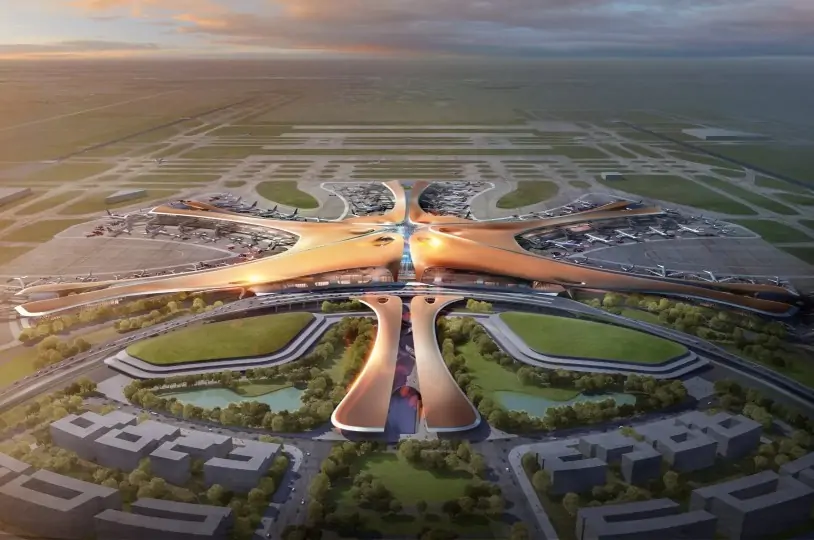
visual representation of mumbai 30 highlighting smart infrastructure decentralised urban growth and sustainable city planning
“Is the Financial Capital Shifting? Mumbai 3.0 and the Next Growth Story”
CategoriesMumbai 3.0 tips & tricks

Is the Financial Capital Shifting? Mumbai 3.0

THE EDGE — DIRECT ANSWER

Mumbai 3.0—the emerging corridor spanning Karjat, Khopoli, Alibaug, Pen, and Raigad—represents the next frontier of urban growth beyond saturated Mumbai 1.0 (island city + suburbs) and developed Mumbai 2.0 (Navi Mumbai). Three mega-infrastructure catalysts are reshaping investment potential: the VAMC (Virar–Alibaug Multimodal Corridor), the operational NMIA (Navi Mumbai International Airport), and the Second Expressway widening. Land prices in Mumbai 3.0 areas are 70–80% cheaper than Navi Mumbai, with projected 14–20% CAGR through 2028–2031. Early investors in Mumbai 3.0 today will replicate the Navi Mumbai playbook—dismissed as “too far” decades ago, now commanding premium prices. The 2026 entry window is critical before infrastructure completion drives prices beyond reach.

Home

Market Insights

Is the Financial Capital Shifting? Mumbai 3.0

KEY TAKEAWAYS

  • Mumbai 3.0 spans Karjat, Khopoli, Alibaug, Pen, and Raigad — the next frontier beyond saturated Mumbai and developed Navi Mumbai.
  • Three infrastructure catalysts converging 2026–2028: VAMC, NMIA, Second Expressway widening.
  • Land 70–80% cheaper than Navi Mumbai with 14–20% CAGR potential through 2031.
  • Early-mover advantage: Navi Mumbai was dismissed as “too far” decades ago; same cycle unfolding in Mumbai 3.0 now.

For decades, Mumbai has been India’s city of dreams — from the island city to its suburban sprawl. But with limited land, soaring prices, and strained infrastructure, the question arises: Where does Mumbai grow next?

The answer lies in what I call Mumbai 3.0.

The Three Eras of Mumbai

🔹 Mumbai 1.0 – The Original City

  • The island city and suburbs — from Colaba to Borivali, Chembur to Mulund.
  • The financial capital, Bollywood hub, and India’s nerve center.
  • But today, Mumbai 1.0 is saturated: rising costs, limited land, traffic congestion.

🔹 Mumbai 2.0 – The Navi Mumbai Story

  • Conceived in the 1970s as a planned twin city.
  • Wide roads, open spaces, and emerging corporate centers like Vashi, Belapur, and Panvel.
  • The upcoming Navi Mumbai International Airport is set to transform it.
  • Yet, even Navi Mumbai faces limits as growth pushes further outward.

Mumbai 3.0 – The Next Frontier

This is where the future unfolds.

  • Regions: Karjat, Khopoli, Alibaug, Pen, Uran, and parts of Raigad.
  • Mega Infrastructure Driving Growth:
    • Virar–Alibaug Multimodal Corridor (VAMC) — ₹80,000 crore, Phase 1 completion 2027–2028
    • Navi Mumbai International Airport (NMIA) — operational 2026–27, 60M passenger capacity
    • Second Mumbai–Pune Expressway widening — 6 to 8 lanes, reduced congestion

These projects are not just reducing travel time — they are reshaping investment potential.

Why Mumbai 3.0 Matters

  • Affordable land compared to Mumbai & Navi Mumbai.
  • Perfect for weekend homes, plotted developments, and long-term investments.
  • Early-mover advantage, similar to how Navi Mumbai was undervalued decades ago but commands premiums today.

My Perspective

Having spent over two decades in real estate and generating over $1 billion in sales, I’ve seen Mumbai evolve through multiple phases.

Just as Navi Mumbai was once dismissed as “too far,” today it thrives. The same cycle is unfolding for Mumbai 3.0. Investors and developers who recognize this early will be part of the city’s next big growth story.

Final Thought

Mumbai 3.0 is not just geography — it is the future of urban living, investment, and growth. The question is: Will you be a spectator, or a participant in shaping this chapter?

🔥 What are your thoughts on Mumbai 3.0? Do you see Karjat, Alibaug, and Raigad as the next big hubs?

About the Author — Girish Chhalwani

Girish Chhalwani is the Founder & CEO of THE EDGE Developments, a RERA-registered plotted-development company in the Karjat–MMR corridor. With 20+ years in Maharashtra land acquisition, NA conversion, and infrastructure-led land investment, he advises HNI and NRI investors on land strategy near Mumbai.

 ·  About THE EDGE Developments

Explore RERA-Registered Plots in the Karjat–MMR Corridor

THE EDGE Developments offers legally clear, NA-converted plotted developments in Mumbai 3.0 — the next frontier of urban growth. Speak with our team for current pricing and a guided site visit.

Book a Consultation →