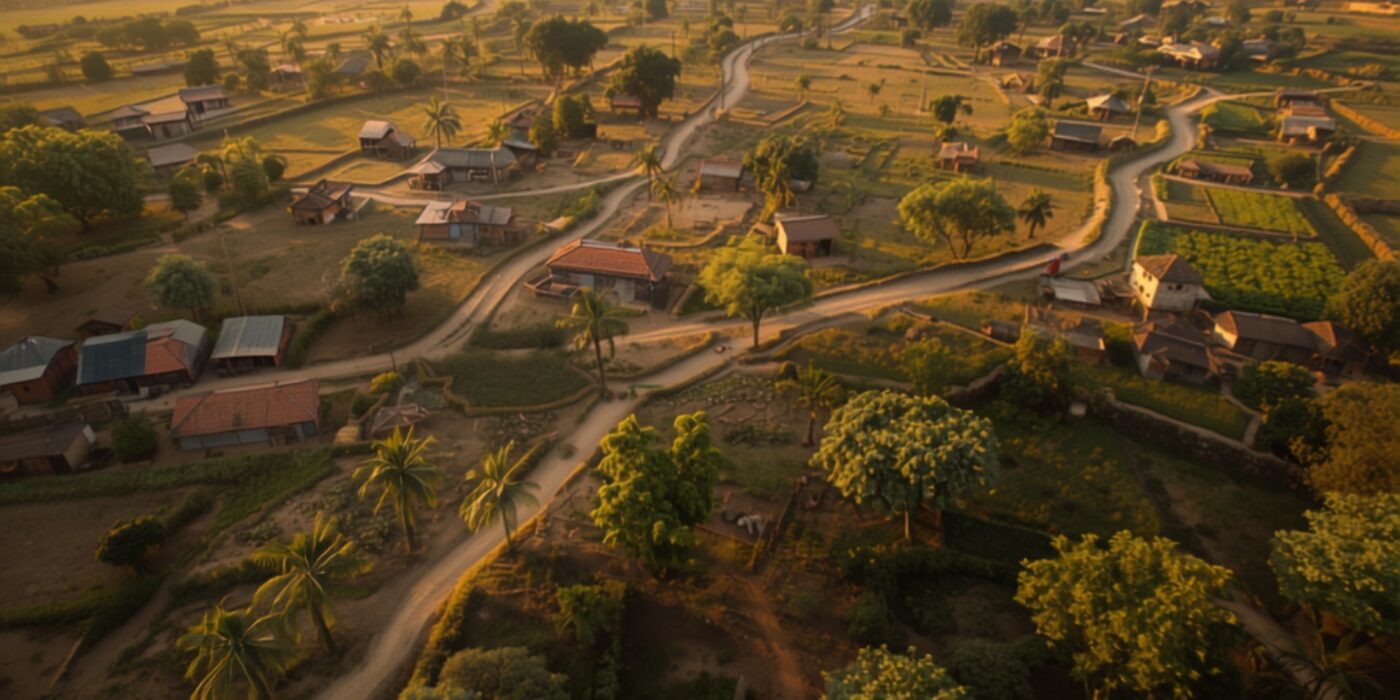
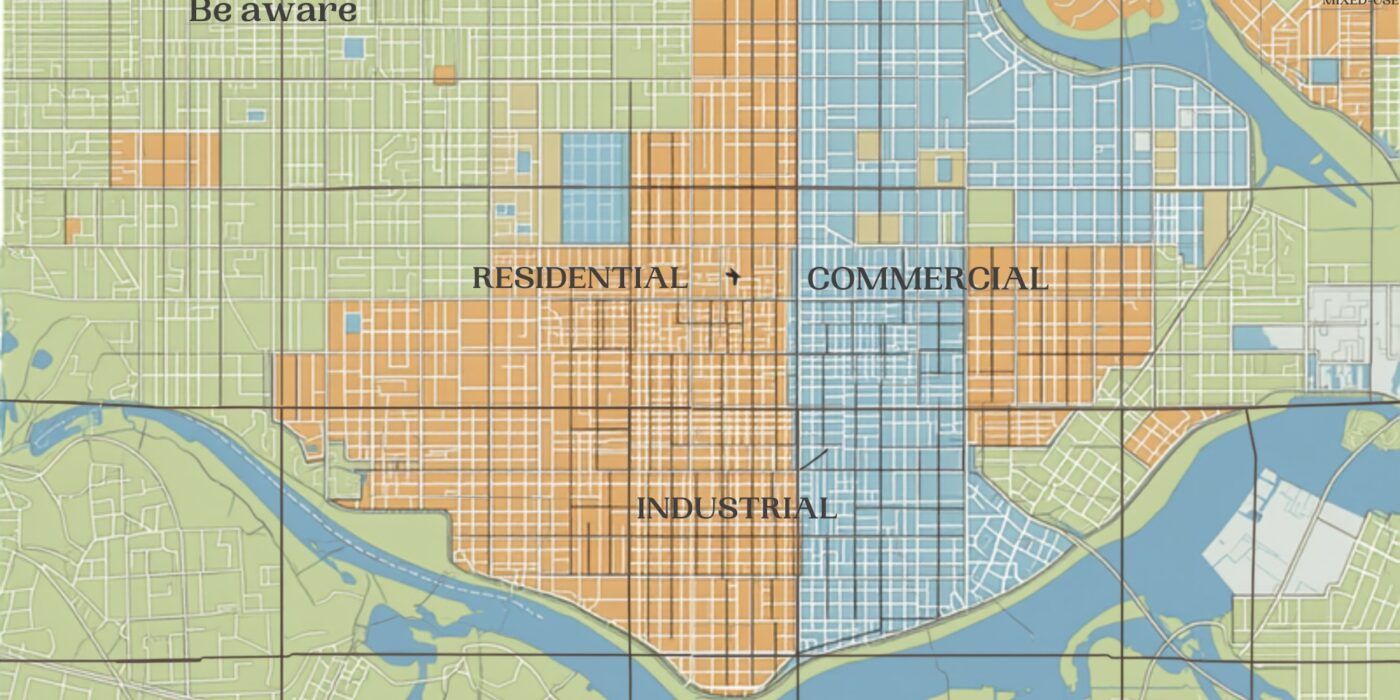
Aerial view of a road cutting through green agricultural fields divided into rectangular plots at sunset
CategoriesLand Investment

NA Conversion Process in Maharashtra: Cost, Timeline & Step-by-Step Guide 2026

THE EDGE — Direct Answer

Converting agricultural land to Non-Agricultural (NA) status in Maharashtra involves filing an application with the District Collector (or delegated Tehsildar) under Sections 42/44 of the Maharashtra Land Revenue Code 1966, along with the 7/12 extract, survey map, and proof of zoning compatibility. Processing typically takes 3–6 months for straightforward applications with no title disputes, forest, or CRZ complications — longer if any exist. The cost has two components: the NA conversion premium (a one-time government charge, typically ₹50–300 per sq.m depending on location and applicable rate), plus legal/documentation fees. Once approved, the NA order updates the 7/12 extract via a mutation entry, after which the land can be legally sold to non-farmers, developed, and bank-financed.

TL;DR — KEY TAKEAWAYS

  • NA conversion is filed under Sections 42/44 of the Maharashtra Land Revenue Code 1966 with the District Collector or delegated Tehsildar.
  • Typical timeline is 3–6 months for clean applications; complications (forest proximity, CRZ, title disputes) extend this significantly.
  • Cost = conversion premium (₹50–300/sq.m, location-dependent) + documentation/legal fees — budget accordingly before committing to a purchase price.
  • Maharashtra has a “deemed NA” provision — if the Collector doesn’t respond within the statutory period, conversion can be treated as granted, though this route carries more risk than an explicit order.

Buyers evaluating agricultural land often underestimate what NA conversion actually involves — treating it as a formality rather than a multi-month regulatory process with real cost and real risk of delay. This guide walks through the exact process, realistic timelines, and what determines whether your specific parcel converts smoothly or gets stuck.

Reading time: 11 minutes | Last updated: July 2026 | Author: Girish Chhalwani, Founder & CEO, THE EDGE Developments

Under Sections 42 and 44 of the Maharashtra Land Revenue Code, 1966, any occupant of agricultural land wishing to use it for a non-agricultural purpose must apply for and obtain permission from the Collector. Using agricultural land for non-agricultural purposes without such permission is itself a violation that can attract penalties and complicate future title transactions. — Source: Maharashtra Land Revenue Code 1966, Sections 42, 44

What is the legal basis for NA conversion in Maharashtra?

The Maharashtra Land Revenue Code, 1966 governs land classification statewide. By default, land is presumed agricultural unless formally converted. Section 42 covers the general power of the Collector to permit non-agricultural use; Section 44 sets out the application process a landholder must follow. The Collector’s power is often delegated to the Sub-Divisional Officer or Tehsildar for routine cases, which is typically the practical point of filing.

Step-by-step: how does the NA conversion process work?

  1. Obtain the current 7/12 extract for the survey number from mahabhulekh.maharashtra.gov.in, confirming current agricultural classification and ownership.
  2. Prepare supporting documents: ownership proof, measurement/survey map (from the Land Records department), no-dues certificate for land revenue, and — where applicable — a layout plan if the conversion is for a plotted development.
  3. File the application (Form as prescribed) with the Tehsildar or Sub-Divisional Officer having jurisdiction, along with the prescribed application fee.
  4. Site inspection: revenue department officials verify the land’s actual condition, boundaries, and confirm no encroachment or ongoing disputes.
  5. Zoning and compatibility check: confirmation the intended non-agricultural use (residential, commercial, industrial) aligns with the applicable Development Plan or Regional Plan zoning for that area.
  6. Payment of the NA conversion premium: a one-time charge calculated as a percentage of the land’s Ready Reckoner value, varying by district and zone.
  7. Issuance of the NA order: the Collector’s formal order granting non-agricultural status, specifying the permitted use (residential/commercial/industrial).
  8. Mutation entry: the 7/12 extract is updated to reflect the NA order, which is the final, checkable proof of conversion.

How long does NA conversion actually take?

Scenario Realistic timeline
Clean title, no encroachment, straightforward residential zoning 3–6 months
Land near forest boundary requiring Forest Department NOC 6–12 months or longer
Land within Coastal Regulation Zone (CRZ) Significantly longer; may require Coastal Zone Management Authority clearance
Disputed title or unclear succession Indefinite until the underlying title issue is resolved first

Maharashtra also has statutory provisions under which, if the Collector fails to respond within a prescribed period from a complete application, the conversion can be treated as deemed granted. In practice, buyers and developers still prefer to secure an explicit written NA order — a deemed conversion, while legally provided for, is harder to prove definitively to a future buyer, bank, or RERA authority than a physical order with a reference number.

What does NA conversion cost?

Two components make up the real cost:

  • NA conversion premium: A government charge, typically in the range of ₹50–300 per square metre, varying significantly by district, zone classification, and the applicable Ready Reckoner Rate for that survey number — areas with higher RR rates generally carry a higher conversion premium.
  • Documentation and professional fees: Survey/measurement charges, application processing fees, and — where a landowner engages an advocate or liaison consultant to manage the filing — professional fees on top of the statutory premium.

For a 10,000 sq.ft (approximately 929 sq.m) plot, total NA conversion costs commonly fall in the ₹2–10 lakh range depending on location, though this can vary meaningfully — always get a location-specific estimate before finalising a purchase price that assumes conversion is “included” or trivial.

What can delay or block NA conversion?

  • Unclear or disputed title — the Collector will not process conversion on land with an unresolved ownership dispute.
  • Proximity to forest land — requires a No Objection Certificate from the Forest Department, which can take considerably longer than the standard process.
  • Coastal Regulation Zone restrictions — land near the coastline may face construction restrictions regardless of NA status, requiring separate CRZ clearance.
  • Zoning incompatibility — if the Development Plan designates the land for agricultural or no-development use, NA conversion for residential/commercial purposes may be refused outright.
  • Pending revenue dues — unpaid land revenue must be cleared before conversion is processed.

Frequently Asked Questions

Can I convert agricultural land to NA myself, or do I need a developer?

Any landowner can file an NA conversion application directly with the Collector/Tehsildar — a developer is not legally required, though many buyers engage an advocate or liaison consultant to navigate the process, particularly for larger or more complex parcels.

How much does NA conversion cost per acre in Maharashtra?

Cost scales with area and location-specific Ready Reckoner Rate. As a rough guide, the conversion premium alone (excluding professional fees) commonly ranges from ₹2–12 lakh per acre depending on district and zone, with significant variation between high-demand corridors and slower-moving rural areas.

Is NA conversion mandatory before selling agricultural land to a non-farmer?

Selling restrictions on agricultural land to non-farmers are separate from NA conversion, but land generally cannot be legally developed for residential or commercial use without NA status, and most buyers require NA conversion (or a clear commitment to it) before purchase.

What happens if I build on land without completing NA conversion?

Construction on land without NA conversion is a violation of the Maharashtra Land Revenue Code and can result in penalties, demolition orders, and significant complications when attempting to sell, mortgage, or register the property later.

Can NA conversion be denied?

Yes — if the land falls in a no-development zone, has unresolved title disputes, sits within protected forest or CRZ boundaries without the required clearances, or has outstanding revenue dues, the Collector can refuse conversion.

Citations & Sources

  1. Maharashtra Land Revenue Code, 1966 — Sections 42, 44
  2. Maharashtra Revenue and Forest Department — NA conversion procedural guidelines
  3. Maharashtra Coastal Zone Management Authority — CRZ clearance requirements

Skip the Conversion Wait — Buy Already-NA Land

THE EDGE Developments offers plots that are already NA-converted, RERA-registered, and title-verified — no multi-month conversion process, no uncertainty.

Contact: connect@theedgedevelopments.com | +91-9664662938 | edgere.in


Split image of green agricultural farmland versus a demarcated NA plot — agricultural land vs NA plot Maharashtra
CategoriesLand Investment

Agricultural Land vs NA Plot: What’s the Difference and Which Should You Buy?

TL;DR — KEY TAKEAWAYS

  • Agricultural land = farmland (cultivation only); NA plot = legally converted for building. That difference decides everything.
  • You cannot build, sell to an NRI, or get a home loan on agricultural land — only on an NA plot.
  • NA plots cost 3–5x more than agricultural land, but carry legal certainty and immediate construction rights.
  • NA conversion takes 6–24 months and can be rejected — a strategy for experienced investors only.

Agricultural land is government-classified farmland that can only be used for cultivation. An NA (Non-Agricultural) plot is land that has been legally converted for residential, commercial, or industrial use by the District Collector. The difference determines what you can build, who can buy it, how you can finance it, and how much it is worth. This guide explains everything you need to know before deciding which to buy.

Reading time: 10 minutes | Last updated: July 2026 | Author: Girish Chhalwani, Founder & CEO, THE EDGE Developments

In Maharashtra, approximately 78% of the land area is classified as agricultural under the Maharashtra Land Revenue Code. Converting agricultural land to NA status requires formal approval from the District Collector and takes 6–24 months. Buying agricultural land without understanding this distinction is one of the most common — and costly — mistakes first-time land buyers make. — Source: Maharashtra Revenue Department 2025

What is the core difference between agricultural land and an NA plot?

Agricultural land is restricted to farming with no construction, no NRI purchase, and only agri loans; an NA plot allows building, NRI purchase, and home/plot loans — at 3–5x the price. The table shows every difference.

Parameter Agricultural Land NA Plot
Legal use Farming, cultivation only Residential / commercial / industrial
Construction allowed? No (except farm shed) Yes (as per FSI and building rules)
NRI purchase allowed? No (needs RBI approval) Yes (free purchase under FEMA)
Bank loan available? Agri loan only Home loan / plot loan available
RERA applicability No Yes (if part of project)
Price per sq.ft (Karjat) ₹200–600 ₹800–2,500
Development timeline Requires NA conversion first Can start construction immediately
7/12 classification “Jirayat” or “Bagayat” “NA” or “Sanad”

What is agricultural land in Maharashtra?

Under the Maharashtra Land Revenue Code (MLRC) 1966, agricultural land is any land used or capable of being used for cultivation. It is classified in the 7/12 extract as:

  • Jirayat: Unirrigated dry land (rain-fed cultivation)
  • Bagayat: Irrigated land (perennial water source)
  • Khajan: Low-lying salt water or marshy land

What you CAN do with agricultural land:

  • Farm, cultivate, grow produce
  • Build a small farm shed (with Gram Panchayat permission)
  • Lease it to farmers
  • Apply for NA conversion to change its use

What you CANNOT do:

  • Build a house, villa, or commercial structure
  • Sell it to an NRI without RBI permission
  • Register it as a RERA project
  • Subdivide and sell plots legally to the general public

What is an NA plot in Maharashtra?

An NA (Non-Agricultural) plot is land that has received formal conversion permission from the District Collector under Section 44 of the MLRC. The NA order specifies:

  • The permitted use (residential NA, commercial NA, industrial NA)
  • The plot area and survey number
  • Conditions of the conversion (completion timeline, development conditions)

After NA conversion, the 7/12 extract is updated to reflect the new status. Construction plans can be submitted to local authorities (Gram Panchayat, MMRDA, Municipal Council) for building permission.

Can you buy agricultural land and convert it to NA?

Yes — this is a common investment strategy. Buying agricultural land at lower prices (₹200–600/sq.ft) with the intention of converting to NA (and increasing value to ₹800–2,500/sq.ft) can deliver significant returns. However:

  • Timeline: NA conversion takes 6–24 months, sometimes longer
  • Approval is not guaranteed: The Collector can reject based on zone classification, proximity to forests, or development plan restrictions
  • Carrying cost: You are holding a non-income-generating asset during the conversion period
  • Risk: If conversion is rejected, you are left with agricultural land at a premium price

Recommendation: Agricultural land conversion is suitable for experienced investors with legal expertise, not for first-time buyers seeking a safe entry into land investment. See THE EDGE’s complete NA conversion process guide for the full filing procedure, realistic timelines, and true cost per acre.

Who should buy agricultural land?

  • Farmers or agri-entrepreneurs wanting farmland for cultivation
  • Experienced investors with legal expertise and patience for NA conversion
  • Developers who have already identified viable NA conversion prospects
  • Agri-tourism operators looking for large land parcels at competitive prices

Who should buy NA plots?

  • First-time land investors wanting legal clarity and immediate development rights
  • NRIs (the only legally unrestricted option under FEMA)
  • Weekend home buyers wanting to start construction without waiting for conversion
  • Anyone buying in a RERA-registered branded plotted development

What is the NA conversion process in Maharashtra?

You apply to the District Collector, who routes it to the Tehsildar for inspection; after zoning and clearance checks the Collector issues the NA order, you pay NA tax, update the 7/12, and apply for building permission.

  1. Apply to District Collector with 7/12 extract, property card, site plan, and reason for conversion
  2. Collector sends to Tehsildar (Talathi) for field inspection and report
  3. Revenue Department verifies zoning, forest adjacency, water body proximity
  4. Collector issues NA order (or rejection with reasons)
  5. Pay NA tax and development charges
  6. Update 7/12 extract with new NA classification
  7. Apply for building permission with local authority

Why does NA status multiply value?

NA conversion typically lifts value 3–4x because it unlocks construction rights, NRI eligibility, and bank finance. Karjat 2026 data:

Land Type Price Range (₹/sq.ft) Value Multiplier Post-NA
Agricultural (good location) ₹250–600 3–4x after NA conversion
NA (basic, no amenities) ₹800–1,500 Baseline
NA (branded project, RERA) ₹1,500–3,000 Premium on legal certainty + amenities

The value jump from agricultural to NA is real and significant. The risk is in the conversion timeline and approval uncertainty.

Frequently Asked Questions

Can I build a house on agricultural land in Maharashtra?

No. You cannot legally construct a residential building on agricultural land without first obtaining NA conversion from the District Collector. Structures built on agricultural land without NA status are liable for demolition by revenue authorities.

Can an NRI buy agricultural land in India?

No. Under FEMA regulations, NRIs cannot purchase agricultural land, farmhouses, or plantation properties in India without prior approval from the Reserve Bank of India. NRIs can freely purchase NA plots, residential properties, and commercial properties.

How long does NA conversion take in Maharashtra?

NA conversion typically takes 6–18 months in Maharashtra, depending on the taluka, district workload, and any objections raised during the verification process. In some cases, particularly near forest or water bodies, it can take longer or be denied.

Is agricultural land cheaper than NA plots?

Yes, typically 3–4 times cheaper per sq.ft. Agricultural land in Karjat is available at ₹250–600/sq.ft while NA plots trade at ₹800–2,500/sq.ft. The price difference compensates for the NA conversion cost, risk, and time — and the premium buyers pay for legal certainty and immediate construction rights.

What is the safest type of land to buy as a first-time investor?

An NA plot in a RERA-registered branded plotted development is the safest entry point for first-time land investors. It combines clear legal title, NA status, escrow protection, developer accountability, and planned infrastructure.

About the Author — Girish Chhalwani

Girish Chhalwani is the Founder & CEO of THE EDGE Developments, a RERA-registered plotted-development company in the Karjat–MMR corridor. With 20+ years in Maharashtra land acquisition, NA conversion, and infrastructure-led land investment, he advises HNI and NRI investors on land strategy near Mumbai.

 ·  About THE EDGE Developments

Explore RERA-Registered NA Plots in the Karjat–MMR Corridor

THE EDGE Developments offers legally clear, NA-converted plots — no conversion wait, no title guesswork — in Mumbai’s fastest-growing infrastructure corridor. Speak with our team for current pricing and a guided site visit.

Book a Consultation →