
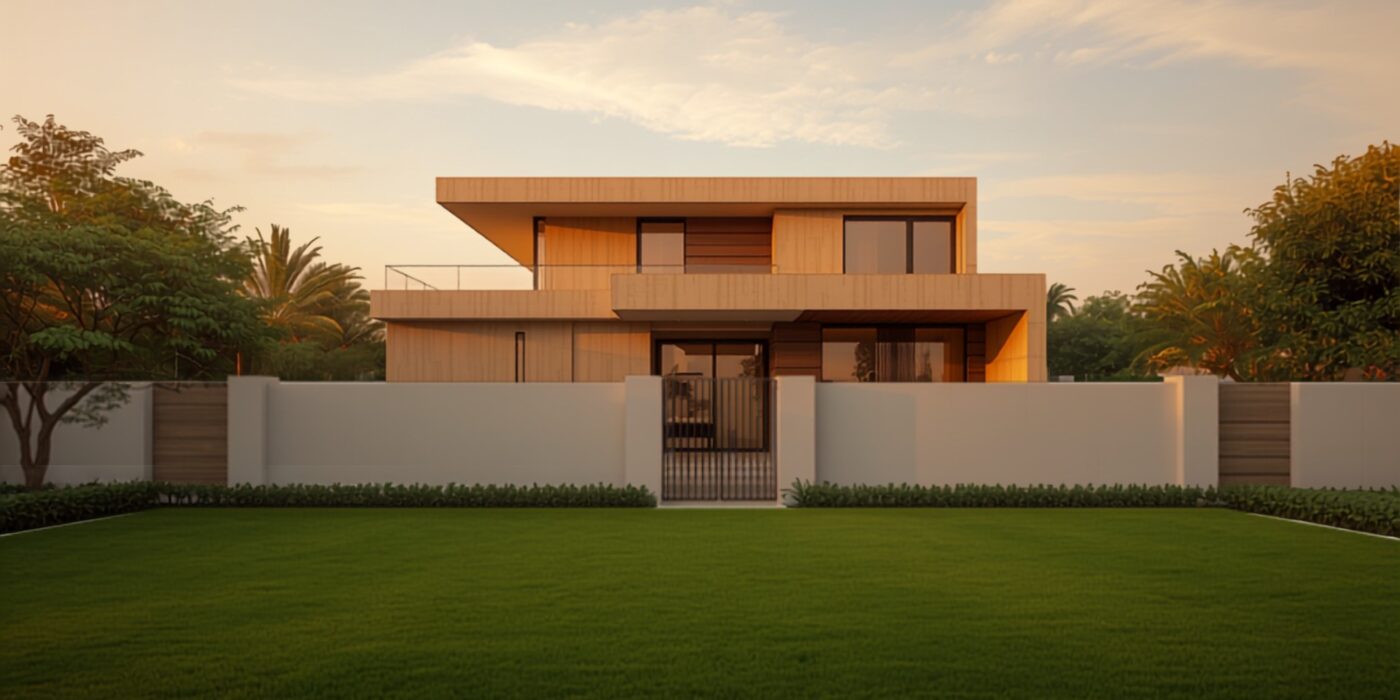
Modern villa on a plotted residential development with a landscaped lawn at golden hour in Maharashtra
CategoriesLand Investment

MahaRERA for Plotted Projects: What a Plot Buyer Must Verify

TL;DR

  • Section 3 of the Real Estate (Regulation and Development) Act, 2016 requires registration before any advertising or sale where the land proposed to be developed exceeds 500 square metres, or where more than eight apartments or plots are proposed, whichever applies.
  • A plotted development carrying infrastructure obligations is a real estate project. Sale of raw land with no development obligation is different, and that distinction is where promoters argue.
  • Each phase is a separate real estate project and needs its own registration. A registration number for phase one says nothing about the plot you are being sold in phase two.
  • Under section 13, a promoter cannot accept more than ten per cent of the cost of the plot as an advance or application fee without first entering into a registered agreement for sale.
  • Under section 4(2)(l)(D), seventy per cent of the amounts realised from allottees must go into a separate account, to be used only for that project’s land and construction cost.
  • Section 18 gives the allottee a right to withdraw with refund and interest, or to continue and take interest for delay, if the promoter fails to complete or hand over by the agreed date.
  • Penalty for developing without registration can run to ten per cent of the estimated project cost, with imprisonment for continued breach.

A plotted development with roads, drainage, water lines and a completion promise is a real estate project, and if it crosses the section 3 thresholds it cannot be advertised or sold before it is registered. The belief that a MahaRERA plotted project is somehow outside the regime is the single most useful misunderstanding a weak promoter has, because it removes the escrow, the agreement, the timeline and the remedy all at once.

When registration is required

Registration under section 3(1) is required before any marketing, advertising or sale where any one of the triggers is met. The thresholds are not cumulative in the way people assume, and the exemption is narrower than the trigger.

Section 3 triggers and the exemption
Position Requirement
Land proposed to be developed exceeds 500 sq.m Registration required
More than eight apartments or plots proposed Registration required, whatever the land area
Project without a valid occupancy certificate, still selling inventory Registration required
Each phase of a phased development Treated as a separate project, each needing its own registration
Exemption Only where the area is under 500 sq.m and there are not more than eight units. Both limbs must be satisfied

The phasing point deserves emphasis because it is where plot buyers are most often misled. A promoter can hold a genuine registration for a first phase and sell plots from an unregistered second phase alongside it, on the same site, under the same name, using the same signboard. The registration number on the brochure has to be checked against the specific phase in which your plot sits.

The raw land argument

The counter-position a promoter will run is that this is a sale of land, not a development, and land is outside RERA. That argument has a real basis where nothing is being promised: a survey number is conveyed, the buyer takes it as it is, and there is no obligation on the seller to do anything to it.

It collapses the moment infrastructure obligations enter. Internal roads, storm-water drains, a water line, street lighting, a gate, a compound wall, common open space, an amenity plot, a completion date. Each of those is a development obligation, and a promoter who has taken money against them has sold a real estate project. The test is what has been promised, not what the document has been titled.

The three protections a plot buyer loses without registration

This is the part worth internalising, because registration is not paperwork. It is the mechanism that delivers three specific protections.

  1. The ten per cent rule, section 13. A promoter cannot accept more than ten per cent of the cost of the plot as an advance or application fee without first entering into a registered agreement for sale. Where a buyer has paid forty per cent against a booking form and an allotment letter, that rule has been broken and there is no registered agreement setting out area, price, timeline or default consequences.
  2. The seventy per cent account, section 4(2)(l)(D). Seventy per cent of the amounts realised from allottees must be deposited in a separate account, to be used only for the land and construction cost of that project. This is what stops money from one project funding another promoter’s land purchase elsewhere, which is the single most common mechanism by which projects stall.
  3. The delay remedy, section 18. Where the promoter fails to complete or hand over by the agreed date, the allottee may withdraw and claim a refund with interest, or continue and claim interest for every month of delay. Without a registered project and a registered agreement carrying a date, there is nothing to be in breach of.

Plotted developments with infrastructure obligations do require registration.

Analysis of section 3 registration requirements under MahaRERA

What to check, and how

The plot buyer verification sequence
Check What good looks like What to be wary of
Registration number on the MahaRERA portal An active registration matching the project and the phase your plot sits in A number that resolves to a different phase, a lapsed registration, or a number quoted only on paper
Promoter name Matches the entity that will execute your agreement and the entity on the title Three different names across brochure, agreement and 7/12
Sanctioned layout on the portal Plot numbering that matches what you are being shown on site A marketing plan with plot numbers that do not appear in the sanctioned layout
Declared completion date A specific date you can hold against section 18 Soon, subject to approvals, or a date only in conversation
Quarterly progress updates Filed and current Nothing filed for several quarters on a project claimed to be moving
Amount demanded before agreement Not more than ten per cent A booking demand well above ten per cent against an allotment letter
Litigation disclosed Listed on the portal Encumbrances you find yourself that are not disclosed

Do these in this order, because the first two dispose of most problems in ten minutes and the rest are only worth doing if the first two hold.

Registration is not a quality certificate

An honest article has to say this. A MahaRERA registration number tells you the promoter has made declarations to a regulator, that a separate account exists, and that a completion date has been committed. It does not tell you the title is clean, that the layout was properly sanctioned, that the land is free of the tenure restrictions discussed elsewhere on this site, or that the promoter can deliver.

Registration is a floor. A registered project with a defective title is still a defective title, and the regulator does not adjudicate that for you before granting registration. Run the title work regardless.

What non-registration actually costs the promoter

Where a project that required registration was developed or sold without it, the penalty can extend to ten per cent of the estimated cost of the project, with imprisonment available for continued contravention. That is worth knowing not because a buyer wants to prosecute anyone, but because it explains behaviour. A promoter who has taken your money outside the system has an incentive to keep you outside it, and that shows up as reluctance to execute a registered agreement.

Frequently asked questions

Does RERA apply to plots or only to flats

It applies to plots. A plotted development with infrastructure obligations is a real estate project and requires registration where the section 3 thresholds are met.

What is the registration threshold for a plotted project

Registration is required where the land proposed to be developed exceeds 500 square metres, or where more than eight plots or apartments are proposed. The exemption applies only where both limbs are satisfied.

Is each phase registered separately

Yes. Each phase is treated as a separate real estate project with its own registration, so the number on the brochure must be checked against the phase your plot is in.

How much can a promoter take before the agreement for sale

Not more than ten per cent of the cost of the plot, under section 13. Beyond that a registered agreement for sale must be executed first.

What is the seventy per cent account

Under section 4(2)(l)(D), seventy per cent of amounts realised from allottees must be kept in a separate account and used only for the land and construction cost of that project.

What can I do if the plot is not handed over on time

Section 18 lets the allottee withdraw and claim a refund with interest, or continue and claim interest for the period of delay, where the promoter fails to complete or hand over by the agreed date.

Does a MahaRERA number mean the title is clean

No. Registration records declarations to a regulator. It is not a title certificate, and full title due diligence remains necessary.

Being sold a plot in a phase you cannot find on the portal? That is the check to finish before the booking amount, not after. We verify registration, phase and layout against what is actually on site.

Talk to THE EDGE

Related reading

Citations and sources

  • Real Estate (Regulation and Development) Act, 2016, section 3 — registration of real estate projects, the 500 square metre and eight unit thresholds, phase-wise registration and the exemption. See this analysis of section 3 registration
  • Real Estate (Regulation and Development) Act, 2016, section 13 — no more than ten per cent as advance without a registered agreement for sale
  • Real Estate (Regulation and Development) Act, 2016, section 4(2)(l)(D) — seventy per cent of realisations to a separate account
  • Real Estate (Regulation and Development) Act, 2016, section 18 — refund with interest or interest for delay
  • Real Estate (Regulation and Development) Act, 2016, section 59 — penalty up to ten per cent of estimated project cost for non-registration

Two people exchanging house keys over a wooden desk with a document folder and pen
CategoriesLand Investment Market Insights Mumbai 3.0 NRI Guides tips & tricks Uncategorized Weekend Homes

How to Check a Project MahaRERA Registration Before You Buy in Maharashtra (2026)

Key takeaways

  • MahaRERA registration is mandatory for any plot layout or project where the land to be developed exceeds 500 square metres or where more than eight plots or units are proposed — Section 3 of the RERA Act, 2016.
  • Verify on the official portal only: search the project name, promoter name, or registration number at maharera.maharashtra.gov.in before you pay any token amount.
  • The registration page shows the quarterly progress report (QPR), sanctioned approvals, carpet area, encumbrance and litigation, and the committed completion date.
  • The 70 percent escrow rule (Section 4(2)(l)(D)) forces promoters to ring-fence buyer money for land and construction of that project only.
  • Buying into an unregistered project strips you of the Act’s remedies — Section 18 refund with interest and the Section 31 complaint route.
  • Your broker must also carry a MahaRERA agent registration under Section 9.

Reading time: about 8 minutes · Last updated: 21 August 2026 · By Girish Chhalwani, Founder & CEO, THE EDGE Developments (20+ years in Maharashtra land)

The direct answer

Direct answer: to check a plot or project MahaRERA registration, open the official portal at maharera.maharashtra.gov.in, click “Registered Projects,” and search by project name, promoter name, or the 51-character MahaRERA registration number — do this before you pay a single rupee of token money. A genuine registration returns a project page carrying the sanctioned plan approvals, carpet-area schedule, quarterly progress report, litigation status, and the committed completion date. If the project does not appear, or the promoter cannot give you a registration number, treat it as unregistered and walk away.

MahaRERA is the Maharashtra Real Estate Regulatory Authority, the state body set up under the central Real Estate (Regulation and Development) Act, 2016. It is the single most powerful free due-diligence tool available to an ordinary buyer, and most people never open it. The verification below takes about five minutes and can save you years of litigation.

Which plots and projects MUST be registered

A real estate project must be registered with MahaRERA if the area of land proposed to be developed exceeds 500 square metres, or if the number of plots or apartments proposed to be developed exceeds eight, inclusive of all phases. This is the threshold in Section 3(2)(a) of the RERA Act, 2016, and it applies squarely to plotted developments, not only to towers.

The wording matters, so read it the way the regulators do. A project is exempt only when both conditions are small — area of 500 square metres or less and eight or fewer plots. If either threshold is crossed, registration is compulsory. A 40-plot layout on two acres is covered; so is a small six-plot layout that happens to sit on 900 square metres of land.

Development Registration required? Why
Plotted layout on 2,000 sq m, 30 plots Yes Both thresholds crossed
6-plot layout on 900 sq m Yes Area exceeds 500 sq m
4 plots on 480 sq m, no promised amenities No Both under threshold
Layout marketed with roads, gate, clubhouse Yes, if over threshold Promised common amenities make it a “real estate project”

One practical trap: a promoter may slice one large layout into several “phases” of eight plots each to dodge registration. The Act counts all phases together, so this is non-compliant. If a seller tells you the plots are “too small to need RERA” but is selling roads, drainage, and a compound wall, be sceptical and verify the numbers yourself.

How to check a project on MahaRERA, step by step

Follow this exactly. Use the official domain; never a lookalike or a broker’s screenshot.

  1. Go to the official portal at maharera.maharashtra.gov.in and open the Registered Projects section.
  2. On the Search Project page, enter the project name, the promoter/company name, or paste the MahaRERA registration number the seller gave you.
  3. Match the result carefully — confirm the promoter name, the district, and the survey or CTS numbers match the land you are actually buying, not a namesake project elsewhere.
  4. Open the project page and download the certificate, the sanctioned plans, and the latest quarterly progress report (QPR).
  5. Check the proposed completion date and whether any extension or complaint is recorded against the project.
  6. Separately verify your broker at Registered Agents — an unregistered agent selling a registered project is still a red flag.

What the registration page actually shows you

A MahaRERA project page is a self-declared but legally binding disclosure by the promoter, updated every quarter. Read these five fields before anything else:

  • Sanctioned approvals: the commencement certificate, layout sanction, and NA (non-agricultural) order. A plot layout without a sanctioned NA order is not sellable land.
  • Carpet area / plot schedule: the exact area you are paying for, promoter-declared. Match it to your allotment letter.
  • Quarterly progress report (QPR): construction and development status filed every quarter. A project with no QPR filed for two or more quarters is either stalled or non-compliant.
  • Litigation and encumbrance: pending cases and mortgages disclosed against the land. Cross-check this against the 7/12 extract.
  • Completion date: the date the promoter committed to. This is the date your Section 18 refund clock runs from.

Registered vs unregistered: what changes for you

The gap is not paperwork — it is whether the law is on your side when things go wrong.

Factor Registered project Unregistered project
Public disclosures Approvals, QPR, carpet area, litigation all visible Nothing you can independently verify
Buyer money 70% ring-fenced in a project escrow account No protection; funds can be diverted
Delay remedy Section 18 refund with interest, or interest for delay Only slow civil/consumer routes
Complaint forum Section 31 complaint to MahaRERA Not available for the project as such

Section 18 gives you the strongest remedy in the Act: if the promoter fails to hand over possession by the committed date, you may either withdraw and demand a full refund with interest, or stay and claim interest for every month of delay. Section 31 lets any aggrieved person file a complaint directly with MahaRERA against a promoter, allottee, or agent — a far faster forum than a civil court. Both remedies exist only if the project is registered. That single fact is why verification is not optional.

The 70 percent escrow rule

Under Section 4(2)(l)(D) of the RERA Act, the promoter must deposit 70 percent of the money collected from buyers into a separate project bank account, to be used only for the land and construction cost of that project. Withdrawals are allowed in proportion to construction completion and only after an architect, an engineer, and a chartered accountant each certify the stage. This is what stops a developer from taking your money for one layout and spending it on another. In an unregistered project, no such ring-fence exists, and your payment is unsecured from day one. Where a project is in default, MahaRERA can even freeze the account — the reason it maintains a public common bank account list of such cases.

Do not forget the agent

Every real estate agent who facilitates the sale of a registered project must themselves hold a MahaRERA agent registration under Section 9 of the Act. Ask your broker for their agent registration number and confirm it on the Registered Agents search. An agent operating without registration cannot legally market a RERA project, and dealing with one weakens your position if a dispute arises later.

Firm law vs recent circulars — read the label

Honesty about what is settled matters when money is on the line. The thresholds in Section 3, the 70 percent escrow in Section 4, the Section 18 refund-with-interest remedy, the Section 31 complaint route, and Section 9 agent registration are all firm statutory law in the RERA Act, 2016 — they do not change on a bureaucrat’s note. Layered on top are MahaRERA circulars and orders — administrative measures such as periodic changes to the QPR format, project grading, and the requirement to print a MahaRERA QR code and registration number on advertisements. These are enforceable but evolve; always read them on the current Rules, GRs and Circulars page rather than relying on an old summary. When a claim you hear is only a “proposal” or a draft circular, treat it as not-yet-binding until it is notified.

“In twenty years of buying and developing land across Maharashtra, I have never seen a five-minute check pay off like the MahaRERA search. If a plot layout is worth your money, it will be on that portal with its approvals and quarterly report visible. If a seller is nervous about you opening the site, that nervousness is your answer.”

— Girish Chhalwani, Founder & CEO, THE EDGE Developments

Disclaimer: This article is general information on the Real Estate (Regulation and Development) Act, 2016 and MahaRERA procedure as of August 2026, not legal advice. Statutory sections and circulars are updated periodically. Verify every project on the official MahaRERA portal and consult a qualified advocate before committing funds.

Frequently asked questions

Is MahaRERA registration mandatory for plotted developments in Maharashtra

Yes. A plotted development must be registered with MahaRERA if the land to be developed exceeds 500 square metres or more than eight plots are proposed across all phases, under Section 3 of the RERA Act, 2016. Only layouts below both thresholds are exempt.

How do I check if a project is registered on MahaRERA

Open maharera.maharashtra.gov.in, go to Registered Projects, and search by project name, promoter name, or registration number. Confirm the promoter, district, and survey numbers match your land, then download the certificate and the latest quarterly progress report.

What does the 70 percent escrow rule mean for my payments

Under Section 4(2)(l)(D), the promoter must keep 70 percent of buyer money in a separate account usable only for that project land and construction, released in stages certified by an architect, engineer, and chartered accountant. It protects your money from being diverted to other projects.

What can I do if I bought into an unregistered project

An unregistered project falls outside the Act, so the Section 18 refund and Section 31 complaint remedies do not apply to it. Your recourse shifts to slower civil or consumer forums, which is exactly why registration must be verified before you pay.

Does a real estate agent need MahaRERA registration

Yes. Section 9 of the RERA Act requires every agent facilitating a registered project to hold their own MahaRERA agent registration. Ask for the number and confirm it on the Registered Agents search before you deal through any broker.

Buying a plot near Mumbai? Verify it with us first.

THE EDGE Developments runs a MahaRERA and title check on every plotted development we advise on. If you have a project in mind, send us the details and we will help you read the registration page before you commit.

Talk to our team »  |  Call +91-9664662938  |  connect@theedgedevelopments.com

Related reading

Citations and sources

More land guides from THE EDGE