
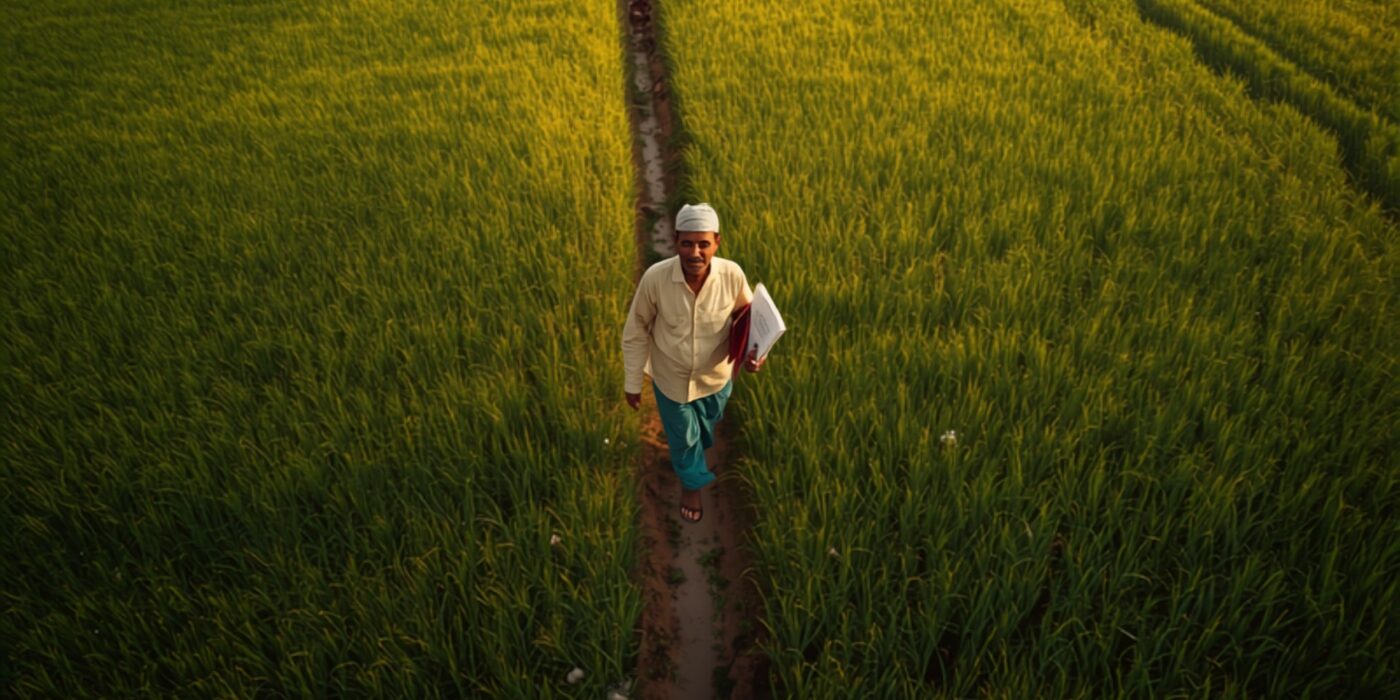
- Maharashtra Revenue Minister Chandrashekhar Bawankule has directed tighter enforcement of documentary proof of active farming status for landholders claiming certain agricultural land benefits and schemes.
- The directive responds to concerns about benefits under agricultural schemes being claimed on land where the “farmer” status of the recorded holder is unclear or unverified.
- Landholders should ensure their 7/12 extract, cropping pattern records, and any scheme-specific documentation are current and consistent, since verification is being emphasized at the point of benefit disbursal.
- For land buyers, this signals continued regulatory attention on ensuring agricultural land classification and usage records are accurate and up to date, not just historically filed.
Reading time: 6 min | Last updated: July 2026 | By Girish Chhalwani, Founder & CEO, THE EDGE Developments
Maharashtra’s Revenue Department under Minister Chandrashekhar Bawankule has moved to tighten verification of “farmer proof” — documentary evidence of genuine agricultural activity — for landholders seeking benefits tied to agricultural land status. The push reflects a broader 2026 pattern from the Revenue Ministry of strengthening the accuracy and verifiability of Maharashtra’s land records, an effort that touches everyone from smallholder farmers claiming scheme benefits to land buyers relying on the accuracy of agricultural classification.
What the Directive Covers
The core thrust of the directive is straightforward: landholders seeking to access schemes, subsidies, or benefits contingent on active agricultural use should be able to substantiate that status with consistent documentary evidence — primarily the 7/12 extract’s recorded cropping pattern, alongside any additional scheme-specific proof required by the administering department. This is aimed at reducing instances where land is recorded as agricultural, and benefits are claimed accordingly, without the underlying cultivation activity being genuine or current.
Why This Matters Beyond Direct Scheme Beneficiaries
| Stakeholder | Relevance |
|---|---|
| Active farmers | Need to ensure 7/12 cropping records and supporting documentation are current and accurate to avoid disruption in scheme access |
| Land buyers evaluating agricultural land | Reinforces the importance of checking that a seller’s recorded agricultural status and land use genuinely matches current ground reality |
| NA conversion applicants | Consistent documentation history strengthens the credibility of any subsequent NA conversion application |
“Every push toward tighter documentation standards from the Revenue Ministry is, in effect, a push toward land records that actually reflect ground reality. That’s good news for buyers doing due diligence — it means the paper trail is becoming more trustworthy over time, provided you’re still checking it carefully rather than assuming compliance.” — Girish Chhalwani, Founder & CEO, THE EDGE Developments
What Landholders Should Do
- Confirm the current 7/12 extract accurately reflects the crop and cultivation pattern for the relevant land.
- Gather any additional scheme-specific documentation that may be required alongside the standard land record.
- Address any discrepancies between recorded status and actual land use proactively with the local Talathi, rather than waiting for a benefit application to surface the issue.
How This Fits Maharashtra’s Wider 2026 Documentation Push
The farmer proof directive doesn’t exist in isolation — it’s one piece of a broader effort by the Revenue Ministry in 2026 to close gaps between what land records say on paper and what’s actually true on the ground. The same underlying logic applies to tribal land records under Forms 7E/12E, where accurate documentation of landholder status is equally central to preventing disputes and unauthorized transfers. In both cases, the government’s position is that a land record is only useful if it’s kept current — a status recorded a decade ago and never revisited is a liability, not an asset, for the landholder and for anyone transacting with them.
For agricultural landholders specifically, this means the days of treating a 7/12 extract as a “set it and forget it” document are ending. Crop patterns change, land gets subdivided among heirs, and cultivation sometimes lapses entirely when a family member moves away for work — all of which can leave the recorded cropping pattern out of step with reality. Under the new emphasis on verification, that gap is no longer a paperwork inconvenience; it’s something that can actively block access to a scheme benefit at the moment it’s needed most. The practical takeaway for any landholder is to treat the 7/12 as a living document that needs periodic reconciliation with actual land use, not a one-time filing.
Buyers evaluating agricultural land should read this directive as a signal about where enforcement attention is heading generally — toward documentation accuracy as a first-order concern rather than an afterthought. A seller whose 7/12 cropping pattern hasn’t been updated in years, or whose land use has clearly diverged from what’s recorded, is a seller whose overall record-keeping discipline deserves closer scrutiny before you commit to a transaction.
FAQ
What is the “farmer proof mandatory” directive about?
It refers to Revenue Minister Chandrashekhar Bawankule’s push for tighter documentary verification of genuine agricultural activity for landholders seeking scheme benefits tied to farmer status.
What documents count as farmer proof?
Primarily the 7/12 extract’s recorded cropping pattern, along with any additional scheme-specific documentation required by the administering department.
Does this affect land buyers, not just current farmers?
Indirectly yes — it reinforces the importance of verifying that a seller’s recorded agricultural status genuinely matches actual land use before purchase.
What should I do if my land’s cropping record seems outdated?
Raise it proactively with the local Talathi office to update the record, rather than discovering the discrepancy during a benefit or scheme application.
Does this directive change how NA conversion applications are assessed?
It does not change the NA conversion process itself, but a consistent, up-to-date documentation history strengthens the credibility of any subsequent NA conversion application.
Citations & Sources
- Maharashtra Revenue & Forest Department, 2026 policy announcements
- Office of the Revenue Minister, Government of Maharashtra
Related Reading
- Maharashtra Land Records Portals: The Complete Directory of Government Websites
- How to Read a 7/12 Extract in Maharashtra: Complete Guide for Land Buyers 2026
- E-Ferfar Maharashtra: How Online Mutation Entries Update Your 7/12 Record
- 8A Extract Explained: The Land Record Companion to 7/12 in Maharashtra
- First-Time Land Buyer’s Checklist: 10 Due Diligence Steps
- Tribal Land Records: Form 7E/12E and Bawankule’s 2026 Push for Accurate Adivasi Land Documentation
- Case Study: Infrastructure-Triggered Land Appreciation in the Karjat Corridor
- Contact THE EDGE Developments
Stay Ahead of Maharashtra’s Evolving Land Record Standards
THE EDGE Developments tracks every Revenue Department policy shift that affects land buyers and owners. Talk to us before your next transaction.
connect@theedgedevelopments.com | Phone: +91-9664662938