
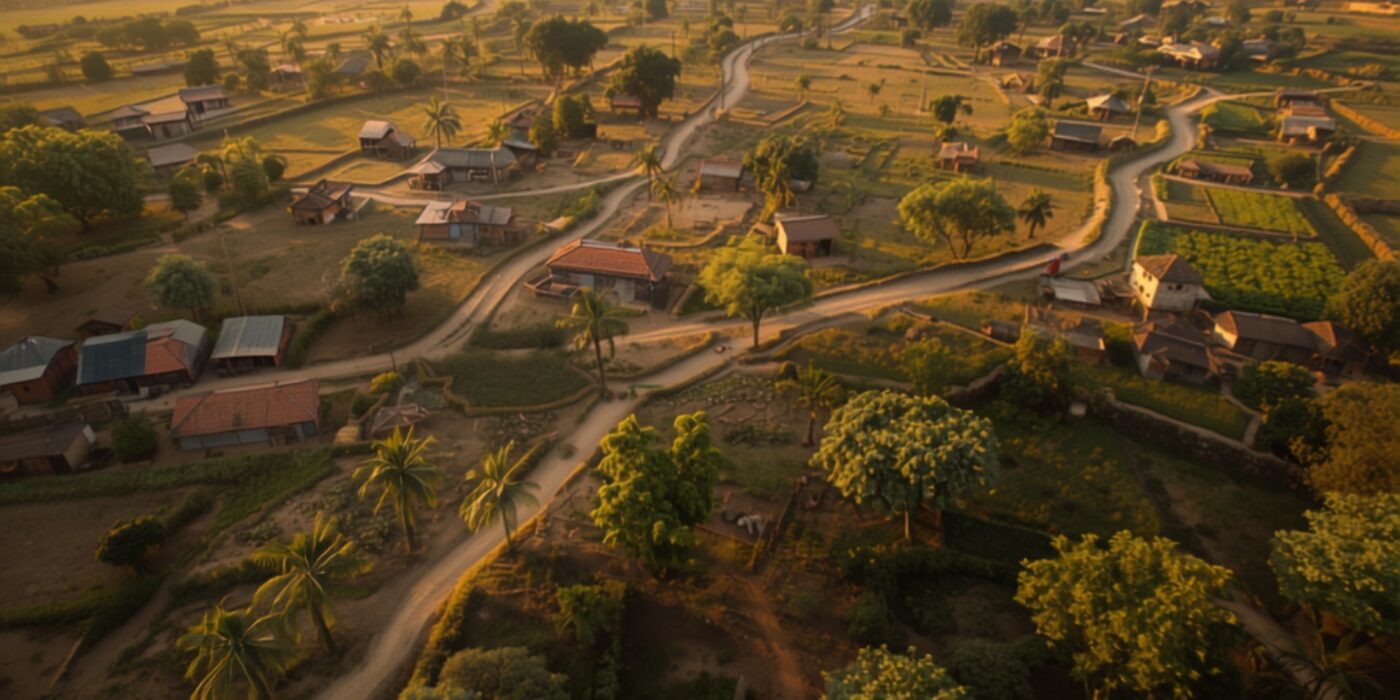
- Gunthewari refers to land layouts developed and sold in small plots (historically measured in “guntha,” a traditional land unit) without following formal town-planning or layout approval — common in peri-urban and rapidly urbanizing parts of Maharashtra.
- The Maharashtra Gunthewari Developments (Regularization, Upgradation and Control) Act allows such unauthorized layouts, under specific conditions, to be regularized retroactively.
- Regularization is not automatic or guaranteed — it depends on factors like the layout’s date of development, compliance with minimum road-width and open-space norms, and payment of a regularization fee/penalty.
- Buying into a gunthewari plot that has NOT been regularized carries real risk: limited access to formal bank financing, complications in obtaining a building permission or occupancy certificate, and potential future demolition exposure in extreme cases.
- Buyers should verify a gunthewari layout’s regularization status directly with the local planning authority (municipal corporation, council, or gram panchayat/town planning office) before purchase — a “for sale” listing does not confirm legal status.
Reading time: 8 min | Last updated: July 2026 | By Girish Chhalwani, Founder & CEO, THE EDGE Developments
Gunthewari layouts are plotted land developments in Maharashtra that were carved out and sold without formal town-planning approval, and while the state has a legal mechanism to regularize them, buyers need to understand that regularization is conditional, not automatic. These layouts are especially common on the fringes of expanding cities — where agricultural or unplanned land gets informally subdivided and sold in small plots ahead of, or instead of, official development permission. For a buyer, the difference between a regularized and an unregularized gunthewari plot can mean the difference between a bankable asset and a legally exposed one.
What Does “Gunthewari” Mean?
“Guntha” is a traditional unit of land measurement in Maharashtra (1 guntha ≈ 1,089 sq ft, and 40 gunthas make one acre). “Gunthewari” layouts get their name from the practice of subdividing and selling land in guntha-sized plots, historically bypassing the formal layout-approval process required under town planning and development control regulations. This became widespread in fast-growing peri-urban belts where demand for affordable plotted land outpaced the formal, approved supply.
The Gunthewari Regularization Framework
The Maharashtra Gunthewari Developments (Regularization, Upgradation and Control) Act, first enacted in the early 2000s and amended subsequently, provides a legal pathway for such unauthorized layouts to be regularized, subject to conditions. The broad framework typically requires:
| Condition | Detail |
|---|---|
| Cut-off date | Layouts developed before a specified cut-off date are eligible for consideration; layouts formed after are generally not covered |
| Minimum infrastructure norms | Roads, open space, and basic layout standards must meet (or be brought up to) minimum thresholds set under the regularization scheme |
| Regularization fee/penalty | A fee calculated per plot or per area is payable to the local authority to formalize the layout |
| Local authority approval | The relevant municipal corporation, council, or planning authority must process and approve the regularization application |
Because eligibility criteria and cut-off dates have been revised through amendments over the years, the current applicable rules should always be confirmed with the local planning authority rather than assumed from older information.
Why Regularization Status Matters to Buyers
- Bank financing. Most banks and housing finance companies will not extend a home loan against a plot or structure in an unregularized gunthewari layout, since clear, bankable title and approved layout status are standard lending requirements.
- Building and occupancy permissions. Constructing on an unregularized plot, or seeking an occupancy certificate for an existing structure, can be blocked or heavily delayed until the layout’s status is resolved.
- Resale liquidity. Regularized plots are significantly easier to resell, since the pool of buyers willing to take on an unregularized asset (and its financing/permission constraints) is much smaller.
- Long-term legal exposure. While large-scale demolition of long-standing gunthewari layouts is uncommon in practice, unregularized status keeps a property in a legally uncertain position that can resurface during future disputes, redevelopment, or infrastructure projects.
“Gunthewari plots get marketed like any other plot, but the legal reality underneath varies enormously from one layout to the next. Some are cleanly regularized with full documentation; others are years into a pending application that may never clear. Always get the regularization status confirmed in writing from the local authority — don’t take the developer’s or broker’s word for it.” — Girish Chhalwani, Founder & CEO, THE EDGE Developments
How to Check a Gunthewari Layout’s Status Before Buying
- Identify the layout’s location and the local planning authority with jurisdiction (municipal corporation, municipal council, or the relevant regional/town planning office).
- Request written confirmation of the layout’s regularization status — approved, pending, or not eligible — directly from that authority.
- If regularized, ask for the specific regularization order/certificate number and cross-check it against the plot in question.
- If pending or unregularized, treat this as a material risk factor in your purchase decision and pricing, not a minor technicality.
- Consult a local property lawyer familiar with gunthewari matters for a formal title and status opinion before finalizing any transaction.
FAQ
What does gunthewari mean?
Gunthewari refers to land layouts in Maharashtra that were subdivided and sold in small “guntha”-sized plots without following the formal town-planning layout approval process.
Can gunthewari plots be regularized?
Yes, under the Maharashtra Gunthewari Developments (Regularization, Upgradation and Control) Act, eligible layouts can be regularized, subject to conditions like cut-off date, infrastructure norms, and payment of a regularization fee.
Is every gunthewari layout eligible for regularization?
No — eligibility depends on when the layout was developed and whether it meets minimum infrastructure and planning norms; layouts developed after the applicable cut-off date are generally not covered.
Can I get a home loan for a plot in an unregularized gunthewari layout?
Typically no — most banks require clear, approved layout status before extending financing against such a property.
How do I check if a gunthewari layout is regularized?
By requesting written confirmation of regularization status directly from the local municipal corporation, council, or planning authority with jurisdiction over that area.
Is buying land in an unregularized gunthewari layout illegal?
Buying itself isn’t automatically illegal, but the plot’s unregularized status carries real practical risk around financing, construction permissions, and resale — this should be factored into any purchase decision.
What happens after a gunthewari layout is regularized?
Once regularized, the layout is recognized by the local planning authority, generally enabling standard building permissions, occupancy certificates, and mortgage financing on individual plots.
Should I consult a lawyer before buying a gunthewari plot?
Yes — given the variability in regularization status across layouts, an independent legal opinion specific to the plot in question is strongly advisable before committing funds.
Citations & Sources
- Maharashtra Gunthewari Developments (Regularization, Upgradation and Control) Act
- Urban Development Department, Government of Maharashtra
Related Reading
- How to Read a 7/12 Extract in Maharashtra: Complete Guide for Land Buyers 2026
- Ready Reckoner Rate & eASR Maharashtra: How Government Land Valuation Works
Considering a Plotted Layout? Verify Its Legal Status First
THE EDGE Developments checks layout approval and regularization status on every plotted development we recommend. Talk to us before you buy into one.
connect@theedgedevelopments.com | Phone: +91-9664662938