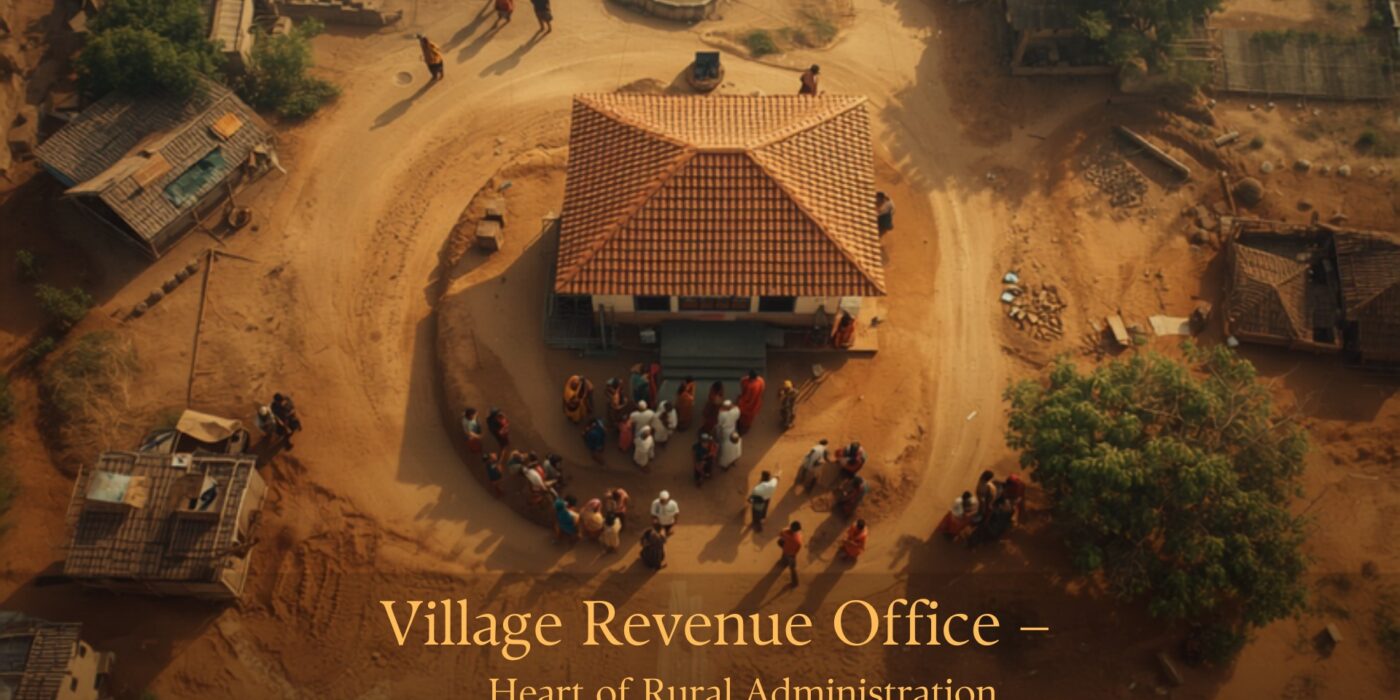

Check Ferfar Status Online: Maharashtra Mutation Tracker
TL;DR
- A ferfar is a mutation entry, which is the record of a change of holder in the village register, and you can check ferfar status online free on the state portal — but only once you know the district, the taluka and the village. There is no state-wide search.
- The register of mutations is kept under section 150 of the Maharashtra Land Revenue Code, 1966, and an entry sits in it as pending until it is certified.
- A pending entry is the gap buyers pay into: the seller shows a 7/12 with his name on it while an unresolved entry is still running behind it.
- The mutation number is the handle for everything else. Without it the Talathi office cannot find the file and neither can you.
- Tested on the live portal on 23 September 2026: the site is Marathi only by its own notice, and a mobile number and captcha are mandatory on every single query.
- The portal carries its own disclaimer that the information shown cannot be used for any governmental or legal purpose. The free copy is a lead, not evidence.
Anyone can check ferfar status online in Maharashtra in about four minutes, free, and the check catches the single defect that most often survives a casual title read. The obstacle is not the fee or the login. It is that the portal will not let you search until you already know which village the land sits in.
Terms used on this page
Mutation is the entry that records a change of holder in the record of rights.
Ferfar is that mutation entry itself, numbered and kept in sequence for the village.
Satbara is the 7/12 extract: the village record of rights for one parcel.
Khatedar is the person recorded as holding the land.
Tahsildar is the revenue officer in charge of a taluka.
Gat number is the group survey number given to a holding after consolidation.
What is a ferfar, and why does its status decide your deal?
The register of mutations under section 150 of the Maharashtra Land Revenue Code, 1966 is where every change of holder is written down before it reaches the 7/12. An entry is made, notice goes out, objections are heard, and only then is it certified. Until certification the entry exists but settles nothing.
That interval is the whole problem. A seller can hold a satbara showing his name while an entry behind it is still open, or while an earlier entry was certified over an objection that is now under appeal. The extract looks clean because the extract only shows the current state, not the argument that produced it.
So the status of the ferfar is a different question from what the 7/12 says today, and it is the more useful one. A buyer who reads only the current extract is reading the answer without the working.
How do you check ferfar status online?
The sequence below reflects the portal as it stood on 23 September 2026 and the order matters, because each step narrows the next. Fix the geography first, pull the record, then read the entries in sequence under section 150 of the Maharashtra Land Revenue Code, 1966 rather than skipping to the latest one.
- Fix the village before you touch the portal. District, taluka and village are all mandatory fields. If you have only a survey number and a seller’s name, you cannot begin; get the village from the agreement, the tax receipt or the previous deed.
- Choose the record type. The portal offers four: 7/12, 8A, Property Card and K-Prat. For a rural parcel you want the 7/12; urban land sits on the Property Card instead.
- Enter the survey or gat number. The form accepts a numeric survey number or an alphabetic one, and these are separate options rather than one field that takes both.
- Supply a mobile number and clear the captcha. Both are compulsory on every query, which is also why nobody can run this in bulk across a chain of villages.
- Read the other rights column, not the occupant column. Pending entries, charges, tenancies and disputed notes live here, and this is the column sellers do not volunteer.
- Take the mutation number off the entry and take it to the Talathi. The online view tells you an entry exists. The office file tells you what it says and whether anybody objected.
What does the portal refuse to do?
Four limits, all observed directly on the live portal on 23 September 2026 and none of them documented anywhere a buyer would normally look. Knowing them before you start is the difference between a four-minute check and a wasted afternoon, and two of the four will return nothing at all rather than an error.
| What we found | What it means for your search |
|---|---|
| The portal carries an explicit notice that it is available in Marathi only, and that third-party transliteration tools are not expected to be used | Names have to be read and entered in Devanagari, spelled the way the record spells them rather than the way the seller spells them in English |
| A mobile number and a captcha are compulsory on every query | The check cannot be scripted or run in bulk; a chain of five villages is five manual queries |
| The district list offers thirty-five entries, while the portal numbers districts internally up to thirty-six | The missing one is Mumbai City, which has no 7/12 at all and sits on Property Cards instead |
| Three districts appear only under their current names: Dharashiv, Chhatrapati Sambhajinagar and Ahilyanagar | Searching for Osmanabad, Aurangabad or Ahmednagar returns nothing, and it returns nothing silently |
The portal also carries its own disclaimer, and it is the most important line on the page: the information shown there cannot be used for any governmental or legal purpose. Treat the free view as a lead. For anything a lender, a court or a sub-registrar will read, you need the digitally signed copy.
Where does the mutation number actually appear?
On the 7/12 itself, in the other rights column, and it is the handle for everything that follows under section 150 of the Maharashtra Land Revenue Code, 1966. Each entry carries its own number in the village sequence, and that number is what the Talathi office uses to find the file.
Without it you are asking a clerk to search by name and date, which in a village with three families sharing a surname is not a search at all. With it, you can ask for the specific thing worth asking for: the notice that was issued, who objected, and the order that certified or rejected the entry.
The extract tells you who holds the land today. The mutation file tells you whether anybody disagreed, and disagreement is what turns up two years after you have paid.
Girish Chhalwani, Founder & CEO, THE EDGE Developments
What does a pending entry mean for a buyer?
It means the record of rights is mid-sentence, and section 150 of the Maharashtra Land Revenue Code, 1966 has not yet finished it. A pending entry is not a defect by itself. Most of them are routine and most are certified without objection. The risk is in buying while one is open without knowing what it says.
The workable rule is simple. If an entry is pending, find out what it does before you pay anything that cannot be recovered. If it records the seller acquiring the land, the seller is selling something he does not yet hold on the record. If it records somebody else acquiring an interest, you need to know that before the sale deed, not after.
Where the entry has been certified but an appeal is running, the extract will look entirely clean. That case is invisible to this check, and it is the reason a ferfar status check is one step in a title search rather than the whole of it.
Frequently asked questions
Can I check ferfar status online without knowing the village?
No. District, taluka and village are all mandatory fields before the portal will accept a survey number or a name. If you have only a seller name, get the village from the agreement, a tax receipt or the previous deed first.
Is the free online ferfar legally valid?
No. The portal states that the information shown cannot be used for any governmental or legal purpose. For a lender, a court or a sub-registrar you need the digitally signed extract rather than the free screen.
What is the difference between a pending and a certified mutation?
A pending entry has been made but not yet decided after notice and objections. A certified entry has been decided, and it is the certified ones that are reflected as settled on the record of rights.
Where do I find the mutation number?
In the other rights column of the 7/12 extract. Each entry carries its own number in the village sequence, and that number is what the Talathi office needs to retrieve the file.
Can I run this check for several villages at once?
No. A mobile number and a captcha are compulsory on every query, so each village is a separate manual search. A chain of five villages is five searches.
Does a clean extract mean there is no dispute?
Not necessarily. Where an entry has been certified and an appeal is running against it, the current extract can look entirely clean. That is why a ferfar check sits inside a wider title search rather than replacing one.
Buying in the Karjat, Khopoli or Khalapur belt? THE EDGE Developments reads the mutation history before the price is agreed, not after the deposit. Ask us to check a parcel.
Related reading
- e-Ferfar: how online mutation entries update the 7/12
- Old ferfar and historical mutation records
- Digital Satbara: the digitally signed 7/12
- How to read a 7/12 extract
- Government valuation of land in Maharashtra
- 7/12 and 8A difference
- Speak to THE EDGE about a title check
Citations and sources
- MahaBhulekh v2.0, Maharashtra Bhumi Abhilekh — the record types, mandatory fields, district list, language notice and disclaimer, all read off the live portal on 23 September 2026.